A recurring subject for discussion has been whether Australia should have a dedicated Coastguard service. Last year it was once again raised by the Naval Studies Group in their A Maritime Strategy for Australia(AMS 2035). In the Spring 2004 edition of the Journal of the Australian Naval Institute, Professor Stephen Martin outlined the thinking behind the Labor Party’s proposal to create an Australian Coastguard. This provides useful background for the contemporary discussion on the subject.

The evolution of Labor’s policy on an Australian Coast Guard
Following the re-election of the Coalition in 1998, the Beazley Labor Opposition undertook a re-examination of all its policies, particularly in view of the number of changes that occurred in terms of responsibilities within the Shadow Ministry. The 1998 Labor Defence Policy similarly was the subject of such a review.
The concept of an Australian coastguard was not new. But it had died something of a natural death within Labor’s policy radar and had last been considered by the Party when in government. At that time, the Minister for Defence, the Hon Kim Beazley, ruled it out essentially on the basis of cost and the reluctance of Australia’s defence force to support an initiative that it considered was not mainstream Defence responsibility.
However, with the continuing threat of incursions from unauthorised entries into Australia’s maritime approaches, coupled with a deterioration of the region’s security environment (the arc of instability), it was considered in the office of the Shadow Minister for Defence that the time had come to revisit this issue.
Calls for tighter surveillance were mounting amid concerns about organised immigration rackets, the risks of introducing exotic diseases and the prospect of political and economic uncertainty to our north sparking an exodus of refugees. It was already clear that Australian law enforcement agencies faced serious and growing challenges, especially in the areas of illegal migration and narcotics trafficking.
These issues coalesced politically, playing on the collective fears of Australians in times of insecurity. Of course, it was the Coalition Government, led by the manipulating efforts of the Minister for Defence Peter Reith in the 2001 election campaign, that lifted this form of untruthful, exaggerated spin doctoring to new heights.
In the months following the 1998 election, Kim Beazley formed a National Security and Trade Committee (NSTC) of the Shadow Ministry. The concept of an Australian Coast Guard (ACG) was first raised with that Committee in early 1999. In the initial drafts of the policy, the Shadow Minister for Defence proposed that the ACG actually be part of the military. It was considered that for the concept to gain understanding and acceptance in the community at large, it had to be linked to issues of national security and therefore required the full weight of the ADF behind it.
In discussions within the NSTC, the concept was generally accepted. The Shadow Minister for Defence took a proposal to the Shadow Cabinet in late June 1999. That proposal suggested that Australia faced a law enforcement challenge.
Two problems were identified with the current system. One was the lack of a whole of government approach to maritime surveillance and enforcement. Existing arrangements were based on the principle of partnership and shared responsibility. No one agency had the responsibility for taking a holistic view of the requirements for coastal surveillance. Customs, Australian Quarantine Inspection Service (AQIS), Australian Federal Police (AFP), Fisheries and the Attorney-General’s (AGs) Department amongst others were all involved in some way. But these individual agencies were responsible for risk assessments and for translating them into tasks for Coastwatch.
The second problem was that the system suffered because Coastwatch was a private enterprise operation with civilian status. Labor considered that coastal surveillance was a vital national security task that required a paramilitary, or even a military organisation with proper equipment and appropriately trained and disciplined personnel. However, Coastwatch operational staff were civilians and received less thorough training.
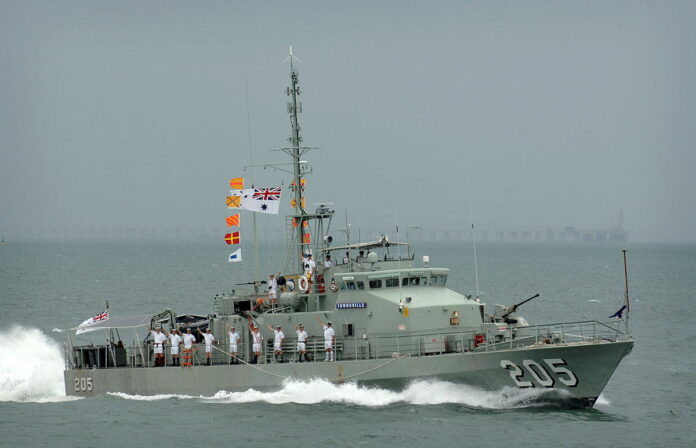
Similar problems of organisation, training and discipline applied to the patrol boats operated by the Customs as part of Coastwatch. These vessels were not armed and their civilian crews not trained or authorised to carry weapons. The new and larger vessels being acquired by Customs would not add to this effectiveness unless they were armed and operated by members of a properly trained and disciplined force.
In terms of Defence policy, there was a movement away from the Defence of Australia and its sea air gap to one of developing regional community security. This presented a new set of challenges. In the future, the operational focus of the RAN and the RAAF was likely to be concentrated beyond Australia’s environs. Their focus on the high technology end of maritime operations tended to concentrate on training and equipment policy as well as war fighting doctrine rather than constabulary tasks. Continuing budgetary pressures and the need to bolster less capable regional forces, leaving them to concentrate on sovereignty and constabulary task, would reinforce this.
On the other hand the changing nature of warfare and the Revolution in Military Affairs put a higher priority on constabulary tasks such as peacekeeping and similar crypto-law enforcement tasks.
Dealing with the problem was seen as not just a matter of having an effective surveillance and response system. Nor was it just a matter of giving total responsibility to an existing law enforcement agency such as the AFP or Customs. The former was already too small and under-resourced, as well as focused on shore bound operations. Customs was better placed but inadequately trained and equipped, especially to handle what were likely to be escalated threats in the future.
The challenge would be to cope with offenders who would themselves be well equipped and increasingly well armed. Officers would be faced with offenders using sophisticated electronic equipment and weapons of considerably more power than basic small arms.
Chief of the Defence Force, Admiral Chris Barrie noted at the time that the role of non-state players as a source of threats may continue to increase, while the traditional state on state wars may become localised, and between smaller states. He believed that, increasingly, Governments would need to structure against a broader range of threats rather than focus solely on traditional state on state based war.
The submission concluded that there was a fundamental need for a single paramilitary enforcement agency to have leading responsibility for national surveillance and enforcement in our huge area of offshore jurisdiction. The formation of an ACG could reflect considerable economies of scale.
An ACG was expected to focus on the enforcement of Australian sovereignty and law in Australian waters. Processes being pursued by Customs to improve their effectiveness could be refined by an ACG that would then devise an appropriate structure for their command and control. Additionally, the research and specifications for types of equipment more appropriate to coastal surveillance roles, fisheries patrol and protection of off shore resources would be more likely. At the time civilian agencies preferred the economy and flexibility of contracted services, whilst the ADF were concerned with combat capability.
The proposal also indicated the range of patrol and other vessels as well as fixed wing and rotary wing aircraft that would be required. It concluded that most of these were available or in the process of being acquired, such as the replacement for the Fremantle class patrol boats. The Jindalee Over the Horizon Network was thought also to add significant value, while the need for an enhancement of two or three bases such as Broome, Cairns and Darwin was recommended. The use of the existing Australian Volunteer Coastal Patrol and individuals through Neighbourhood Watch-type operations would add a community input into the concept.
As it became more widely debated with other Shadow Ministers whose portfolio responsibilities were affected, concern was expressed that the full military option was not the best solution. In a typical soft response, members of the Left argued that, like the US Coast Guard, its home should be within a portfolio like Transportation. This reflected the view that since Fisheries, AFP, Customs and Attorney-Generals would in some way be affected because of existing legislative restraint, the softer option should prevail. In truth it was more about the perception of anything military that had some of the Shadow Ministers nervous.
In the final analysis, a number of Shadow Ministers, including Robert McClelland, Duncan Kerr and I, were given the task of fine-tuning the policy. It was ultimately agreed that the Coast Guard would not be military in a command sense, but would have its staff drawn from across the military and civilian jurisdictions. In time of war, it would in effect become the fourth arm of the military.
Having received approval for the policy from both the NSTC and the Shadow Ministry, the policy was then presented to the Caucus National Security and Trade Committee. Although some questions were asked related to the detail of staffing proposals and its quasi-paramilitary appearance, the Committee approved the concept. This Committee was generally comprised of right and centre left members of Caucus, so its passage was pretty much assured.
Finally, the policy was presented to a full Caucus meeting for approval. Such was the interest of the Caucus that not one question was asked at the time. Kim Beazley, Duncan Kerr and I formally launched the policy in Darwin in late 1999. All Labor policy launches were choreographed to get maximum media attention. This was no different, and over the next two years considerable effort was spent in promoting the concept around Australia.
In August 2000, the formal inclusion of the Coast Guard policy within the ALP National Platform at the Party’s National Conference in Hobart was completed. This followed a number of months of consideration by the Foreign Affairs, Defence and Trade National Policy Committee in consultation with the relevant Shadow Ministers. But by this time, the concept had received some interested response and was not challenged.
The policy was taken to the 2001 election, but like most of what Labor had to say on national security and defence issues was drowned in the wake of the Tampa and children overboard affairs, 9/11 and Afghanistan.
Following Labor’s third consecutive loss that year, incoming Labor leader Simon Crean announced that all of Labor’s policies were to be totally reviewed, but that the Coast Guard policy would remain. As the issue of security, border protection and Australia’s involvement in a number of significant world conflicts continued to dominate, the policy was again reviewed by Mark Latham, Shadow Minister for Economic Ownership and Community Security.
The fundamental principles of the original policy remained in the policy announced in November 2002. Costings associated with acquiring appropriate maritime and aerial surveillance vessels and aircraft were updated to reflect changes made by the Government in increased expenditure in Defence. Labor’s policy continues to be the establishment of an Australian Coast Guard.
About the Author
Professor the Hon Stephen Martin AO was at the time of writing this article the Chief Executive Officer of the University of Wollongong (UOW) in Dubai. Born in Wollongong Stephen Martin lectured in economics at UOW and earned his PhD there in 1999. He was first elected to the Australian Parliament in 1984 and served as Parliamentary Secretary to the Minister for Foreign Affairs and Trade (1991-1993), the Speaker of the Australian House of Representatives (1993-1996) and was the Shadow Minister for Defence (1998-2001). He returned to UOW in 2002 and is now on UOW’s Council.