Gaps in Australia’s maritime defence

0
42

By Jennifer Parker*

In 2023, the Australian government adopted a “strategy of denial” to guide defence planning, defined as an “defensive approach designed to stop an adversary from succeeding in its goal to coerce states through force, or the threatened use of force, to achieve dominance.” The 2026 National Defence Strategy and its associated Integrated Investment Program, released last week, offer the next steps in achieving this plan, with maritime capabilities a crucial component. But gaps remain. (From: The Interpreter. The Lowy Institute.)

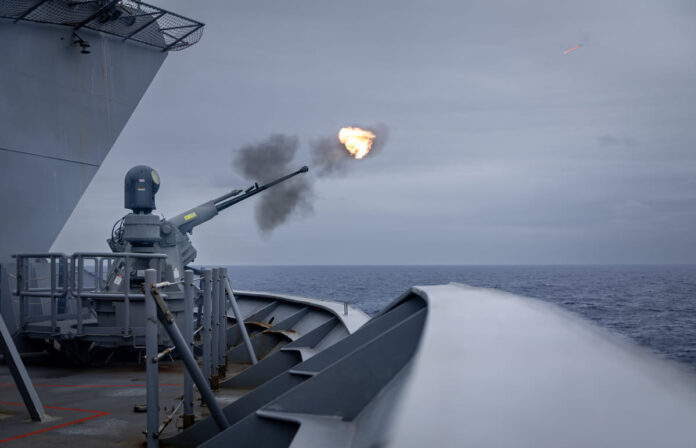
The 2026 Strategy is careful to distinguish a strategy of denial from a strategy of sea denial. Sea denial, as seen in the Black Sea or the Strait of Hormuz, can restrict an adversary’s freedom of manoeuvre, but it does not guarantee our own. Securing freedom of manoeuvre across the maritime domain through sea control is essential to protecting long sea lines of communication and enabling maritime power projection.

The 2026 Strategy recognises this, committing to work with allies and partners to protect Australia’s critical sea lines of communication, reinforced by ADF tasks focused on defending economic connections and strengthening maritime domain awareness. It also broadens the concept of maritime strategy, with a stronger focus on defence industry policy and supply chain resilience. Reducing the volume of critical goods that must move by sea is an important part of any effective approach.

Sea denial can restrict an adversary’s freedom of manoeuvre, but it does not guarantee Australia’s own.

This reflects an attempt to take a more national view, but sits awkwardly in what is still a military strategy and would be better developed in a whole of government maritime strategy.

The 2026 Strategy sets out 11 priorities for the integrated force, many with a clear maritime focus. It includes undersea warfare to project force, hold an adversary at risk and maintain situational awareness. It extends to maritime capabilities for sea denial and localised sea control to deny access and enable ADF freedom of action, and amphibious capability. These themes were evident in the 2024 edition of the strategy but are now more clearly expressed.

Even so, the 2026 Strategy is still not clear on how Australia would protect its sea lines of communication. It would have been stronger if this had been set out as a layered, whole of government approach, rather than left to be inferred.

The Integrated Investment Program released alongside the 2026 Strategy outlines the prioritised capability investments to implement the longer-term vision. The maritime elements of the capability investment program remain largely the same as in 2024.

Of the 11 capability priorities outlined in the investment program, several are maritime, including undersea operations, sea denial and localised sea control, and amphibious army capability supported by investment in targeting and missile. Maritime capability still makes up a large share of the investment program, at around 41%.

In line with Defence announcements over the past year, the Integrated Investment Program reinforces the central role of nuclear-powered submarines under the AUKUS arrangement. It also places growing emphasis on extra-large and large uncrewed underwater vehicles such as Ghost Shark and Speartooth. While their full capabilities are not public, their likely intelligence, surveillance, reconnaissance and strike roles should help bridge the gap between the ageing Collins-class and the future Virginia-class submarines. These uncrewed underwater vehicles are also likely to play an important role in seabed warfare, an area of increasing focus. Whether this will be sufficient remains uncertain.

A positive shift in the Integrated Investment Program is the broader view of maritime capability, with renewed attention to areas such as hydrography and mine warfare that were largely overlooked in the 2024 version. But the added detail is not matched by a clear plan or funding to close the capability gaps in the earlier version. The Integrated Investment Program includes references to autonomy and uncrewed systems helping to address these shortfalls, but it remains unclear how, likely reflecting budget constraints. As it stands, the approach leans heavily on the promise of autonomy without explaining how it will deliver.

On localised sea control – where the distinction with a strategy of pure sea denial becomes important – this task rests with the surface combatant fleet of frigates and destroyers, consistent with the selection of the upgraded Mogami general purpose frigate in August 2025. While the expanded capability will be considerable, these ships will not arrive until the 2030s and 2040s.

In the meantime, the present fleet of ten surface combatants – including seven ageing Anzac-class ships – will fall to nine in 2026 and not grow again until the first Mogami enters service around 2030. There is no ambition to accelerate the Hunter class frigates, not expected until 2034. The Large Optionally Crewed Surface Vessel announced in 2024 curiously remains, despite indications the US will move away from this – leaving Australia’s ambition feeling rather aspirational.

Replenishment is a more immediate gap. The ability to keep ships at sea through replenishment is scarcely addressed in the Integrated Investment Program. After cancelling the future multi role vessels in 2024, the investment program maintains that two replenishment ships are enough. They are not. This does not support continuous operations and provides no real resilience. It remains a clear capability shortfall.

The 2026 Strategy describes a more dangerous and unpredictable era, with higher levels of state conflict than at any time since 1946, and acknowledges Australia’s core maritime vulnerability of sea lines of communication, yet the 2026 Integrated Investment Program still does not provide the ability to protect it over the next five years – a risk that is compounding.

*Jennifer Parker is a Nonresident Fellow at the Lowy Institute, an Expert Associate at the National Security College, Australian National University, and International Fellow at the London-based Council on Geostrategy. She is a former Royal Australian Navy officer with more than 20 years’ service.

LEAVE A REPLY

Please enter your comment!
Please enter your name here