By Clive Williams*
Sea mine contamination in the Strait of Hormuz represents the principal obstacle to the restoration of normal commercial shipping operations in the Persian Gulf, even with a cessation of hostilities.
While limited transit corridors could potentially be reopened within weeks under favourable conditions, comprehensive clearance and restoration of commercial confidence are likely to require several months.
A six-month timeframe for full reopening remains plausible and may prove optimistic should additional mines be discovered or if hostile activity continues.
The principal strategic intention of the Iranian mine campaign was denial of safe passage through the Strait of Hormuz. Even a relatively small number of sea mines can significantly disrupt commercial shipping, increase insurance costs, and reduce energy market confidence.
Available reporting from allied intelligence services, maritime surveillance assets, and open-source maritime tracking indicates that Iran has likely employed a mixed minefield strategy involving both tethered and seabed mines.
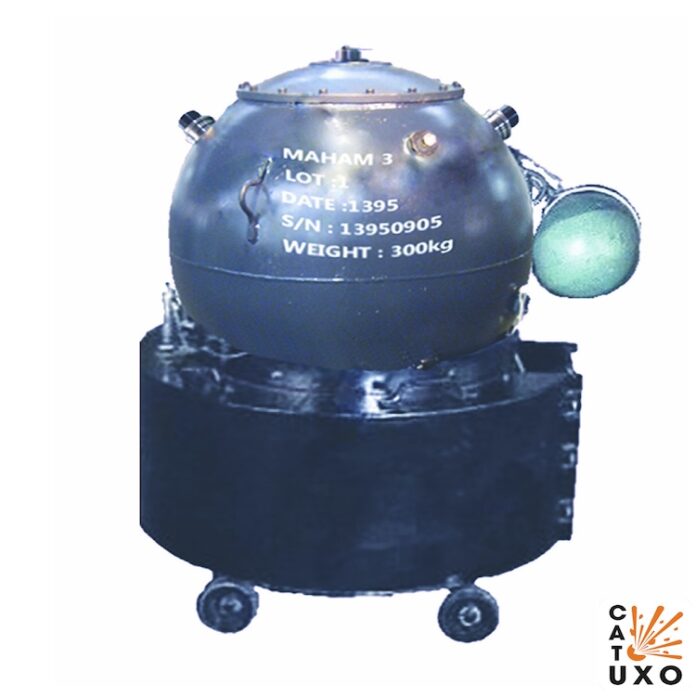
Iranian sea mines are believed to include the Maham 3 and Maham 7 series, which are thought to be manufactured domestically by Iran and based in part on earlier Soviet, Chinese and indigenous designs.
The Maham 3 is a tethered mine designed for deployment within the principal tanker channels of the Strait in waters up to 100 metres deep. Anchored directly to the seabed by a cable, its buoyant mine body is positioned below the surface, making visual detection difficult—particularly in poor underwater visibility conditions.
This design is highly effective against large commercial vessels and naval combatants utilising magnetic and acoustic target detection within a programmed distance to attack vessels below the waterline, potentially causing catastrophic flooding or structural failure.
In contrast, the Maham 7 is a compact influence mine, also using magnetic and acoustic detection, deployed on the ocean floor at depths up to 35 metres. It can become covered in sediment and difficult to distinguish from natural seabed clutter. Some variants in this class incorporate ship-counting or delayed activation logic. When detonated directly below medium-sized vessels or landing craft, it utilises fluid dynamics to break the hull apart.
Confirmation and neutralisation of seabed mines generally require deployment of sophisticated sonar systems and remotely operated vehicles.
It is believed that both mine types have been deployed, though quantities remain unknown. Some estimates suggest contamination could range from several dozen to more than one hundred mines dispersed across the Strait. The likely absence of reliable Iranian minefield records, combined with mine deployment by Iranian vessels under attack, increases uncertainty regarding the total scale of contamination.
The Strait of Hormuz presents a particularly challenging mine-countermeasure (MCM) environment. Typical depths within the designated shipping lanes range from approximately 60 to 100 metres, making them suitable for tethered mines, while shallower approaches, anchorages and constrained manoeuvring areas may be more suitable for seabed influence mines.
Furthermore, underwater visibility is often limited to less than ten metres and can fall substantially lower. Water clarity in the Strait is frequently degraded by high sediment loads, seasonal plankton blooms, dust deposition from regional storms and strong tidal mixing.
As a result, mine clearance operations cannot rely on visual detection and must depend heavily on advanced technology, including side-scan sonar, synthetic aperture sonar, autonomous underwater vehicles, remotely operated vehicles, and magnetic/acoustic influence sweeps. Even with these specialised tools, the environmental conditions will significantly slow the search, classification and neutralisation process.
US and allied MCM capabilities prospectively include Independence-class Littoral Combat Ships deploying the LCS MCM mission package, unmanned underwater vehicles, airborne mine detection and neutralisation systems, specialist diving and explosive ordnance disposal teams, and dedicated mine warfare support vessels.
Even using these assets, mine clearance will be inherently slow. The current situation is heavily complicated by uncertain minefield boundaries, the potential drifting of moored mines, the likely presence of multiple mine types, and ongoing security concerns.
Each sonar contact must be individually investigated before clearance authorities can certify safe passage, and historical experience demonstrates that even relatively limited minefields require weeks or months to clear.
Any prolonged disruption to Hormuz traffic will have consequences extending well beyond the Gulf region. Potential global impacts include sustained increases in worldwide oil prices, higher LNG prices in Asian markets, increased marine insurance premiums, greater inflationary pressure across both developed and developing economies, and severe supply chain disruptions affecting energy-intensive industries.
For Australia, the principal concern is indirect economic exposure via global energy markets, rising shipping costs and broader impacts on key trading partners. China, Japan, South Korea and India remain heavily dependent upon Gulf energy exports. Any prolonged reduction in Hormuz throughput could destabilise regional economic stability and increase demand for Russian energy supplies.
While partial shipping corridors could be established within several weeks if hostilities cease and coordinated MCM operations proceed without interference, the restoration of full commercial confidence will inevitably lag behind technical clearance. Shipping companies, insurers and energy traders will require extensive verification before resuming normal shipping operations.
Ultimately, the full restoration of confidence-based commercial shipping operations could extend into the fourth quarter of 2026 or beyond, although the actual timeframe will depend heavily on the scale of contamination and security environment. This assumes no significant re-mining activity, no major tanker damage during clearance operations, and continued coalition access to affected areas.
The principal lesson from the current crisis is that sea mines remain among the most cost-effective area-denial weapons available to a middle power. A relatively small number of mines has the potential to disrupt a waterway critical to global energy security, impose substantial economic costs, and tie up significant naval MCM resources for extended periods.
Regardless of the ultimate outcome of the present crisis, the Strait of Hormuz episode reinforces the continuing importance of MCM capabilities and highlights an ongoing vulnerability within global maritime trade networks.
Professor Clive Williams MG is a former Defence intelligence officer.