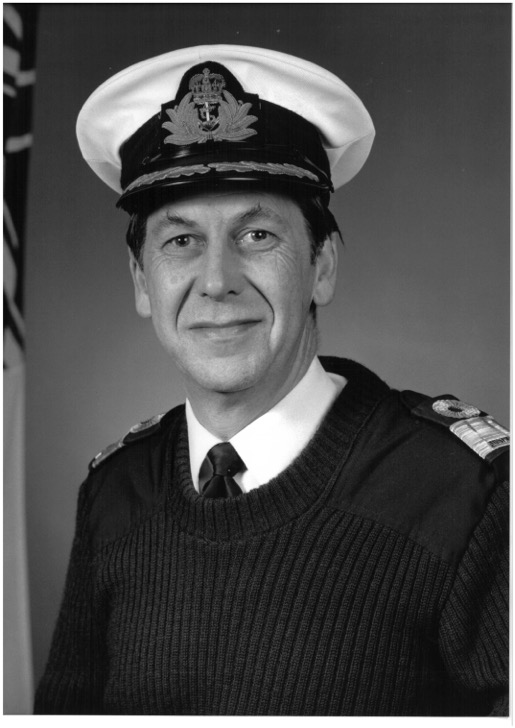
Born in England in 1939, Commodore Peter Dechaineux was the son of Captain Emile Dechaineux DSC RAN who was mortally wounded at the Battle of Leyte Gulf in 1944 while in command of HMAS Australia.
Educated in Hobart and later in Melbourne, Peter Dechaineux joined the RAN in 1953 as a 13-year-old cadet midshipman. He graduated from the RAN College (then at Flinders Naval Depot in Victoria) before experiencing fleet duty in the frigate HMAS Swan and UK training at Britannia Royal Naval College, Dartmouth.
His engineering postings at home and abroad were many and varied and included sea time in the aircraft carrier HMAS Melbourne and the destroyers Tobruk, Vampire, Duchess and Perth.
Asked for his recollections on his retirement, CDRE Dechaineux said the most vivid were the officers and sailors he had been fortunate to serve with. He expressed total personal satisfaction with his “various and diverse” naval postings. He said it was a truism to say one learnt from superiors. However, his most valuable learnings had come .from the lower deck.
“The ability to get things done depends on close working relationships with other people and nowhere is this more evident than with sailors. Their widely differing backgrounds, strengths and weaknesses are a direct reflection of the spirit of the Navy. They are the backbone of the wider naval family of which I am intensely proud to have been part of. My days as a Midshipman and Sub Lieutenant were full of incidents where senior and junior sailors taught me the right way (and sometimes the wrong way!) to do and to act. Many was the time when I was given a dressing down, in the most polite way, by a Chief Petty Officer. Their wealth of technical experience was unmatched and I have no hesitation in saying that some of the finest examples of leadership can be found in the lower deck.”
CDRE Dechaineux said the two areas which he had found most interesting were training and project management. Among his “major achievements” was introduction of the LM2500 marine gas turbine into the surface fleet which had required a distinct change in maintenance culture, shifting more towards the aircraft maintenance philosophy of repair by replacement, more detailed record keeping and a higher level of configuration control.
“The adoption of many aero engine maintenance presented an interesting challenge, but it seems to have been successful,” he added. Concurrent with introducing the LM2500, his time developing and training naval officers was intensely rewarding,” he said. ” The opportunity to pass on technical knowledge at the Royal Naval Engineering College was gratifying in an engineering sense, but I strongly believe that it is more important to be a professional naval officer than to be a professional engineer.”
“My two postings to HMAS CRESWELL were incredibly satisfying. “It is pleasing to see that Naval Quality Management is alive and well in our officer corps – the quality is continuously improving!”