AUKUS cracks are showing: UK inquiry

0
70

“Cracks are already beginning to show” in the UK’s funding for the AUKUS agreement, according to a British House of Commons Defence Committee inquiry. UK shipbuilding has been under-funded for decades and the country’s submarine availability is “critically low”, the inquiry found.

It said AUKUS promised improved deterrence, closer relationships with allies, and accelerated technological advancement, but the inquiry revealed shortcomings and failings in the delivery of AUKUS which threatened to prevent that promise becoming a reality.

Summary

AUKUS, a trilateral defence and security partnership, was announced in 2021 by the leaders of the US, UK and Australia. Conceived with the overarching aim of preserving security and stability in the Indo-Pacific, AUKUS is made up of two distinct elements, or Pillars. Under Pillar 1, the UK and US will enable Australia to acquire a fleet of sovereign nuclear-powered, conventionally armed submarines (“SSNs”).

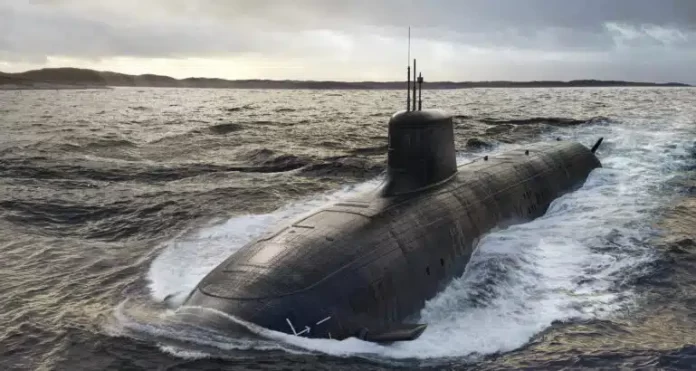
This new submarine—the SSN- AUKUS—will also replace the UK’s existing Astute-class SSN fleet when it leaves service and is expected to be delivered to the Royal Navy from the late 2030s. Pillar 2 will see the trilateral partnership collaborate on the development of advanced technologies including hypersonics and AI.

AUKUS promises specific strategic advantages for the partner nations: improved deterrence, closer relationships with allies, and accelerated technological advancement. Despite the profound geopolitical shifts which have taken place since AUKUS was announced in 2021, we find that its promise remains valid and the rationale underpinning the agreement still holds.

However, our inquiry has revealed shortcomings and failings in the delivery of AUKUS which threaten to prevent that promise becoming a reality. In the UK, political leadership—essential to secure the success of a programme of AUKUS’ length, cost, and complexity—has faded. We call on the Prime Minister to take a more visible role in promoting and driving forward AUKUS to counter the political drift that could see it derailed.

Public support will be needed to maintain the political capital to deliver AUKUS over several electoral cycles, but public awareness and understanding of the programme is limited. We call for the Ministry of Defence (MOD) to better engage Members of Parliament in the effort to communicate the benefits of AUKUS at constituency level.

The expansion of the UK’s SSN fleet will require significant and sustained funding to regenerate a depleted submarine industrial base. Timely investment in upgrading the BAE Systems shipyard at Barrow where SSN-AUKUS will be built will be crucial. This has already slipped: any further failures could lead to delay in delivering SSN-AUKUS with serious consequences both for UK national security and for credibility with AUKUS partners. Efforts to regenerate Barrow to attract and maintain the workforce required to deliver SSN-AUKUS must be properly funded.

The Government must work urgently with the US and Australia to address barriers to workforce movement across the trilateral. Failure to act now risks bottlenecks as work on SSN-AUKUS intensifies and could lead to key milestones being missed: we call for an “AUKUS visa” to be considered to address this issue.

Fulfilling the UK’s commitment under AUKUS to increase SSN visits to Australia has already placed severe pressure on an overstretched Royal Navy. Infrastructure upgrades at submarine maintenance facilities in Plymouth and on the Clyde must be completed at pace to relieve pressure on the existing fleet and prepare for SSN-AUKUS; wider investment in Plymouth to support the increased workforce requirement must also be prioritised.

For Australia, AUKUS is an unprecedented undertaking to be delivered to ambitious timescales. The UK will need to work closely with Australia at both industry and government level to share expertise and support Australia in meeting its own milestones.

With Australia expected to acquire 3–5 Virginia-class SSNs from the US prior to SSN-AUKUS entering service, low Virginia production rates in the US are a matter of concern. Although efforts are being made to address this, it has been identified as a potential risk to Pillar 1.

We welcome the far-reaching reforms providing exemptions to export control regimes between AUKUS partners. After a disappointingly slow start, the Government must now act to maximise the use of these exemptions by UK companies, particularly SMEs, and ensure that the relevant approvals are granted swiftly.

Cross-trilateral progress on advanced technology under Pillar 2 has been inadequate and it is rapidly losing credibility; priority programmes must be agreed and delivered at pace if this is to be reversed. Pillar 2 taps into existing UK strengths and offers clear opportunities to deliver defence- related prosperity, but Whitehall needs to take a more joined-up approach if its potential is to be maximised. Plans to expand Pillar 2 to include additional partner nations must, regrettably, be put on hold until tangible progress has been made at trilateral level.

Failure to meet our AUKUS commitments would have severe implications both for the UK’s defence and security, and for the UK’s standing with its trilateral partners. With progress in some areas having already fallen short, the Government must do more—and do it faster—if it is to avoid those consequences and deliver on the promise that this seminal partnership affords.

The full report is here.

LEAVE A REPLY

Please enter your comment!
Please enter your name here