US Navy seeks funds for missile stocks

0
557

The latest Pentagon budget request calls for massive purchase increases of two key missiles the Navy has relied on for the U.S.-Israeli war with Iran and the U.S. conflict with the Houthis in the Red Sea, US Naval Institute News reports.

Specifically, the new Fiscal Year 2027 budget is seeking a 1,200 percent increase in the number of Tomahawk Land Attack Missiles and a 225 percent increase in Standard Missile 6s over what Congress appropriated money for in Fiscal Year 2026.

The funding is split between a traditional budget request and reconciliation funding. Both of those weapons are primary munitions for the guided-missile destroyers that have been the backbone of the Navy’s current war effort in the Middle East.

The Navy is asking Congress for 785 additional Tomahawk Land Attack Missiles for $3 billion, a more than 1,200 percent increase from the 55 TLAMs Congress funded for $258 million in FY 2026, according to Pentagon budget documents released on Friday. Likewise, the Navy is asking for 540 SM-6s for $4.33 billion, up from 166 SM-6s for $1.41 billion in 2026. The Navy is also asking for 494 AIM-120 Advanced Medium-Range Air-to-Air Missiles at $804 million – a major 370 percent increase over 2026 – and 141 MK-48 heavyweight torpedoes for $571 million.

The majority of the Tomahawk and SM-6s would be part of a second federal funding reconciliation bill that could allow the Navy to spread the procurement out over several years. This is the second consecutive budget cycle the Trump administration is turning to reconciliation to supplement its annual budget request, splitting funding and procurement quantities across the two legislative vehicles.

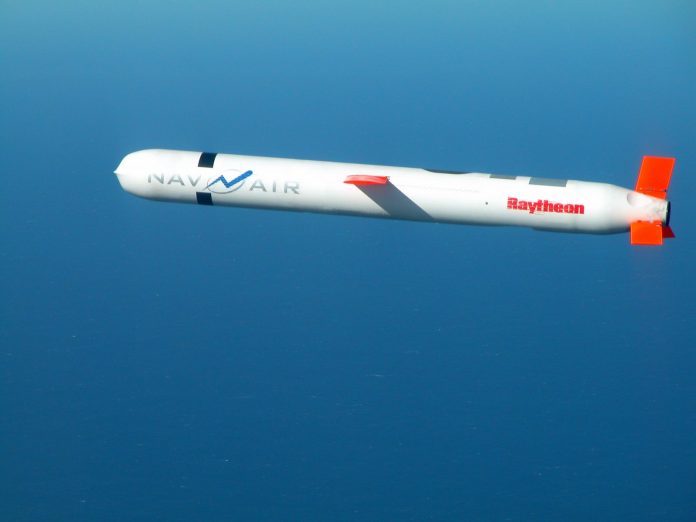
Tomahawks are precision missiles with a range of more than 1,000 nautical miles. The missiles have been fielded from the MK-41 vertical launch systems on Arleigh Burke guided-missile destroyers, nuclear attack submarines and Ohio-class guided-missile submarines.

SM-6s are multi-use missiles that can attack air, drone and cruise missiles. The munitions have been the primary defensive weapons of the Navy’s destroyer fleet.

The munitions request comes amid concerns over the recent U.S. expenditure of these weapons in the Middle East conflict and how the decreased capacity could leave the military less equipped to counter China in the Pacific. Both the SM-6s and Tomahwaks are some of the most expensive and difficult to build munitions in the Pentagon’s arsenal.

As of late last month, the Navy had fired 850 Tomahawks as part of the ongoing Operation Epic Fury, according to the Center for Strategic and International Studies. That’s the highest number of Tomahawks launched in any individual conflict going back to the first Gulf War in 1991, according to the think tank.

Todd Harrison, a senior fellow focused on defense spending with the American Enterprise Institute, said the U.S. “absolutely” needs to buy these quantities of the two missile systems, but there’s “not a chance” the industrial base can currently support that procurement scheme.

Given that the Navy wants to buy most of the Tomahawks and SM-6s as part of the reconciliation portion of the funding request, Harrison said it’s possible the Trump administration wants to spread the buy out across several years, which is more achievable.

“So they’re essentially pre-funding acquisitions of munitions,” he told USNI News. “They’re frontloading the money, and then we’ll spend it out more slowly than is typical.”

For the Tomahawks, the Navy wants to buy 58 missiles in FY 2027 and 727 in reconciliation. For the SM-6s, the Navy wants to purchase 106 missiles in FY 2027 and 434 in reconciliation.

Locking in the large munitions purchase in reconciliation gives the companies that build the platforms a longer outlook, so they can invest in the workforce and infrastructure needed to support the government’s order, Harrison said.

“The key is it doesn’t mean you’re going to get them any sooner,” he told USNI News.

SM-6s in the past have taken 36 months or more to build largely due to the availability of solid rocket motors. The Navy has expanded the industrial base to improve the rate of production for the missiles. Likewise, the Tomahawk supply chain is filled with single-source vendors and can take two-years or more of lead time to start production on them, according to a 2023 study from the Center for Strategic International Studies.

“If the plan all along is, we’re going to frontload it, we’re going to go to industry, we’re going to sign big contracts and then give them the time they need to execute, but then they’ve got an assured order, then that works,” Harrison said of the proposal. “If the expectation was that no, we can get these delivered in the near term, that’s just not going to happen.”

LEAVE A REPLY

Please enter your comment!
Please enter your name here