The relationship between the two largest Commonwealth navies in the Indian Ocean region has been one of unrealised potential. The then Captain Jonathan Mead explored in Headmark 139 (March 2011) this increasingly important naval relationship.
Pavlova and Vindaloo: Natural Partners
Something strange is occurring in our neighbourhood. For over 100 years, the dominant local power in Asia has, for good or for bad, been led by an authoritarian government. But change is afoot. Incredible India, a vibrant democratic state, espousing the principles of pluralism, freedom of speech and the rule of law, is turning the age old notion of authoritarianism and uni-polarity on its head. Clearly, this is good news for Australia. But it’s only good news if we are prepared to invest the resources into nurturing Indo-Australian strategic relations. Something we have historically been reticent to commit to.
This article aims to tease out some of the more subtle geo-political movements which are taking place in the Asian theatre. In broad terms, India’s rise as a global player challenges the traditional concept that has seen, for the past century, the Asian region under the influence of a lone non-democratic hegemon (Japan pre-World War II, the Soviet Union post-World War II, China 1990-present). This is not to deny the quintessential ‘balancing’ role played by Britain and the US throughout the 20th Century. But the point is, these actors were extra-regional powers.
Coupled with India’s rise, we are witnessing the slow decay of states that buttress the Indian Ocean – many of these states are slowly descending into the morass of anarchy. On the back of this spectacle Canberra’s and New Delhi’s strategic trajectories will progressively intersect.
History in the Making
We Australians are a suspicious lot. And this suspicion dates back to the earliest days of colonisation. Historically, our distance from Mother England and the vast expanses of ocean to Australia’s east and west were viewed as a ‘curse’, giving rise to a phenomenon of strategic loneliness in the Antipodes. We never truly understood that instead of the ocean acting as an invasion route, the bodies of water surrounding us could act as a bridgehead.
To be fair, when it came to identifying a threat, Australia was indiscriminate. During the first hundred years of settlement, we feared invasion from the French, Germans, and Indonesians. The turn of a new century did not bring any noticeable change to Australian paranoia. Indeed, the Great War only served to accentuate our anxieties. After the Versailles Treaty, the enduring thought of war was displaced by a deep-seated conviction and universal hope that global peace would prevail. Buoyed by that conviction, many countries opted to de-militarise and disengage. Some countries, however, elected to pursue a more military path. In our own backyard, Japanese imperial rule eventually manifested itself in uber-nationalism and military adventurism.
After World War II, the pace of economic and strategic change was both unexpected and unprecedented. But one thing did not change – that of regional hegemony, and in the Asian theatre, an autocratic Japan was usurped by a Stalinist USSR. For the next 45 years, Asia, and its surrounding waters were under the influence of Soviet maritime reach. As a counter and by way of ‘balancing’ and ‘containing’ Soviet irredentism, America reacted by establishing a strong naval presence in the region.
Fast forward to 1991. For sure no one could have predicted the tumultuous events which would lead to the fall of the Soviet Empire – but fall the Soviets did. Again, history was to repeat itself, and as one Asian power fell another emerged. Inspired by Deng’s Four Modernisations and fuelled by a free market economy, Communist China stepped up to the plate to fill the strategic vacuum in Asia.
Throughout the ages, Australian security anxieties crossed political, economic, cultural and ideological boundaries. Notwithstanding the eclectic nature of countries which we viewed as a threat, each was defined by one common trait – an absence of liberal democracy. On this point, there is substantial literature that suggests that relations between democratic and non-democratic countries will invariably be strained and certainly never reach the heights of those between like minded (and governed) states. Commonly referred to as Democratic Peace Theory (DPT), the argument runs along the following lines: ‘the apparent absence of war between liberal states, whether adjacent or not for almost 200 years has significance.’ States that abide by the principles of liberal democracy tend to gravitate together, and over time a certain chemistry develops. All of this would be academic except for the fact that India has burst onto the strategic stage and is challenging the traditional dogma of uni-polarity and authoritarianism.
In case there is any doubt, let’s be clear about India’s potential. By 2028 its population will surpass China, peaking at 1.6 billion in 2040. In 2010, the average age of the Indian citizen will be 25 years, whilst China’s will be 34.2 years. Without getting into too detailed analysis, some broad generalisations can be made. The age differential provides the Indian economy with an enormous advantage. Younger people are generally more productive and in turn less of a drain on the government’s social services purse. The theory goes that the older a person the more of a liability they become to the state. Whilst a nine year difference between India and China may appear of little consequence, when this figure is extrapolated out to cover 1.1 billion people then the changes and benefits are immense.
Economically, India is projected to be the third largest in absolute terms by 2050. And with a standing army of 1.3 million men (and another 1.3 million in the paramilitary), an indigenous nuclear submarine undergoing sea trials, three aircraft carriers in various stages of build and underpinned by a credible nuclear deterrent which includes a nuclear SLBM (codenamed Sangrika), New Delhi can rightly claim its place as an Asian super-power. More to the point, the Indian Navy will be a potent maritime force capable of blue water projection and ‘sea control in selected areas of the Indian Ocean’.
The Indian Ocean – Asia’s new Silk Route
The Indian Ocean is different to any other large body of water. Unlike its Pacific and Atlantic cousins which stretch from the South to the North Pole and are geographically unconstrained, the Indian Ocean is hemmed in by the mighty Himalayan mountain range, the Indian subcontinent and the wider Asian land mass. These topographical features give rise to a unique weather pattern resulting in rhythmic winds blowing across the Indian Ocean. When finally the secrets of the monsoonal wind were unraveled by the Greek navigator Hippalos in the first century AD, the gulf between Europe, Asia and Australia was suddenly narrowed.
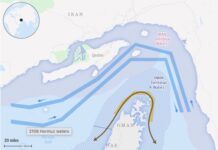
Nowadays, strategic wisdom dictates that distance no longer matters. What has not changed is our reliance on the Indian Ocean to transport vital commodities. In that context, oil has replaced spices as the lifeblood of nations and the SLOCs stretching from Hormuz to Malacca have become the modern day Silk Route.
What makes this situation all the more complex is the fragility of the Indian Ocean region (IOR). Of late this region has achieved notoriety for all the wrong reasons. Foreign Policy’s 2010 index of failed states has again determined that the vast majority of critical, in danger and borderline states are those that lie on the periphery of the IOR. Somalia, Pakistan, Myanmar, the entire east African seaboard, and segments of South and Southeast Asia are all singled out for specific mention – it’s a gloomy but all too familiar story. And here lies the rub: the world’s most important waterway is guarded by states judged least competent of doing so. In many cases, these same states are not only incapable of contributing to regional maritime security, but are also incapable of policing their own territorial waters; the east African archipelago a case in point. The concept of maritime security in many parts of the IOR is problematic. Poor governance is but one part of the problem. But also regional frameworks for naval cooperation and information exchange are lacking and bilateral sensitivities often manifest in cooperative-paralysis.
Of course, within this cornucopia of sickly states there are two exceptions, Australia and India – both militarily robust, both democratic and both with a clear interest in the long-term stability of an otherwise very fragile region.
2+2≠4
A long time ago, Australia was connected to the Asian land mass. Around 75,000 BCE, ancestors of the first Australians migrated from South and Southeast Asia to the Great Southern Land. Genetically these early Australians were at one with their Indian Ocean neighbours. But by a quirk of tectonic and climatic fate, the Australian continent drifted away from Asia’s terra firma. And drift away we did – not only physically but psychologically. Ever since that time, it would be fair to say that Australia and India have been in each other’s blind spot. To think otherwise would be, well, naive. On this point, we would do well to remember that strategic engagement is an abstract science (unlike mathematics, whereby 2+2=4) and states, acting in a global anarchical society, will often act irrationally even if they are rational actors.
A review of Australia’s interaction with India since independence reads like a Shakespearean tragedy. In the beginning it all started with the best of intentions. As Partition threatened to socially balkanise India in 1947, Australia quickly developed warm relations with its Indian Ocean neighbour. Canberra’s enthusiastic approach was rewarded when two years later Australia was the only Western country invited to attend the ‘Eighteen Nations Conference on Indonesia’ in New Delhi. India’s Prime Minister Nehru noted that: ‘here we are representatives of the free nations of Asia and our friends from Australia.’
The development of the Colombo Plan further entrenched Australia’s position in India, and this was met with strong approval by New Delhi. Unfortunately, from that point on, relations between the two countries deteriorated. Partly this can be explained by India’s adherence to non-alignment and Australia’s entrenchment in an alliance matrix. But the divide between the two countries was more complex than simple differences over ideology. Australia’s security focus was driven by the fact that our major cities, political capital, economic/financial backbone and population base were all positioned on the eastern seaboard. Rightly or wrongly, this forced us down a ‘Pacific Ocean’ line of thinking, in much the same way that America’s orientation, (with Washington and New York situated to the east) was toward the Atlantic. Demographics (and economics) were key features which shaped our thinking.
Not surprisingly, India did not rate highly in our list of strategic engagement priorities. Through necessity, Australia did dip its toe into the Indian Ocean in the early 1980s by way of naval deployments, but this adventure drove a further wedge between Canberra and New Delhi. The Soviet empire’s sudden collapse in 1991 heralded a new wave of strategic thinking. Some authors argued it was ‘the end of History, others waxed over a looming clash between civilizations, but the more things changed in our own backyard the more they stayed the same. Even before the Soviet exit, another authoritarian power (China) sought to fill the strategic void. Despite the Soviet demise – maybe even because of it – Australia and India failed to connect.
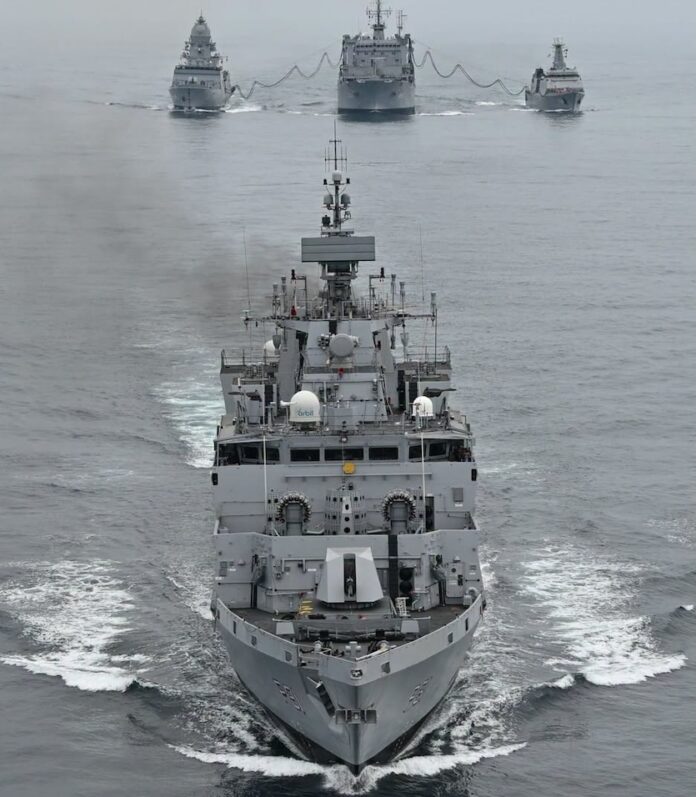
In 1998 it all went horribly wrong. India’s decision to cross the Rubicon and undertake five nuclear tests in the Rajasthan desert, and Australia’s outspoken damnation bitterly soured strategic relations between the two; once again the relationship had been turned upside down. That said, change for the better did occur and in the dawn of the new millennium an upswing in naval engagement took place. For the past five years, the winds of strategic change have blown hard, led primarily by a robust naval relationship. Frequent visits by CN and DCN and the establishment of formal Staff Talks, naval exercises and exchange programs have underpinned the broader strategic relationship. It would seem reasonable therefore, that as India continues to Look East and Australia Looks West, our strategic trajectories will further intersect.
On this front, there is cause for optimism. By way of example, the Maritime Doctrines of both India and Australia are strikingly similar. More recently, the Indian Navy, strongly supported by the RAN, established the Indian Ocean Naval Symposium (IONS) in 2009, the aim of which was ‘to sustain a regionally relevant, consultative forum within which the navies of the littoral States of the Indian Ocean Region can discuss issues that bear upon maritime security’. Similar in makeup to WPNS, the success or otherwise of IONS will largely depend upon the strength of RAN-IN bilateral cooperation. Whether it is via the medium of IONS or whether we choose a different mechanism to promote regional maritime security, one thing is clear, the IOR is in desperate need of strong leadership.
How we (Australia and India) provide this leadership is a telling question. Our current level of naval engagement has probably reached a glass ceiling and the next bold move would see us embark upon a sophisticated bi (or multi) lateral exercise program. Both navies still harbour an element of uncertainty about each other, and only through concerted exercising can we hope to add ballast to the trust equation. Ultimately, and in the final demonstration of naval cooperation, we should aim for both navies to work together in an operational environment. The fact that RAN and IN units pass each other in the night off the Horn of Africa, whilst undertaken identical tasking, is illustrative of the strategic distance that still exists between the two countries.
The path ahead
Ever since Federation, Australia has been forced to ‘balance’ against the regional authoritarian power, but with the rise of India, we are faced with the exquisite alternative of being able to ‘bandwagon’ with a local regional power. However, the road ahead will not be an easy one. The past four years have seen a number of issues threaten to bankrupt the broader political relationship. In 2007 it was the Haneef affair, 12 months later Harbajhan Singh and Australian all rounder Andrew Symonds clashed on the centre pitch of the SCG, in 2009 it was the sordid harassment and violence of Indian students in Melbourne, and then it was Australasia’s nomination of ex-Prime Minister Howard to the ICC council. That each event occurred on Australian soil is a telling point. Often lost in the polemic of mutual misunderstanding, events affecting the two countries have been cast into sharper relief than what the facts justified.
This is a story without an end. The Indian Ocean and India will forever remain a geographic reality. How we deal with this reality will largely shape the future prosperity of Australia and its people. As Gandhi once remarked, ‘the future depends on what we do in the present’.
About the Author
Vice Admiral Jonathan Mead AO RAN had recently served as the Australian Defence Advisor in New Dehli when he wrote this article. His seagoing and shore commands were HMAS Parramatta (2005-07), Combined Task Group 150 (2011-12), Head Navy Capability (2011-12), Fleet Command (2018-20), Chief Joint Capabilities (2020-21), Nuclear Powered Submarine Task Force (2021-23) and Australian Submarine Agency (2023-).