In Headmark 133 published in 2009, the then Captain Peter Scott wrote about the key considerations to be taken into account when thinking about the replacement to the Collins class. To say there have been many twists and turns since then is an understatement. Yet there is much in this article that remains germane as the RAN prepares to join the nuclear powered submarine ‘club’.
Same, Same but Different; A Personal Perspective on the Requirements for a Future Submarine
The article briefly discusses the characteristics and advantages which define the submarine as a preeminent naval weapon system, before leading in to an exploration of the important distinction between what we might want the future submarine to be and what we actually need it to do. The implications of those needs, or requirements, will be addressed, as will any constraints that they impose. The article highlights the enduring features of submarines as they are relevant to Australia’s circumstances, and identifies achievement in the areas of operational effectiveness and the human dimension as the principle determinants of success.
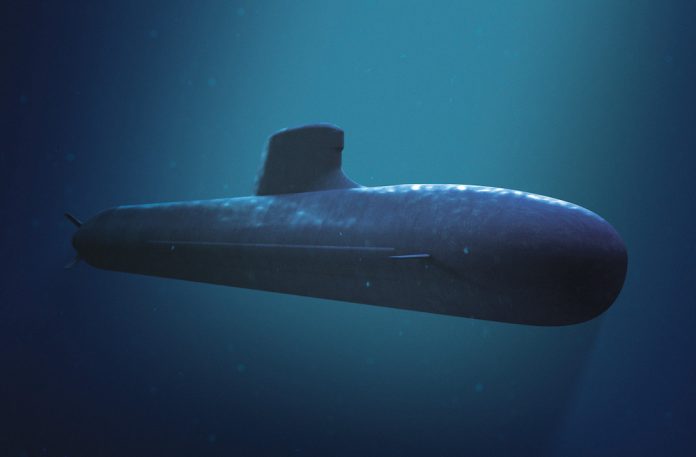
Let me start by describing for you, or at least reminding those of you who have lived this and known it, just what an Australian submarine can be. An Australian submarine – properly built, maintained, supported and armed; fully crewed and worked up, well led and appropriately tasked, is a superb example of naval weaponry.
An Australian submarine can train and exercise our fleet, test the skill and expertise of our allies, it can represent us in multi-national exercises and in the harbours of our neighbours. Big Deal! What else can it do?
An Australian submarine, underway and dived, can also conduct surveillance, reconnoiter, and collect intelligence against an adversary. It can deter an adversary from action against our interests; consume his thoughts, energy and resources; or deny him the sea and strike him down!
Both a symbol and a tool of national will, what I am describing is something much more than a pressure hull with a suite of sensors and weapons. It is a living, breathing and vibrant thing; a creature of the sea, quite literally sinewy and steely at once. I am describing that combination of man and machine that coalesce to form a sensitive, cognitive, adaptive, responsive and tremendously powerful instrument; that can prowl the ocean domains unsuspected, undetected and unmolested. Ensign furled, but unequivocally Australian.
The Important Distinction – Wants and Needs
You may expect that in delivering my personal thoughts on the requirements of a future submarine, I will express an opinion on those specific capabilities and technologies that we will most need in the future. Thankfully, because they are important subjects, there are many others who will address these points during the conference. But I wish to take a different approach, and discuss those enduring characteristics and associated advantages of Australian submarines which define them as a pre-eminent naval weapon system, and explore the important distinction between what we might want the future submarine to be and what we actually need it to do.
Enduring Characteristic One – Submarines are crewed by People
I know what the future submarine will look like! It will look like just like AE1 and AE2. It will be remarkably similar to the first Oxley and Otway. It will bear an uncanny resemblance to the Oberons and to the Collins Class as well. Indeed, in many respects, it will look like every other Australian submarine class in our history.
The most glaringly obvious similarity is that the future submarine will be crewed by Australian officers and sailors. People. The muscle, sinew and bone, the lifeblood, nerves and brain of a submarine. No submarine is a weapon of war without a skilled and motivated crew. Like every submariner before them, the people who man the future submarine will endeavour to know and understand their mission, their environment, their platform, including sensors and weapons, and, of course, their adversary.
In a warfighting sense, the submariners are the submarine. Well equipped, well trained and well led, they are capable of remarkable feats. As warfighters, they continually amaze me and exceed my expectations. But it’s worth recognising that the submariners of the future will be no more or less intelligent, no more or less diligent, no more or less capable or even good looking than the submariners of yesterday and today!
The primacy of the people factor extends beyond the billeted crews; there’s more to a submarine force than the just the dolphin wearers. It extends equally to the design authorities, the workshops, the schools and headquarters staff that will build, maintain and support the force at sea and strive to hold onto an edge over the life of the class. The first requirement to achieve the submarine of which we are capable, is that every consideration and every related decision must take the people into account.
Enduring Characteristic Two – the environment invokes Complexity
A reasonable starting point is to examine the most fundamental or broadest overall requirements of a future submarine. In other words, what will we demand of our submarines in the future? Regardless of the mission, notwithstanding the task, we will require that they can contend with the considerable demands of the sea, and of the depths. We will require that they can sustain human life in complete isolation from material support or replenishment. We will require that they can generate the situational awareness necessary to so dominate the information environment that they can maintain tactical advantage and achieve strategic, operational and tactical effects, in whatever role they have been tasked. We will require that they achieve all this across vast distances and over extended periods of time. No wonder then that, as with their predecessors, the future submarine will be comprised of a highly technical platform and systems, with an equally complex array of sensors and weapons. Technical complexity, then, is the second enduring characteristic which will feature in the future submarine. The point that I would like to stress here, however, is that this is by necessity, not by desire. And nor should it be by design. I am not a Luddite; I am a mariner, and a submariner. And I tell you, technical complexity is not an objective! It is borne solely of the demands of the environment in which the submarine operates.
We might want a submarine that is at the cutting edge of technological advancement and innovation in every field, but we need a submarine that can be inhabited, understood and wielded by the Ship’s Company. There is no glory or prestige in creating the world’s most complex submarine and designing or engineering complexity into our submarines doesn’t prove we are clever – designing simplicity into our submarines proves we are clever!!
Recognising the inevitable levels of technical complexity, but recalling the fundamental fact that people will need to live in, operate and exploit the advantages of the platform in the most demanding conditions, we actually need to embrace simplicity, wherever we can find it. In doing so, we will give the crew an opportunity to fight the enemy with the submarine; rather than having to fight the sea, the submarine and the enemy. Naval effectiveness, not technical complexity, is the real measure of success.
Enduring Characteristic Three – the environment demands Reliability
Complexity is not an objective for our future submarine, but reliability is an absolute necessity. A recent advertisement for Omega boasted the technological advancements that had been achieved over decades of Olympic competition. But the accompanying article made the point that these advancements had never been introduced at the games themselves and stated “the Olympics are not the time for the very latest in equipment so much as the absolutely proven”.
There is a lesson for us here and there are two aspects to it. In a submarine at sea, we want the latest, we need the proven. Why is this so? Because application of reliable technology in reliable equipments in a reliable platform is a fundamental necessity of safe, sustained submarine operations. In doing, so we become! In setting to sea, and diving, so we become submariners. In sailing Australian and regional waters, so we become Australian submariners.
There is no doubt that you can teach someone to fly in a simulator, but you cannot make him an airman. Similarly, you can instruct a sailor in the classroom alongside on the art of good submarine practice ad nauseam, but he will not know and understand his submarine, he will not know and understand the sea or the environment, and will not be able to contend with an adversary who does. Without the ability to reliably and consistently proceed to sea and operate the submarine, no defence force can maintain and sustain a professional high quality submarine force.
The second aspect to reliability is that when a submarine commanding officer and crew are absorbed with fighting their own submarine because they are overwhelmed by defects, inconsistencies and uncertainties onboard, they are again denied the capacity to know and understand what really matters; their mission, their environment, and their adversary. Design concepts for any future naval vessel which seek to maximise the application of new and unproven technology for its own sake, without due regard for the crew capacity or risks to schedule and reliable performance at sea, will fail to produce the forces that we need. Reliability is an objective!
Enduring Characteristic Four – Submarines are reliant on Stealth
It is an entirely reasonable assumption that the future submarines will, at some time in their service, be aggressively targeted by an enemy. To presume otherwise or to let this slip from our consciousness would be negligent in the extreme. Bearing this in mind, a fourth enduring characteristic is that ultimate tenet of submarine operations – stealth. Preservation of stealth fundamentally shapes the way a submarine operates and is operated. And again, regardless of the actual mission, it is inevitably the exploitation of stealth which gives the submarine its advantage and permits the desired military effect. However, the pre-eminence of stealth is not confined to noise quieting technologies built into the platform and astute tactical handling of the submarine. Nor does the battle to preserve stealth start when a submarine sails on patrol sometime in the 2020’s. The battle to preserve stealth, the backbone of the submarine’s tactical advantage, needs to start now.
Mere mortals as we are, having set out to create the future submarine, we will want to boast of our successes. We will want to build the best submarine in the world and tell the world about it, step by step. What we actually need to do is to protect the capabilities of the submarine which can give the force its advantage and make it a world beater on the days it really matters. Equally we need to protect the vulnerabilities that could render the submarines impotent through circumvention or, worse still, lead to their defeat or destruction by a calculating enemy at sea. The actual capabilities and limitations of the future submarine need to be a complete mystery to any potential adversary, until it is unleashed upon him. The consequences of getting this wrong are likely to be measured in terms of both blood and treasure, and may yet be borne out with the Collins Class.
Enduring Characteristic Five – Force Continuity
A single submarine is not a submarine force and a submarine force is more than a collection of hulls. It is the coalescence and synthesis of platforms, weapons and sensors with a body of knowledge, skill and experience. It takes years, perhaps decades to build a fully functional and professional submarine force. Once born, in the absence of enemy action or attrition through some other cause, it can be continually re-generated. However, just as a hull can degrade over time or in the absence of proper care and attention, so too can the softer elements of a submarine force. People get rusty quicker than steel, and the consequences of a hole in the experience base of a crew can be just as dire as a hole in the hull.
It follows that the fifth enduring requirement – I do hesitate to describe it as a characteristic of Australian submarines – is continuity of the force. We need to achieve continual re-generation of the submarine force, regardless of which platform is being sailed, and avoid giving birth to a new leviathan every thirty years. We might want to spend years studying the problem to death, but recognize that the timely introduction into service of the future submarine will be absolutely critical to the retention of perishable skills and levels of experience within the force. Continuity is also critical to avoid exposure to the strategic risk of opening a gap in capability with a subsequent erosion of deterrent effect which might be exploited, either politically or militarily, by an adversary.
It is worth mentioning here that we quite properly want Australian industry involvement; for reasons of finance, employment, skill and technology transfer and advancement, and strategic control. To achieve continuity of the force, we need a maritime industry which is structured to support the Navy; an industry which understands and is motivated by the fact that we are in the business of generating sea power to ensure the security of the nation.
This brief article has sought to highlight the enduring features of submarines as they are relevant to Australia’s circumstances, and identify achievement in the areas of operational effectiveness and the human dimension as the principle determinants of success. It has drawn your attention to the need to: focus on achieving a streamlined introduction into service; protect the capabilities and limitations of the force to preserve stealth; demand absolute reliability; acknowledge complexity, but honour simplicity; and remember always that it’s not the submarine, but the people who do the warfighting. Regardless of the eventual specifications and particulars of the future submarine, I am convinced that if we meet with success in each of these, we will once again have a boat and a force that rightly demands the respect of ally and enemy alike.
About the Author
Commodore Peter Scott CSC RAN (retired) joined the RAN in 1983 and became a submariner. He served in 20 different command and leadership appointments over 34 years. They included command of the submarines HMAS Collins and HMAS Dechaineux and operational deployments to Iraq, the Persian Gulf and Afghanistan. Shore appointments included Director Submarine Operations, Chief of Staff to the Vice Chief of the Defence Force, Deputy Commodore Flotillas and the Director General Submarine Capability. He is the Vice President of the Submarine Institute of Australia and author of the Running Deep published in 2023.