China’s cutting-edge technology

0
49

By Franciszek Kopczewski*

In January and February 2025, Chinese-operated ships Shunxing 39 and Hong Tai 58 committed similar sabotage tactics. Both ships dragged their anchors for miles, intentionally targeting and cutting the critical undersea cables that connect Taiwan to the global internet. (From: The Center for International Maritime Security.)

This was not an isolated incident of maritime negligence. These vessels were employing a refined gray zone harassment tactic first observed in February 2023, when Chinese ships severed the two main arteries leading to the Matsu Islands. That 2023 incident resulted in a digital blackout for 50 days, paralyzing the lives of 13,000 residents and stripping the island of its ability to communicate with the central government.

Russia and China routinely weaponize commercial shipping to hide behind the veneer of plausible deniability and evade accountability from international law. China’s primary tool in this domain is the People’s Armed Forces Maritime Militia (PAFMM). These fishing boats are civilian only on paper. In reality, they operate as a subsidiary arm of the People’s Liberation Army (PLA), capable of conducting swarming operations that overwhelm coast guard capacities. In the Baltic Sea, the Russian Federation employs a similar modus operandi through its shadow fleet – a disorganized but coordinated mass of tankers operating under flags of convenience and ignoring international safety standards. Most recently, the Russian tanker Eagle S was identified as the primary suspect in the cutting of the Estlink 2 cable. Every incident follows the same script: Anchors drag across cables, the ships in question claim innocent navigational error, while the timing and location of the damage suggest coordinated intent to harm. Democratic regimes, bound by the rule of law and the aiming to avoid escalation, consistently struggle with this malign activity.

The Mismatch of Traditional Hulls

The current maritime defense architecture relies on a binary choice that no longer fits the reality of the gray zone. On one hand, both the Baltic states and Taiwan possess gray hulls – commissioned ships of national navies like frigates and destroyers. While powerful, these assets are ill-suited for combating asymmetric sabotage. The persistent mismatch between conventional naval architecture and gray-zone provocation creates a state of strategic paralysis. Gray hulls are designed for high-intensity conflict, leaving commanders with a binary choice: passive observation or disproportionate kinetic escalation. Without intermediate force capabilities, a billion-dollar destroyer is not a deterrent, but a high-priced witness to institutional helplessness. Furthermore, maintaining gray hulls in a constant state of alert to shadow hundreds of potential saboteurs is economically unsustainable.

Meanwhile, national coast guards, or white hulls, operate under a regime of chronic mission saturation. Tasked with search-and-rescue, fisheries enforcement, and border security, these fleets lack the hull numbers required for persistent, point-to-point protection of thousands of kilometers of linear seabed infrastructure. Expanding these organizations to meet the surveillance requirements of a contested EEZ is not merely a budgetary hurdle but a logistical impossibility; the procurement cycles and manpower demands for a fleet capable of providing a credible presence over every vulnerable cable segment would cripple national maritime budgets. This creates a permanent surveillance deficit that cannot be solved by building more manned platforms, but only by shifting the burden to autonomous, scalable systems.

Since traditional hulls cannot secure maritime infrastructure, a new category of sea power is required. With the rapid development of robotics and drone technologies, Taiwan and the Baltic states must pivot toward an undersea asymmetric buffer. While the Danes now monitor infrastructure with surface drones and Poland’s WB Group develops UUV for the same purpose, these concepts currently focus on ISR (Intelligence, Surveillance, and Reconnaissance). However, eyes alone will not stop this aggression. Passive monitoring only provides a front-row seat to the destruction of one’s sovereignty. States must move beyond deterrence by detection. The gap in defense is the lack of Intermediate Force Capabilities (IFC). Intermediate Force Capabilities are defined as tools and effects designed to bridge the gap between presence and lethal force. They provide commanders with scalable options to impede, disable, or neutralize targets without causing permanent damage or loss of life. In the context of seabed infrastructure, IFCs represent the only viable path out of the binary trap of doing nothing versus starting a war.

From Monitoring to Active Occlusion

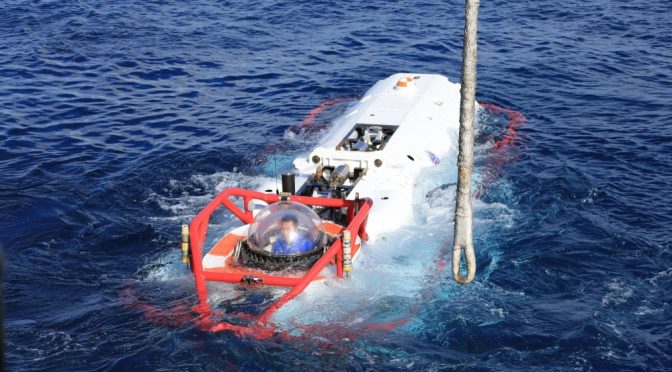
To achieve true security, maritime operational posture must transition from passive detection to active non-lethal intervention. Taiwan’s Submarine Cable Automatic Warning System(SAWS) is a world-class monitoring tool, but it lacks a physical means by which to stop the crime. The answer lies in dual-use drones: platforms capable of ISR and snaring. The breakthrough approach here relies on what the U.S. Department of Defense officially categorizes as occlusion technology, a developing class of Non-Lethal Weapons (NLW) designed to physically obstruct a vessel’s propellers in a reversible but effective manner.

In the context of our proposed system, this translates to active propulsion occlusion: the mechanical incapacitation of a vessel’s drive system through the deployment of aramid snares. Unlike traditional naval weapons that target the hull and risk lethal escalation, this capability focuses exclusively on the propulsion train, rendering the target immobile without causing kinetic damage or environmental hazards.

To understand the viability of this mechanism, it is essential to look at material science. Aramid fibers, most commonly known by the commercial brand name Kevlar, are a class of synthetic polymers characterized by extraordinary tensile strength, impact absorption, and high thermal resistance. While vessels occasionally experience accidental propeller entanglements with standard maritime ropes or discarded fishing gear made of polyethylene and nylon, these conventional plastics are suboptimal for intentional occlusion. Under the massive torque and friction generated by a commercial ship’s drive shaft, standard ropes typically melt or snap. Conversely, steel cables could withstand the friction but are far too heavy to be deployed by compact, autonomous drones.

Aramid fibers offer a unique asymmetric advantage: they are exceptionally lightweight for drone payloads, yet they refuse to yield, stretch, or melt under extreme friction. When deployed into the water column, these snares aggressively bind the spinning propeller shaft, safely stalling the engine and rendering the target immobile without causing kinetic damage or environmental hazards. This non-lethal entanglement forces a critical tactical pause. It immobilizes the ship without harming the crew, giving white hulls the time needed to arrive, board, and facilitate legal prosecution.

The Legal Frontier: From Passive Penalization to Active Prevention

This initiative transcends mere tactical innovation; it represents a fundamental legal necessity aimed at closing a systemic gap in the Law of the Sea. While Article 113 of UNCLOS (United Nations Convention on the Law of the Sea) obliges states to ensure that the injury or breaking of a submarine cable is a punishable offense, the international community currently lacks the means to apprehend perpetrators red-handed during maritime disruptions. Snare drones address this by functioning as instruments of pre-emptive law enforcement, establishing a rigorous chain of custody and physical evidence that effectively strips aggressors of their plausible deniability.

To codify this shift, Taipei and the Baltic states should spearhead a ‘Cable Guardian Coalition’ – a framework defining autonomous snare drones as legitimate ‘Cable Cops’ for maritime law enforcement. This evolution of Article 113 mandates that state obligations move toward active prevention in the age of hybrid warfare, establishing a new customary norm: within critical infrastructure zones, the right of innocent passage terminates exactly where documented sabotage begins.

An Aramid Shield concept can serve as the operational framework for this defense, a technical architecture that integrates autonomous drone swarms with the aramid-based occlusion capabilities described above. To mitigate accusations of unlawful maritime interference, the shield must operate under a rigorous, three-tier behavioral protocol. When the SAWS system detects anomalous vessel behavior – such as anchor dragging within a designated cable corridor – the drone does not engage immediately. Instead, it first issues directional acoustic and radio warnings. Only after explicit instructions are ignored and a designated exclusion zone above the infrastructure is breached does the drone deploy its snares. This controlled escalation – a hallmark of Intermediate Force Capabilities (IFC) – shifts the burden of consequence onto the sabotaging captain, transforming immobilization from an arbitrary defensive act into a direct result of the aggressor’s own refusal to comply.

The ultimate legal safeguard must be a state-backed liability framework. In the event of a system error resulting in the immobilization of a vessel with a genuine mechanical failure, the host state would provide immediate compensation for vessel tie-up. This is a cold calculation: the cost of a one-time payout for a ship’s delay is a rounding error compared to the billions in losses generated by a digital blackout. By absorbing this risk, states like Taiwan or Poland signal to the international community that the integrity of the global data backbone is a non-negotiable priority, over-riding minor maritime traffic disputes.

The Economic Perspective: Prevention vs. Repair

The global fleet of Cable Repair Ships is dangerously limited. Currently, fewer than 60 such vessels exist worldwide, and they are often booked months in advance. A single sabotage event can lead to long queues and astronomical repair costs. The financial argument for autonomous intervention is compelling when viewed through the lens of a cost-exchange ratio. While a single sabotage event can incur repair costs exceeding $1 million-compounded by catastrophic, multi-billion dollar GDP losses during connectivity blackouts, a swarm of fifty mass-produced AUVs represents only a fraction of the price of a single naval frigate. Investing in prevention via a scalable drone architecture is not merely a tactical choice, but a long-term strategic necessity that offsets the cumulative expenses of a decade’s worth of potential repairs.

The strategic value of this autonomous persistence is best illustrated in high-density maritime chokepoints, such as Taiwan. The concentration of critical infrastructure in nodes like Tamsui and Fangshan, where the loss of a few square kilometers of seabed could effectively decapitate regional digital sovereignty – makes them ideal candidates for shore-based drone launchers. By establishing automated response zones at these specific Cable Landing Stations (CLS), defenders can achieve a level of weather-independent, zero-hour readiness that traditional naval patrols, often delayed by transit times from distant ports, cannot provide. Similar vulnerabilities exist in the Luzon Strait (Philippines) or the Okinawa prefecture (Japan), where the seabed is becoming a theater of gray-zone competition. This model of localized, high-readiness persistence is not a niche solution for the Pacific, but a blueprint for securing any critical maritime hub.

The Risks: Aramid Shield is Not a Silver Bullet

Every asymmetric solution carries its own set of risks. The Aramid Shield is no exception, and its success depends on managing three critical vulnerabilities. First is the risk of narrative inversion. Beijing and Moscow are masters of lawfare. Both countries will likely frame the non-lethal immobilization of their civilian vessels as a hostile act against international shipping. Even without drawing blood, the act of snaring a propeller can be weaponized in the media to cast the defender as the aggressor. To counter this, if possible every drone intervention should be backed by real-time video evidence to prove the vessel was engaged in sabotage.

Second is the escalation of escorts. If China perceives snare drones as a serious threat to its maritime militia, it may justify the deployment of armed naval escorts to protect its fishing fleet. This would raise the cost of intervention, forcing a direct confrontation between gray hulls – precisely the scenario IFC is designed to avoid.

Third is the technological cat-and-mouse game. The effectiveness of occlusion is not permanent. Adversaries will adapt by installing propeller cages, reinforced propulsion systems, or acoustic deterrents to jam AUV sensors.

Finally, attribution remains the core challenge. A snared vessel can still claim mechanical failure or randomness. Without a rapid-response white hull presence to board and inspect the ship immediately after it is immobilized, the physical evidence provided by the snare might be lost or dismissed in international courts. To avoid accusations of maritime harassment, the use of snare drones must be tied to a strict behavioral trigger. A vessel only loses its innocent passage status when its actions – such as unannounced anchoring or hovering over critical coordinates – violate standard maritime transit protocols.

Conclusion: The Aramid Shield

The global frontiers, from the Baltics to the First Island Chain are the new laboratories of asymmetric innovation. The synergy between frontline states, from Poland and Ukraine to Taiwan, Japan, and the Philippines must be industrial, not just political. By establishing a shared technological standard for modular mission payloads, these nations can build a scalable deterrent that great powers often overlook.

Policymakers must understand that infrastructure security is not a one-time investment but a constant operational struggle. There is an urgent need for a unified legal framework that recognizes AUVs as legitimate tools of maritime order. While the Silicon Shield protects Taiwan from a full-scale kinetic invasion, an “Aramid Shield” is required to prevent digital strangulation in the gray zone. Across the Indo-Pacific and Europe, the cost of inaction is too high; if critical cables are severed, the most advanced semiconductors will mean nothing if the data can never leave the factories. In the gray zone, silence is a signal of weakness, but a snare is a signal of resolve. The era of passive monitoring must end. The era of active undersea defense must begin.

*Franciszek Kopczewski is a geostrategic analyst specializing in asymmetric warfare. He is a guest contributor to international outlets including Eurasia Review and the Polish-based Układ Sił. He is currently pursuing a degree in International Relations at the Nicolaus Copernicus University (UMK) in Toruń, Poland, and completing an online certification in the Politics and Economics of International Energy at Sciences Po.

LEAVE A REPLY

Please enter your comment!
Please enter your name here