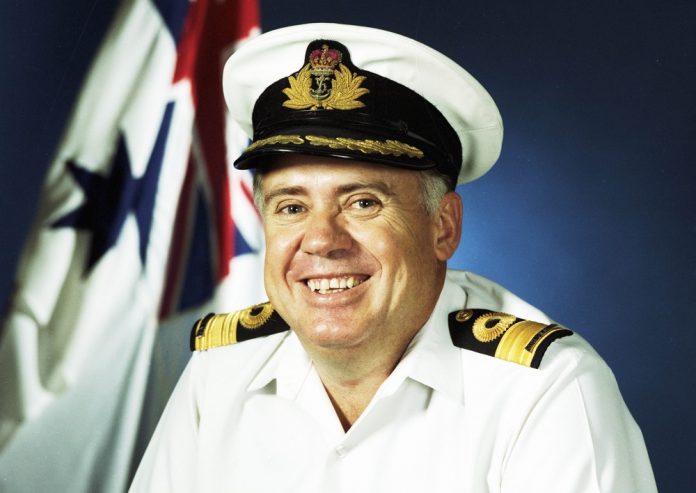
In the May 1995 edition of the Journal of the Australian Naval Institute Commodore Sam Bateman entered the discussion about an appropriate maritime strategy for Australia in the context of the Asia-Pacific region. Thirty years later some of the enduring aspects remain just as relevant, but some of the old sureties are open to question. This article also highlights the intellect and perceptiveness that the late Sam Bateman brought to the maritime strategic discourse.
Old Wine in New Bottles?: Maritime Strategy in the Asia Pacific
Rear Admiral Richard Hill of the UK introduced the expression ‘medium maritime power’ to describe a country which has the capability to exercise some autonomy in its use of the sea. In this context, ‘medium-ness’ implies a certain level of development and size (economy, population, geographical area, military strength, etc), as well as the state’s perception of itself. ‘Maritime-ness’ is based on the state’s dependence on the sea and this is an amalgam of factors such as maritime tradition, size of navy and merchant fleet, dependence on seaborne trade, side of Exclusive Economic Zone (EEZ), value of offshore resources, and the capabilities of the domestic shipbuilding industry.
Using this terminology, there is an increasing number of medium maritime powers in the Asia Pacific, Indonesia, Malaysia, Thailand, South Korea, Taiwan and Australia have some claim to fall within the category each with extensive maritime interests, a significant dependence on the sea, both strategically and economically, and capable maritime forces Japan, China and India are perhaps ‘out of the bracket’ and worthy of being termed major maritime powers.
The Asia Pacific is a region where there has been no ‘peace dividend’ and maritime capabilities, in particular, figure prominently in regional defence budgets. Some navies, which previously had only limited Coastguard-type functions, are building up enhanced offshore capabilities – not only highly capable surface combatants and submarines but also significant numbers of aircraft for both maritime strike and surveillance. The regional sea control capability is growing markedly and there has been, what one commentator has referred to as, “the re-emergence of the importance of seapower” in the region. There is ‘old wine in new bottles’ here as the new navies of the Asia Pacific lift their strategic horizons and seek inspiration from the writings of the classical maritime strategists. It could well be said that Mahan is alive and well but living in Tokyo, Seoul, Taipei, Beijing, New Delhi, Bangkok and Jakarta!
Security in the Region
At a conference in 1993, the Australian strategic analyst, Professor Paul Dibb, presented a paper which attracted considerable attention in the media due to his somewhat pessimistic view of the security outlook for the Asia Pacific region. He identified “very worrying military trends and developments and saw prospects in the longer-term shift in the balance of power in Asia, which may not be favourable to Australia or other middle powers in the region.” Primarily Dibb was referring to China which has markedly increased military spending in recent years and continues to display potential for a destabilising rule in the Asia Pacific. China will undergo a major political and economic transition which will affect regional security, and probably even global security. China has the potential to emerge in the future as a major hegemonic power with a significant strategic nuclear arsenal and powerful projection forces. In specific naval terms, and as a Chinese author recently noted, now it is no longer a question whether China will have an aircraft carrier, but what will be its characteristics and when will it enter service.’
While economic growth and social improvement in the Asia Pacific should lead to a regional security environment of peace and prosperity, there are also greater tensions and uncertainties. Wherever one looks across the region, there are pairs of long standing rivals – India and China, India and Pakistan, Vietnam and China, China and Korea, Korea and Japan, Russia and Japan, and Japan and China. A ‘peace dividend’ is not apparent in the region simply because regional defence budgets, except that of Japan, were never determined by considerations of the Cold War.
The role of the United States, as the world’s only superpower, should be pivotal in reducing bilateral tensions and ensuring stability. But it is unfortunate that the present relationship between China, Japan and the US has never been worse, or more inherently unstable, for decades and American prestige in Asia is at, what one leading Australian writer on foreign affairs claimed earlier this year, “an all-time low.”
The ASEAN countries are concerned that instability persists and regional conflict between the major players is a possibility. Thus uncertainty is the threat against which they are developing their maritime strategies and expanding their maritime force. At a lower level, there are the specific concerns of maritime security, including maritime boundary disputes, conflicting claims to offshore territories and resources, and problems with piracy, drug smuggling, refugees, marine safely and illegal fishing. The overall strategic interests lies in the maintenance of a stable maritime regime in the region and the preservation of law and order at sea. Given the types of forces in the region and the possible causes of conflict, any conflict in the Asia Pacific is likely to have a significant maritime dimension. Aggressors will identify the vulnerabilities of their opponents at sea, particularly shipping, offshore resource installations and fishing fleets, and conduct operations accordingly.
The most rapid expansion of naval forces in the Asia Pacific is now occurring in Northeast Asia although these developments seem to be largely escaping the attention of Western maritime strategic analysts. Japan is placing less reliance on the umbrella of the military power of the US and, with its heavy dependence on imports of energy and other strategic commodities, must inevitably look beyond the limit of one thousand nautical miles as the currently expressed extent of Japanese interest in capabilities for the protection of sea lines of communication (SLOCs). With the benefit of rapid economic growth, South Korea and Taiwan are both expanding their naval capabilities. China has already been discussed.
It is now conventional wisdom to acknowledge that there is a process of fundamental change underway in the global strategic balance. The notion of a Western strategic community is losing its relevance in a global sense, although perhaps not in the European context. International alignments and centres of power competition are becoming more diffused and the global strategic balance more complex, fluid and less certain in its structure. Regional powers, particularly in the Asia Pacific, are increasing their power and influence and much will depend in the future on how this power and influence is exercised.
The implications of these changes may be appreciated more fully in the Asia Pacific than they are in Europe. Security assessments from a European viewpoint still appear heavily influenced by the past while in the Asia Pacific, one cannot help but look forward. There is so little in the past that has any relevance to the future. The regional ‘world’ is changing far too quickly.
The prolonged economic downturn in industrialised countries must be contrasted with the ongoing economic dynamism of East Asia. The economic predictions are mind-boggling. Within the next 20 years the largest economies in the world, with the solitary exception of the US economy, will all be in Asia and the Indonesian economy, for example, will be larger than that of any European country, including Germany. The staggering economic growth of East Asia may ultimately be much more challenging to strategic thinking in the West than was the military power of the Soviet Union. There is no reason to doubt that the maritime power of the region will not grow broadly in line with its economic power. This will be a particular challenge to contemporary maritime strategic thinking in the West. The need for seapower in the future, and particularly in the Asia Pacific, can be construed in the light of these factors rather than in the light of any perceptions of the diminished utility of military power or in any atmosphere of defence budget cuts now confronting most Western navies.
lt is not too hard to see the long-term strategic implications which flow from this contrast of economic performance. In the words of Professor Robert O’Neill: “There is also a backlash in most countries against the growth of economic influence from abroad. Nationalism is becoming more strident as attempts to decrease trade barriers encounter greater resistance. Calls for protection and the advocacy of various degrees of self-sufficiency or autarky are heard in national policy debates the world over. The clamour is all the louder in the states which are suffering the sharpest rales of decline or the greatest frustration of what were seen as high prospects.’
There are other contrasts to he drawn. Bob O’Neill has also observed a “decline of the use of force as the ultimate arbiter of conflicts of interest between great powers” because “It has simply become too expensive, counterproductive, for the major military powers to think of using their weaponry vis-a-vis each other for any purpose other than deterrence.” However, this is a view very much from the West. It does not necessarily apply to the East where perceptions of the utility of force are affirmed by, for example, North Korea developing ballistic missiles and China’s disclosed military spending doubling in the last five years.
This may seem to be a somewhat pessimistic view of security in the Asia Pacific but there are rays of sunshine. The first is the encouragement by ASEAN in particular of substantial security dialogue in the region. This includes the ASEAN Post Ministerial Conference (PMC) and Senior Officials Meetings (SOM) involving the seven ASEAN dialogue partners, and the ASEAN Regional Forum, which also draws in China, Russia, Vietnam, Laos and Papua New Guinea.
There are also some significant ‘second track’ initiatives, including the Council for Security Cooperation Pacific (CSCAP) which is designed to focus the research activities of nongovernmental agencies working on security issues in the Asia Pacific and to provide linkage between these activities and official regional security cooperation processes. CSCAP is likely to establish a working group to look specifically at maritime security cooperation. All these developments are significant achievements in the development of multilateralism in the region.
The ASEAN states clearly perceive the potential for maritime threats and are developing maritime forces (ships, aircraft, and to a lesser extent submarines) with a potentially powerful capability to detect and destroy an adversary’s forces in their maritime approaches, furthermore, the platforms and weapons they are acquiring are capable of operations over wider areas and longer ranges than was the case with previous generations of systems. No longer can the maritime forces of ASEAN be regarded as ‘brown water’ navies capable only of inshore operations in coastal waters.
The maritime strike capabilities being acquired by the ASEAN countries can be interpreted in a broader strategic context. The key ‘straits states’ of Indonesia, Malaysia and Singapore (and possibly even Thailand as well) are well aware of the potential strategic leverage they acquire from sitting astride or proximate to major waterways that are essential, first to both their economic well-being and to that of countries beyond their immediate region, and second, to the strategic mobility of countries that may wish to pass naval forces between the Pacific and Indian Oceans. This mobility was a clear consideration for the superpowers and remains a major consideration for the US. It could also he a significant consideration for both India and China, which could wish to deploy forces in the future between the Indian and Pacific Oceans.
In an address to the Australian Naval Institute in 1991, the then Chief of the Singapore Navy noted that “within South East Asia, the exercise of power and influence depends on being able to make use of the seas within South East Asia”1 and that this is clearly illustrated by the long succession of competing powers who have sought to impose their will on maritime South East Asia. Indeed all the ASEAN states would share a view now that external maritime powers should never be allowed to hold this position of power and influence again. This was apparent in the sensitivity of the straits states to any involvement of external countries in activities such as combating piracy in the region and would probably also be a factor in mounting naval peacekeeping operations in the region.
The free movement of shipping in the region is an important consideration for all regional states. Seaborne trade has truly been the ‘engine’ of the phenomenal economic growth of the region. Singapore, Kaohsiung and Hong Kong are now the world’s largest container ports and container traffic through several other Southeast Asian ports, especially Bangkok, Tanjung Priok, Port Kelang and Manila, has grown enormously in recent years. Major factors here have been the growth of intra-regional trade, the lack of any significant land transport infrastructure (other than within individual countries) and the ‘hubs and spokes’ approach to container shipping. It is also relevant that ASEAN flag merchant fleets have grown significantly over the last decade. Against these developments, it is not surprising that the ASEAN states, as well as the countries of Northeast Asia, are showing increased interest in capabilities and arrangements for the protection of shipping and the security of SLOCs. SLOC security is now a major factor in maritime strategic thinking in The Asia Pacific.
SLOCs
This growing regional concern with the security of seaborne trade can be seen in the wider strategic context of the drawdown in US forces in the Asia Pacific. Other factors include the greater economic interdependence between countries and the lack of self sufficiency among regional nations, which are variously dependent on imports of energy, foodstuffs, raw materials, and particular manufactured goods. As over half its overseas trade now crosses the Pacific, the US itself has a major interest in the free movement of shipping in the Western Pacific.
There have been several developments in the region in recent years which highlight the changing emphasis on the security of SLOCs. During the 1980s there were a series of conferences around the region hosted, in most cases, by a non-government organisation in the host nation. The fundamental rationale of these conferences was the problem of re-supply of Northeast Asia in the event of confrontation between the superpowers and key players in the initial round of conferences were the US, Japan, Taiwan and South Korea. The ASEAN countries, Australia and New Zealand subsequently became involved.
At the SLOC conference held in Bali in 1993, a clear shift in emphasis was apparent from concern with the oceanic protection of shipping typical of the Cold War years to a greater focus on focal areas, straits transit issues and broader problems of the safety of merchant shipping. This was largely driven by the ASEAN participants who have become more sensitive about the transit of foreign vessels through their archipelagic and territorial waters. It is perhaps also significant that many of the ASEAN participants come from organisations which are closely associated with their Governments.
It has been frequently argued in recent years that naval roles are changing with the warfighting role losing its utility and the constabulary and diplomatic roles likely to grow in importance. Ken Booth, for example, has spoken about “New Times for Old Navies” concluding that “turning warships into lawships is a rational way ahead for future international society.” He believes that navies do not have a great future, if ‘great’ is meant in a Mahanian sense as expansive, shaping history, engaging in decisive battles, and providing a life of Nelsonic heroism, and that, while deterrence at sea will remain “the bottom line of naval policy”, power projection and coercive diplomacy will be of declining utility. Cooperative naval diplomacy and constabulary functions will increase in importance, he suggests.
Similarly, Geoffrey Till has written that less ‘glamorous’ roles of navies are likely to be areas of significant growth. He believes that constabulary duties, naval diplomacy and the sealift mission are all likely to become more important in the future. The sealift mission enters consideration largely because of the experience of the Gulf War and the demonstrated dependence of allied operations on logistic support by sea. This point is particularly relevant to the Asia Pacific where the geographical operating environment underpins the importance of sealift capabilities and amphibious forces to most regional navies.
For most Western navies. oceanic sea control is attracting less attention and much contemporary maritime strategic thinking is directed towards naval support of land operations, ranging from the direct projection of power ashore (as demonstrated most extremely by the USN’s From the Sea doctrine) to the support of UN peacekeeping missions. For example, Jan Breemer has observed recently that the preoccupation of the US Navy “in the foreseeable future will be land control, not sea control.” As part of this apparent demise of the oceanic sea control mission, major Western navies, in particular, appear to be attaching reduced emphasis to the protection of SLOCs.
The coastguard or constabulary role is a familiar one and includes combating drug smuggling and piracy, controlling illegal immigration, and generally enforcing the creeping jurisdiction of coastal states over littoral waters. The trade in illegal immigrants is growing and becoming more sophisticated requiring greater resources for its monitoring and prevention. A particular concern is the possibility of greatly increased numbers of Chinese refugees should the economic growth of China falter.
Because of the incidence of these activities in East Asian waters, it is easy to jump to a conclusion that this changing role of navies is particularly evident in the Asia Pacific. However, while it may well be true in an absolute sense that the constabulary task is growing it is not true in a relative sense. If anything, the relative importance of the warfighting role may be growing in this part of the world.
This point is well illustrated in the case of the Royal Malaysian Navy (RMN).The Malaysian Strategic analyst, J.N. Mak has described how the RMN, like virtually all the navies of maritime ASEAN, is now caught on the horns of a dilemma in terms of finding a proper balance between the coastguard function and the warfighting mission. During the years when the USN provided the overall maritime security umbrella for the Asia Pacific and the main threats to national security were perceived as land-based. the RMN was able to concentrate its attention on constabulary missions. But now times have changed and Mak perceives there is a need for the RMN to get back to basics and concentrate on its primary warfighting mission and, if need be, hand over its lesser patrol vessels to another agency responsible for coastguard roles.
Although coastguard-type tasks, sovereignty protection and EEZ policing are part of the justification for the expansion of Asian navies, these navies see much broader strategic justification for the forces they are acquiring. This lies in those underlying tensions and uncertainties referred to earlier in this paper and perceptions of the importance of sea power which have much in common with the writings of the classical maritime strategists.
Overtime, theories of maritime strategy and sea power have revolved around command of the sea, projection of power and economic warfare (ie. anti-trade and protection of trade) as principal functions of seapower. During the Cold War, the maritime strategies of the West were unequivocally about sea control and power projection while the Soviet Union never lost sight of economic warfare considerations. As Admiral Gorshkov observed, anti-trade operations are “the most important constituent part of the efforts of a fleet aimed at undermining the military economic potential of the enemy.”
Now as we enter a period when national security, power and status in world affairs will be determined increasingly by economic success, it seems likely that there will be a swing back to economic factors as a large determinant of naval functions. This is despite the current attention in USN doctrine on power projection ashore and the interest in the West in redefining naval roles.
Already there is a significant economic dimension to maritime security in the Asia Pacific with maritime forces seen both as important elements of national prestige and as necessary to support and protect economic activity. To some extent this is an inevitable consequence of the economic growth which, on the one hand, provides the resources to support the development of maritime forces and, on the other, creates demands for the protection of national economic interests many of which lie offshore.
As we look to the future, there can be little doubt that the navies of the Asia Pacific will continue to develop, both quantitatively and qualitatively. The idea that the strategic rationale for these developments lies to some extent in classical principles of maritime strategy leads to the observation that history could be repealing itself. Just as Mahan and subsequent writers drew strength from the Industrial Revolution and the rapid expansion of world trade last century, now the Asia Pacific maritime strategy is being formulated in the context of rapid economic growth and increased regional trade.
1 https://navalinstitute.com.au/wp-content/uploads/1991-VPO-Teo-Chee.pdf
About the Author
Commodore Sam Bateman AM RAN was born in Cotteslowe, WA in 1938 and joined the Royal Australian Naval College in 1954. His early years at sea were mainly in small ships. Notably, he was Executive Officer of the ammunition ship, HMAS Woomera when she caught fire and sank off Jervis Bay in 1960. A non-specialist ‘salt-horse’ Sam went on to have four sea commands, HMA Ships Bass, Aitape (part of the PNG Patrol Boat Squadron), Yarra and Hobart.
Sam Bateman joined the ANI in its first month and would at different times serve on its Council and be the journal’s editor, as well as being a frequent article contributor. As a Commodore he was the inaugural Director General of the Maritime Studies Program, the forerunner to the Seapower Centre Australia, and on retirement from the RAN, he was the founding Director of the Centre for Maritime Policy, later renamed the Australian National Centre for Ocean Resources and Security (ANCORS), at the University of Wollongong.
A prolific writer, Sam Bateman is regarded as one of Australia’s most eminent writers on maritime affairs. He died in 2020 and the ANI’s annual book prize is named in his honour. His ANI obituary is at:
https://navalinstitute.com.au/obituary-commodore-sam-bateman-am-ran/