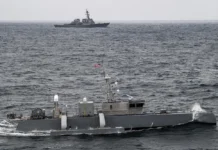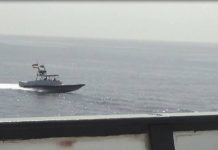
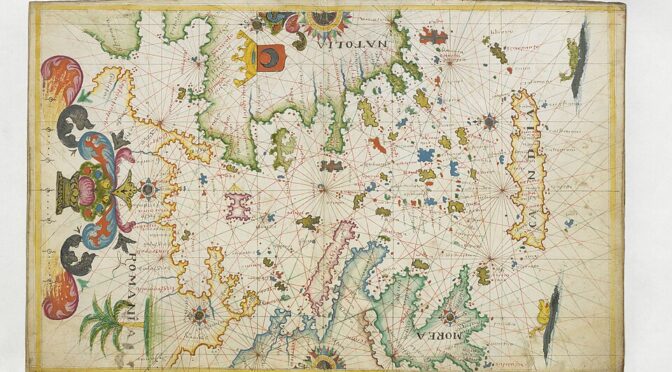
Ships can deter a competitor, compel a rival, and escort a convoy. What they cannot do is build the institutions, relationships, information systems, and rules that keep maritime order running when the guns are silent. China has worked this out. Washington and most of its partners treat governance as an appendage to naval strategy, rather than a domain of competition in its own right. (From: The Center for International Maritime Security.)
The Missing Half of Maritime Competition
Counting ships, missiles, bases, and shipyards is how most would measure power at sea.1 But a second measure gets far less attention. A navy can dominate the horizon and still lose the argument over who writes the rules, who trains the officials, and who supplies the systems that decide what happens at sea on an ordinary Tuesday.
China is the proof of concept. Its satellite-navigation system, BeiDou, is quietly becoming the default across African ports and fishing fleets. Across the Pacific, police training, equipment transfers, and shifts in diplomatic recognition have bought Beijing access no carrier strike group could. In the unglamorous rooms where regional fisheries bodies argue over inspection procedures, Chinese delegates show up year after year to do the slow work other great powers often overlook. This does not replace the People’s Liberation Army Navy. It reshapes the political ground on which that navy will someday be used, resisted, or waved through.
A recent episode in the Strait of Hormuz offers another stark illustration. In spring 2026, the United States assembled a naval force to reopen it after Iran closed it to traffic. A month in, Adm. James Stavridis (Ret.) and a chorus of maritime lawyers reached the uncomfortable verdict that American firepower could not decide the outcome. Iran’s cheap drones and mines kept risk and the insurance premiums high enough to strangle traffic regardless of who controlled the water. If naval power cannot restore transit rights mid-war, it is unlikely to do so in peacetime.
So what does maritime governance produce that naval power cannot? I see four recurring effects: institutional access, security cooperation below the threshold of alliance, dependence on information infrastructure, and influence over the rules themselves. None of this makes governance benign or a fleet optional. Naval power acts on capabilities and behavior, directly and visibly. Governance works more slowly, on the institutional, informational, and normative ground beneath them: the ground on which states decide what counts as legitimate, who exercises authority, and where their interests lie.
Naval Power and Governance: A Functional Distinction
“Maritime governance” can be used to mean everything at once: law, coast guards, fisheries management, port security, and regional diplomacy. I use it more narrowly. Maritime governance organizes authority at sea: it builds the rules, institutions, professional networks, and information systems through which that authority is exercised and sustained.2
In contrast, naval power deters, compels, and projects force, performing the coercive and reassuring functions that keep the peace or break it. Governance organizes and sustains authority while naval power protects it, contests it, or imposes outcomes when necessary. A vessel can enforce a rule nobody else will, but it cannot train a prosecutor, build a chain of custody, or talk a government into years of security cooperation. Navies themselves sometimes do the governing. The distinction is not between military and civilian institutions, but between two mechanisms of strategic effect.
Latin American naval doctrine has long separated poder naval, the military instrument, from the wider poder marítimo which includes administration, commerce, fisheries, civilian institutions, and the entire apparatus of a state’s relationship with the sea.3 In states with thin civilian maritime administrations, the navy is often the whole of maritime governance because it is the only institution capable of training officials or running a surveillance network. The moment a navy starts doing those things, it stops relying purely on coercive effect and starts producing the institutional memory and working relationships that outlast any single deployment.
This suggests a more useful distinction than military versus civilian: whether presence is episodic or sustained. Deployments and port calls are visible and consequential, but temporary. A coast guard cutter returning year after year, or a navy training prosecutors because no one else can, has a different effect. Persistence turns presence into relationships and eventually institutions. That returns us to the four recurring effects outlined above. The first, and most basic, is institutional access.
Institutional Access and Socialization
Institutional access is the capacity to shape how a partner understands a threat and gets through an ordinary day. Compared with a carrier deployment, a recurring training course may be small, but it compounds over years into a habit of professional familiarity that decides whom an official calls in a crisis.
China has been building exactly this kind of access across the Pacific through police secondments, riot-control and surveillance equipment, and training programs with Fiji, Papua New Guinea, and the Solomon Islands. Beijing’s language frames this as sovereign states building their own capacity, making the cooperation politically palatable in capitals that might balk at anything resembling a bloc.
A port call signals interest for a week. Institutional socialization survives the ship’s departure. It shapes doctrine, procurement, and information-sharing habits, and, more quietly, opens ministries close to domestic political power.
This does not buy permanent loyalty, as Ghana demonstrates. In April 2025, Ghana’s fisheries authorities suspended the licenses of four locally flagged, Chinese-owned trawlers for a year.4 Chinese commercial influence over Ghana’s trawl sector is extensive. But that did not stop Accra from sanctioning the vessels. Institutional strength, once it takes root locally, does not come with a remote control for the country that helped build it.
Cooperation of this kind creates access and familiarity, not compliance. Access and socialization alone leave the result intangible. There is no basing agreement or formal commitment, only influence that may later be converted into something more concrete.
Security Cooperation Below the Threshold of Alliance
Institutional access matters most when it changes what a government is prepared to negotiate. General familiarity can become a security agreement or an option on future access.
Small and mid-sized states often want assistance and expertise without the domestic backlash of “picking sides.” Police cooperation, coast-guard support, and disaster response all sit between routine diplomacy and a formal defense pact. That space has strategic value in its own right. The China–Solomon Islands security agreement, signed in 2022, shows how.
The Solomon Islands already had a 2017 treaty allowing Australian police, defense, and civilian personnel to deploy by mutual consent. What Beijing negotiated was different. The text has never been released, but a leaked draft described Chinese police deployment, and provisions for ship visits, replenishment, and transit, all with Honiara’s consent.
Beijing did not muscle its way to maritime access with a naval task force. It got there through diplomacy. Honiara switched diplomatic recognition from Taiwan to China in 2019, and three years of deepening economic engagement and police assistance followed. That groundwork made a security agreement and future naval access negotiable. Governance created an opportunity naval power could not.
Chinese diplomacy did its part too, framing the pact as cooperation between sovereign equals, letting both governments call it domestic security cooperation even as Canberra, Wellington, and Washington read it as a geopolitical realignment.
But the arrangement also shows where the mechanism falls short. Regional pushback revived the principle that Pacific security is a “Pacific family” matter first. The Solomon Islands’ own politics caught up with the pact. In 2026 a newly installed prime minister pledged to review it, a reminder that access built on personal relationships can unravel the moment the government that built it falls out of power.5 Cooperation below the threshold of a formal alliance comes at a lower price of entry, not immunity from the ordinary demands of legitimacy and transparency.
Information-Infrastructure Dependence
The third mechanism runs through information itself. Maritime-domain awareness is often discussed in technical terms that focus on satellites and sensors. But the strategic questions sit above the hardware. They include who supplies and maintains the system, whose standards structure the data, and how easily a country can switch providers. Those questions are easy to ignore early on, when equipment is subsidized and switching still appears simple. They grow problematic only later, once training, procurement, and data formats have all been built around a single supplier.
More than thirty African countries now host BeiDou reference stations or run BeiDou-enabled services, often with subsidized equipment and training. The system reaches well beyond maritime security, encompassing navigation, mapping, transport, and fisheries monitoring. The strategic payoff is not a “kill switch” that lets Beijing blind another country’s maritime awareness on command. The real effect is entrenchment. The BeiDou information-infrastructure stack becomes an indispensable foundation. Once officials are trained and maintenance arrangements established, later choices become harder to make independently. Even with multi-constellation receivers, a state can still find its daily administrative routine dependent on Chinese hardware and technical support.
Washington built a similar mechanism inside NATO, where over 1,200 standardization agreements cover everything from rifle calibers to tactical data links, binding an alliance trained for decades on American doctrine and logistically dependent on American resupply. GPS had no serious rival for a generation. GLONASS did not match it until the 2010s, Galileo went live only in 2016, and BeiDou only in 2020. The difference is that Washington never extended its information infrastructure systematically. Outside NATO, this standardization has been improvisational. China, without a NATO-scale alliance of its own, has built something more systematic through BeiDou.
BeiDou does not leave African governments without alternatives. Ghana and Senegal are building monitoring capacity with several partners at once, Ghana through the Copernicus satellite-detection program and Senegal through joint patrols with the Sub-Regional Fisheries Commission, the EU, and the U.S. Coast Guard.6 Informational dependence is rarely absolute, but entrenchment of an information infrastructure shapes technical and bureaucratic decisions for years afterward.
Normative Shaping
The fourth mechanism operates on the rules themselves, shaping the procedures by which maritime conduct is judged. A navy can enforce or contest a rule, but it cannot decide who gets inspection authority, what data must be reported, or how an international body weighs enforcement against a flag state’s consent.
Regional fisheries bodies are a good place to see this in action, since their decisions are technical, cumulative, and consequential. The Western and Central Pacific Fisheries Commission adopted its first high-seas boarding and inspection procedures in 2006 and has spent two decades refining vessel monitoring and reporting requirements. This is the plumbing of ocean governance. China has stayed at the table throughout, most recently through the Commission’s High Seas Boarding and Inspection Intersessional Working Group formed in late 2024, whose guides were adopted in 2025. That work shapes the conditions under which fishing fleets are monitored, inspected, and sanctioned across one of the most economically important fishing grounds in the world.
Normative influence rarely produces a visible Chinese “win.” More often it appears as a qualifying clause or a gradually normalized practice. These gains build slowly, and a naval deployment can do little to reverse them. Governance and coercion also coexist more comfortably than the usual distinction suggests. China participates in maritime institutions while using aggressive coast guard tactics and advancing expansive legal claims elsewhere. Rule-making can moderate competition, but it can also lend the authority of law to advantage a state has already accumulated. Chinese writing on global ocean governance says as much, openly linking institutional participation, the defense of maritime “rights and interests,” and the accumulation of national discursive power.7
For Washington, that ambiguity makes sustained engagement in these bodies more important. Rules favorable to an open maritime order do not write themselves, and reflexively treating every Chinese proposal as illegitimate can be counterproductive. What works is sustained technical presence, credible legal positions, and coalitions that can turn a broad principle into an accepted procedure.
Where the United States Can Compete
This is not a case for copying China’s model or divesting from ships and munitions. It is a case for treating institutions, information systems, and rules as strategic assets worthy of sustained investment. This is not straightforward, and no single framework captures the whole picture. But three priorities stand out.
The first is institutional relationships, where Washington simply needs to keep doing what already works. The Coast Guard is the obvious lead instrument. It is naval power built for persistence rather than pulses, turning presence into governance.8 Its shiprider agreements, now in force with a dozen Pacific Island nations, let American cutters back up partner enforcement without elbowing aside local authority. State Department peacekeeping funding has already paid for coast guard training in Comoros and Gabon. What is missing is continuity. This means extending these arrangements to Atlantic and Indian Ocean partners, and funding legal mentoring, maintenance, and recurring exchanges.
Coast guards, fisheries agencies, and prosecutors are not secondary audiences waiting for a naval visit. They are the institutions through which sovereignty is exercised daily, and the Coast Guard usually has a sharper comparative advantage in working with them than a combatant command does. The relationship persists. A task force does not.
The second priority is to build on the information architecture that already exists. The Illegal, Unreported, and Unregulated (IUU) Fishing Action Alliance, launched with the United Kingdom and Canada in 2022, and its ties to Global Fishing Watch, already give Washington a vehicle for offering partners an alternative to a single proprietary supplier. Forcing anyone to choose between BeiDou and GPS is a battle Washington is unlikely to win. Instead, it should fund interoperability with shared standards and switching costs low enough that a partner can combine sources without replacing its system wholesale.
Finally, norm-setting requires a different kind of persistence. It involves lawyers and scientists seconded into intersessional working groups. These groups matter because this is where concrete work happens. Technical experts draft language, resolve disagreements and build consensus months before any formal vote takes place. By the time the draft proposal reaches a body’s plenary session, the focus is often ratification, not deliberation. A state that only shows up for the plenary vote arrives after the outcome is largely decided.
All three priorities demand a kind of bureaucratic coordination that a recent U.S. government assessment found consistently lacking. U.S. naval strategy, development assistance, law enforcement, and fisheries diplomacy sit in different agencies with different budgets. China does not coordinate every initiative from the center, but these instruments accumulate inside the same bilateral relationships regardless. To compete, an American approach will need to produce the same cumulative effect, while staying more transparent and less coercive.
Governing the Space Navies Secure
None of this makes naval power dispensable. Ships protect access, deter aggression, and keep governance from turning into an empty promise the moment it is tested with force. But building trusted institutions, negotiating access, sustaining an information system, and producing a rule people actually follow are things ships alone have never managed. These come from governance, or they do not come at all.
China has already combined these tools in ways that matter strategically. Police cooperation opens institutions, security agreements make access negotiable, information systems create switching costs, and participation in rule-making shapes the environment in which fleets operate. Not one of these gains is automatic, and none lasts forever. But together, they redraw the strategic map long before any naval crisis arrives.
A state can dominate at sea and still lose influence over the order built around it. The question facing the United States is not whether naval power matters more than maritime governance, but what each one does. Naval power secures access. Governance shapes the order that access is supposed to serve.
*Hervé Auffret is an independent specialist in security and maritime sector governance and a retired Captain in the French Navy. He has held numerous leadership positions in security and defense institutions, including at the Geneva Centre for Security Sector Governance (DCAF), the UN Department of Peacekeeping Operations, NATO Allied Transformation Command, the French Ministry of Foreign Affairs, and the French Secretariat-General for National Defence. His operational and command experience includes deployments in Africa, the Caribbean, and the Middle East. He is a graduate of the French Naval Academy (École navale) and the French War College and holds two Master of Science degrees.
1. Christian Bueger and Timothy Edmunds, “Beyond Seablindness: A New Agenda for Maritime Security Studies,” International Affairs 93, no. 6 (2017): 1293–1311.
2. Christian Bueger, “What Is Maritime Security?,” Marine Policy 53 (2015): 159–164.
3. Gary Javier González Núñez, “Poder Marítimo y Poder Naval, ¿nueva definición para Colombia?,” Ensayos sobre Estrategia Marítima 2, no. 5 (2017): 31–42; Noé Cuervo Vázquez and Marcos Pablo Moloeznik, “Hacia una medición del poder naval en América Latina,” Anuario Latinoamericano: Ciencias Políticas y Relaciones Internacionales 5 (2017): 291–315.
4. “Ghana Suspends Licenses of Chinese Trawlers over Illegal Fishing,” Africa Defense Forum, May 2025; “Tackling Illegal Fishing: Fisheries Ministry Suspends Licenses of Four Industrial Trawlers,” Business Day Ghana, April 2025; Environmental Justice Foundation, China’s Hidden Fleet in West Africa: A Spotlight on Illegal Practices within Ghana’s Industrial Trawl Sector (London: Environmental Justice Foundation, 2018).
5. Matthew Wale, quoted in “New Prime Minister Says Solomon Islands Will Review Its Secretive Security Treaty with China,” NBC News/Associated Press, June 3, 2026, https://www.nbcnews.com/world/asia/solomon-islands-new-prime-minister-will-review-china-security-deal-rcna348216; “Solomon Islands Won’t Release Security Pact with China Because of Non-Disclosure Clause,” ABC News, June 11, 2026, https://www.abc.net.au/news/2026-06-11/solomon-islands-china-security-pact-non-disclosure-clause/106784432.
6. European Maritime Safety Agency, “Copernicus Maritime Surveillance – Fisheries Control,” use case on EFCA-Ghana cooperation, https://www.emsa.europa.eu/; U.S. Naval Forces Africa, on USCGC Spencer deployment and combined maritime law-enforcement operations with Cabo Verde, Senegal, and the Gambia, January 2023, https://www.globalsecurity.org/military/library/news/2023/01/mil-230119-usn02.htm; Food and Agriculture Organization, “Senegal Shows Commitment to Fight IUU Fishing,” June 2023, https://www.fao.org/port-state-measures/news-events/detail/en/c/1641217/.
7. Luo Gang, “中国参与全球海洋治理的战略思维” [China’s Strategic Thinking on Participation in Global Ocean Governance], Institute of International and Strategic Studies, Peking University, Brief no. 67, 2018.
8. Éric Frécon and Benoît de Tréglodé, eds., La diplomatie des garde-côtes en Asie du Sud-Est, Étude de l’IRSEM no. 73 (Paris: Institut de recherche stratégique de l’École militaire, 2020).