By Tom Sharpe*
Everyone who serves in the Royal Navy knows about the undersea cables between the UK, the US and elsewhere. However, when I was in command of a frigate whose job was to protect them from Russian submarines, few cared outside my ship and immediate chain of command.
Outside the Navy, there was basically nobody who took an interest. A Telegraph investigation makes it clear, beyond doubt, that this must now change.
The paper took four and a half years of satellite tracking data of Russia’s fishing fleet and laid it over existing charts. It found 17 trawlers from five companies loitering at low speed over the North Atlantic’s most important cables.
A naval officer shown footage of another judged her hold and cranes to be ideal for launching underwater drones. A Nato source was clear: “Some of these ships have never seen a single fish on their deck.”
That has changed my thinking in three ways.
Firstly, I used to assume the number of cables crossing the Atlantic, and their geographical spread, gave us a degree of resilience. In September, I received an update suggesting that in some key areas my thinking was now out of date. The Telegraph’s investigation confirms this.
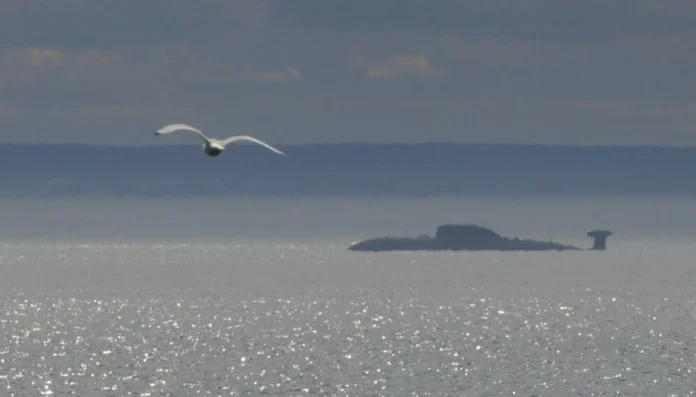
Secondly, I inevitably focussed on Akula-class nuclear-powered submarines, the underwater threat from Russia’s secretive Main Directorate of Deep-Sea Research and the Yantar spy-ship. The Telegraph threw its net somewhat wider than this and, by careful use of tracking data, matched fishing vessel movements with the position of the cables.
China has been using fishing boats as a dispersed intelligence-gathering network for decades, it makes perfect sense that Russia would copy this model. And there is only one reason to chart these cables to a degree of accuracy above that which you can find online – to prepare to attack them.
Thirdly, deniability, which in the grey zone just shy of combat operations where Russia likes to operate, is everything. Put an Akula over our cables and we will know about it, and chase it off.
However, a trawler at two knots, with a couple of crew who answer to the FSB rather than the skipper, breaks no law in international waters and looks like every other small boat. These can’t do everything on their own, but when added to a wider network, they can do a lot for little money and are easily deniable.
I have set out before what happens if the cables do go at the same time: payments stop, the City’s currency markets freeze mid-settlement, our military and intelligence links to America go dark, and repairs take the rest of the year. It is all bad.
Today’s white paper, replacing an Act of 1885, is welcome. But a jail term means little to a trawler that never enters a British port, and the minister concedes it will not stop hostile states. The best response requires a comprehensive plan of which the white paper is only one part. We must also raise awareness of this threat so that the more expensive parts of our comprehensive solution are properly resourced. Deterrence of this kind needs both a shield and a trident. We have elements of both, but they are wafer-thin.