By Tom Sharpe*
The Houthi rebels have seized Perim, the small island in the narrowest part of the Bab el-Mandeb (“the Gate of Tears”), the southern entrance to the Red Sea.
On its own, this is not a big deal. The strait is so narrow there that holding the island does not change the basic geometry: anything passing through has been within reach of missiles and drones fired from the mainland for nearly three years.
How they got it is perhaps more interesting. The indications are that Yemeni government forces withdrew without putting up a fight, and that matters. A garrison on Perim gives the Houthis a lookout position which makes command and control and intelligence gathering a little easier. It also means that Yemeni forces can no longer interfere with their operations.
Add in the capture of Mocha further up the coast a day earlier, and it is clear that the Houthis are on the march again, consolidating their grip on the coastline from which they can continue to fire at innocent mariners.
That is the point. None of these moves is significant in isolation. Put them in sequence – the first Houthi ballistic missile fired at Israel on March 28, the resumption of firing at Saudi Arabia on July 13 and shipping shortly after, now Mocha and Perim – and the trend is clear.
At the very least, it is geared towards heightening disruption, spreading the perception that they can disrupt Red Sea transits at will. Intelligence is increasingly pointing to this latest round of strikes being directed by Iran as part of its wider strategy. As before, though, it doesn’t make a huge amount of difference who is directing whom here, and certainly not if you are a ship trying to sail past.
Now add in Hormuz, the entrance to the Gulf. With that strait effectively shut since March, the workaround for Gulf oil has been the East-West pipeline to Yanbu and out through the Red Sea. Flows through the Bab el-Mandeb rose from between four and five million barrels per day (mbpd) last year to over seven between March and July. Now the East-West pipeline appears to have been struck again, adding to the Houthi embargo and the seizure of Perim. The estimate for August and September is under 5mbpd. The two chokepoints are no longer separate problems. Squeeze one and traffic shifts to the other, where it can be squeezed again.
That is the wider lesson about chokepoints. They are cheap to threaten and expensive to keep open, and the tariff arrives in the form of raised shipping prices: the long way round the Cape and extra weeks on every voyage. Ships loading from Yanbu that would have gone southbound through the Bab el-Mandeb have, since the latest Houthi embargo was declared on July 20, been turning right and heading through Suez. Not only is that a huge detour, it increases the risk in Suez itself, which should never be forgotten.
I am hearing from more than one source that the Saudis have appealed for help in dealing with this new situation to the US, and been told “no” for now. That’s not surprising, given the strain the US Navy has been under.
So who else might help? Bearing in mind that this would not only be help for the Saudis and other Gulf nations in getting their oil out despite the Hormuz closure, but help for most Western-world economies?
A couple of EU Aspides warships are still patrolling the Bab-el-Mandeb as they have been all along, reassuring crews and occasionally escorting the more valuable ships. Will Saudi Arabia send warships this time, reflecting the increase in tension between it and the Houthis? It also looks like there are a couple of US destroyers further up the Red Sea, most likely stationed there to intercept anything fired at Israel or Jordan rather than to police the strait, for now.
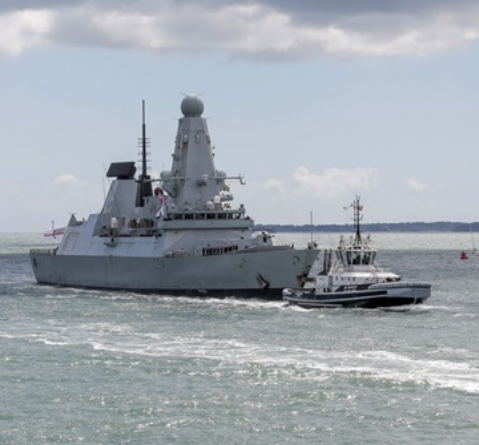
As for us, HMS Diamond performed excellently in the Red Sea against the Houthis. Her sister ship HMS Dragon – now in the region – could do the same. With Hormuz in stalemate but still deemed too high a risk for crewed ships to enter, Dragon could usefully head to the Bab-el-Mandeb and work alongside the Aspides warships.
Much will depend on what she is currently doing – she has been working with the French carrier group rather than the Americans – and on whether she needs to protect RFA Lyme Bay, mothership for the UK’s nascent mine-hunting drone force. The last open reporting had Dragon in Mombasa on Aug 11-12, RFA Lyme Bay likewise, so my guess would be they are currently in the Gulf of Oman or the wider Indian Ocean. Dragon could be in the Red Sea in a few days. It’s good to have options – something navies can do much better when at sea and fully worked up.
The real indicator to watch is the same one as in July. If this is about to seriously escalate, one of the two US carriers will start steaming west. Given the stalemate in Hormuz, resuming strikes on Houthi launch positions might well be seen in Washington as an achievable win as the midterms approach.
Perim, then, is a small island of minor tactical importance in a narrow chokepoint. What its capture represents though is a pattern: one of escalation and continued chokepoint challenges – a trend I’d suggest we are only in the early stages of. All the world’s navies need to adjust accordingly, not just rely on the US.
*Tom Sharpe OBE served for 27 years as a Royal Navy officer, commanding four different warships.
This article was first published in The Telegraph and it republished with the author’s permission.