What do strategic trends in the early 21st century Asia-Pacific region mean for Australia’s future naval operational and force structure requirements? A naval historian considers this question against the background of modern history. History, Policy and Procurement.
From Headmark 129 Sept 2008.
By John Reeve
History is indispensable to military forces. It is a vehicle of tradition, of service education, and an invaluable tool for force planners, strategists and commanders. One may speculate about discontinuity and a different kind of future, but history remains essential. Sun Tzu and Clausewitz, in their different ways, recommended the study of history. Julian Corbett was a great strategic thinker – the most brilliant analyst ever to reflect on maritime warfare – because he was first a great historian. The great commanders have frequently studied the long sweep of history as a function of their successful approaches to war. MacArthur used the case of Wolfe’s approach to Quebec in 1759 to explain his planned amphibious attack at Inchon during the Korean War. None of this should surprise us. History remains a known quantity – real, unclassified, and with a verifiable outcome, and a rich source of experience in its infinite variety of case studies. It is a vast extension of personal experience, and historical ignorance can lead to serious losses. The Royal Navy, for example, learnt the lesson of convoy three times between the 1790s and the 1940s. History teaches, above all, that there is a dialogue between change and continuity in human and military affairs, and a need for strategic awareness combining readiness for the likely and unlikely. It teaches the need for flexibility
Military force structure decisions should be historically literate. They should also be policy-driven. The Australian defence policy tradition has always been a balance (perhaps an oscillation) between local and wider concerns. Today, as ever, our defence policy must encompass issues of local regional stability as much as essential concerns as distant as Afghanistan and the Gulf. In the future Australia may need to act nearby or far away in defence of its territory, landward or maritime, or its interests. Those interests comprise its role as a good international citizen as well as its own national security and prosperity. History suggests that all these priorities will remain part of the policy-strategy continuum. This means a need to consider both global and nearer regional constants and trends, building force structure and capability accordingly.
Australia’s Evolving Strategic Environment
The world has changed since the optimistic days of Cold War victory in the 1990s. Australia’s major strategic partner, the US, has potential rivals in our wider region, the Asia-Pacific. They include, in different ways, China, India, and perhaps Russia – all developing maritime powers. There is global competition for resources, especially oil, an issue bound up with sea transport. International terrorism has become an ideological enemy and lethal threat. It has struck on land and sea and required maritime power projection as far inland as Afghanistan. Environmental change implies security and humanitarian issues. Failing states in the archipelago to Australia’s north mean a need to help maintain stability in its near neighbourhood. Fulfilling this responsibility can also obviate opportunities for hostile or unhelpful outside involvement. In South East Asia, prosperity and rivalries are causing an expansion of military capabilities which might be termed an arms race.
Certain factors, however, are enduring. The wider Asia-Pacific remains maritime-littoral: a land-sea interface between great oceans and characterised by vast distances. Military operations within it are predicated on the need for reach. Australia shares interests with other regional states, as it has historically, in terms of international stability and the security of the sea lines of communication (SLOCs). Australia remains a maritime nation not only in its geography and territoriality, but in its dependence on the sea for economic well being. The great bulk of its trade, by value as well as volume, is seaborne and within the Asia-Pacific. The mineral boom being fuelled by the economic expansion of China and India, and by the continuing resource needs of the rest of East Asia, means that this is unlikely to change suddenly. SLOC security is doubly important for Australia: the SLOCs of its trading partners are also essential to its own economic success.
Australia’s key strategic interests, and their local and wider contexts, are all unquestionably maritime ones. The region involved is vast, both geographically and demographically, and stretches potentially from the Gulf to North East Asia. Australia’s population is small. It must seek to leverage technology, military capability and diplomacy to maximise strategic policy outcomes. Force multiplication is, for Australia, a strategic necessity.
Maritime Strategy
There is a fundamental point about maritime strategy. The sea is one, a single and unified environment. Sailors have made big charts for generations for good reason. That environment can be a tool for oneself or a highway for one’s enemies. There is no option but sea control, when and where required, for a maritime nation. Without it a maritime power is eligible for defeat. One dimensional denial strategies, usually the preference of continental powers – whether utilising privateers, surface raiders, submarines or land-based air power – have lost to maritime powers with sea control for centuries. France in the age of sail, Germany in the two World Wars, the USSR in the Cold War and Argentina in the Falklands all opted for sea denial and were defeated. For a denial strategy to succeed, it must itself be predicated upon sea control. Nothing illustrates this better than the two major submarine campaigns of the Second World War. German U-boats could not deny the Atlantic powers the use of the sea since they could not control it in every dimension: over, on and under it. US submarines, by contrast, empowered by the controlling dominance of the US Pacific fleet, prosecuted one of the most devastating blockades in naval history. This was consistent with the conclusion of both the classical maritime strategists, Mahan and Corbett, that denial is not feasible without sea control.5 A case study in Australia’s near region, which it can never afford to forget, is how sea control enabled Japanese forces to lodge in the northern archipelago in 1941-42, and how it was needed to dislodge them, defeating their denial strategy based upon land-based air power. The minimal ‘capability edge’ for Australia must in fact be an effective strategy of sea control. Here lies the significance of the role of the future RAN Air Warfare Destroyer (AWD) in conjunction with other naval and joint (and possibly coalition) capabilities: as an operational enabler by facilitating sea control.
The Operational Agenda
Sea control can enable a menu of maritime operational missions in defence of Australia’s strategic interests. Nothing is more important than the security of the commercial SLOCs. These are essential not only to a maritime nation’s economic viability but also to its financial sinews of war, its ability to sustain a fight. As Prime Minister Alfred Deakin wrote in 1905, ‘Nowhere are maritime communications more important than to Australia, seeing that our dependence upon sea carriage is certain to increase rather than diminish as population and production advance.’ Such foresight inspired Deakin to promote the building of the Australian fleet which was ready in 1914. Today, his words are as true as ever. Submarine forces are also growing globally. SLOC defence is an international responsibility, necessarily undertaken in conjunction with friends and allies, so interoperability is essential.
Joint force operational capability will also be essential: to be able to lift, deploy, protect, supply, and perhaps evacuate Australian forces in the near region. This mission is implicit in the building of the new amphibious ships (the LHDs), as well as in the history of national operations in the archipelago from the First World War to the Timor deployment of 1999-2000 and beyond. General Peter Cosgrove has stated: ‘Another military blinding glimpse of the obvious is the utility of sea power in the East Timor operation. The persuasive, intimidatory or deterrent nature of major warships was not to me as the combined joint force commander an incidental, nice to have ‘add on’ but an important indicator of national and international resolve and most reassuring to all of us who relied on sea lifelines.’
Australia’s strategic situation implies a variety of other maritime missions:
- lower intensity operations in the form of counter-terrorism, as in the Gulf since 2003;
- continual constabulary duties relating to border protection, fisheries, drugs and contraband, piracy, and environmental protection; diplomacy, presence, and support for peace monitoring, as in Bougainville in 1998; and
- humanitarian assistance as in Sumatra in 2005 after the earthquake and tsunami.
Some of these activities can involve high threat environments, operational endurance, the need for visibility and an impression of power, or all three, and are best performed by major warships.
This agenda involves a multiplicity of roles and levels of force, consistent with a new emphasis within maritime nations on a wide variety of sea power roles.10 It also implies operational reach, likely to be as necessary in the future as when Australian forces served together, for example, in the Mediterranean and North Africa during the Second World War. Capability will need to be interoperable, as well as joint, and deployable on multiple missions and in multiple theatres simultaneously. This is a tall order for a small to medium power whose force structure will be limited. At the operational level, therefore, force multiplication must again be the key, leveraging capability in terms of functions, political diplomatic contexts, space and time. The solution has been at hand, and worked so well, for so long that one might be forgiven for forgetting its merits. The surface warship is one of history’s most successful weapons systems, perhaps the most successful, and intrinsic to the force structure of a maritime power.
The Surface Warship as Force Multiplier
The modern surface warship came on the scene about the year 1500. Today infinitely more capable, strategically it remains what it was then: a strike platform with trans-oceanic reach. Its inherently strategic character derives from this combination of mobility and lethality. Everything in maritime strategy flows from this. The surface warship has been one of history’s greatest force multipliers, alone creating global strategy and international relations. It allowed small states (Portugal, Spain, Holland and England) to create world-wide empires. Here is a lesson for Australia, with no imperial ambitions but disadvantaged in size, in ‘the leverage of sea power’. When employed to the extent of its potential, the surface warship has been a natural instrument for the establishment and exercise of sea control.
The operational capability of the 21st century destroyer or frigate is remarkable. It has battlespace awareness and warfare capability in four dimensions: on, over and under the sea and in the electro-magnetic spectrum. Its fuel capacity and seakeeping and carrying abilities enable its reach, endurance and logistic self-sufficiency, like those of the British ships-of-the-line during the long blockades of France. It can cross the deepest oceans but has shallow draft to penetrate waterways. It can poise in the area of operations and needs no forward operating base. Operating in international waters, it does not require entry permission or host nation support. It can cover or threaten large areas, tying down or confusing opponents – in Kuwait in 1991 as at Quebec in 1759. It can operate independently, in task groups, in joint operations, or interoperability as part of a coalition. It bridges a gap between the patrol vessels employed for policing duties and higher capability warships such as cruisers and aircraft carriers. RAN frigates are the smallest ADF units regularly deployed alone on extended military missions, thus allowing political and financial economy of force. They have been rightly called the workhorses of the fleet. The modern intermediate surface combatant has the same versatility as its ancestor, the British 74-Gun ship-ofthe-line.
The ability to hit, threaten and protect is intrinsic to all operations of the surface warship. In modern terms this can range from simple gunfire to cruise missiles with enormous range for precision strike, able to reach Afghanistan in 2002, for example, from the Gulf of Oman. Warships can also carry significant quantities of munitions. Carrier-based organic air power is effectively an extension of traditional surface strike capability. HMAS Sydney in the Korean War, for example, conducted strike missions against enemy supply lines as well as giving ground troops accurate close air support. Its operations enabled Australia to avoid having to commit additional troops. The advantage of organic air power at sea is range beyond that of land-based air. The issue is not the specified range of any particular land-based aircraft, because it is not quantitative but qualitative. There is no guarantee that the need to operate will not occur beyond that range, whatever it may be. Many carrier operations during the Pacific War, for example, occurred beyond the range of land-based air.
The surface warship also has graduated force, with many things it can do short of using lethal force. These include declaratory blockade, as during the Cuban Missile Crisis and the Iraq sanctions regime. This can avoid escalation, give time for negotiations, or apply a containment policy. Graduated force makes the surface warship a political as well as military force multiplier, invaluable in the broadening of options it gives to government.
Two Key Missions
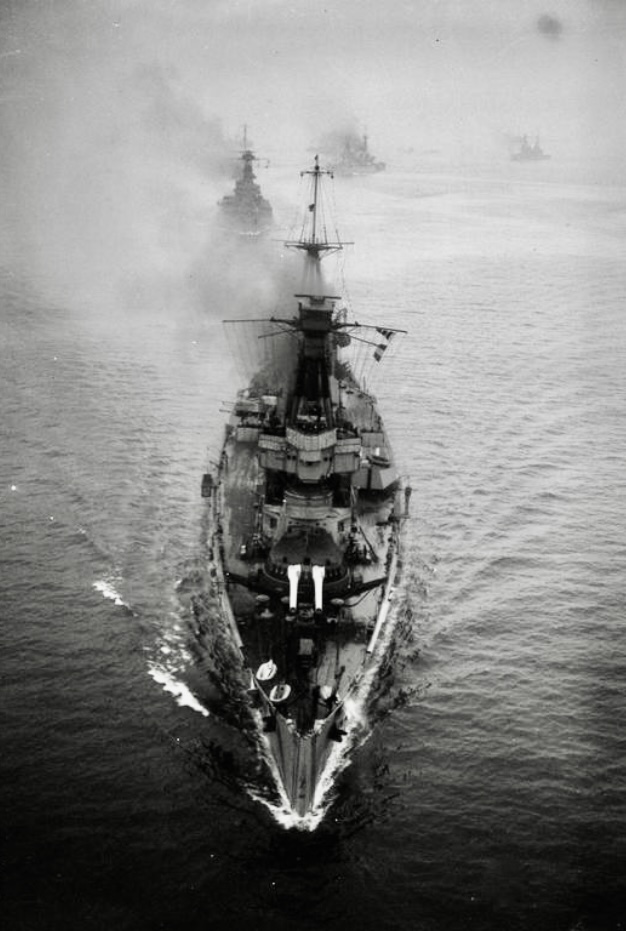
Various historical case studies show the effectiveness of the surface warship in key mission roles for Australia. From the Portuguese at the hands of the Dutch in the sixteenth and seventeenth centuries to Japan under American blockade, maritime powers have been fatally weakened by failure to defend their SLOCs. Britain, by contrast, survived two world wars by securing its sea lanes. By the 1940s the Atlantic was a joint operational environment, with RAF Coastal Command playing a key role, but adequate numbers of escort vessels were critical in the outcome of the campaign. Australia cleared its sea lanes, and ensured the safety of its troop convoys, within months of the outbreak of war in 1914 by deploying the deterrent power of the battle cruiser HMAS Australia and destroying the raider Emden. By the 1950s the RAN had made anti-submarine warfare a specialty, but its surface force structure has remained integral to its ASW capability.
The value of warships in joint operations was never more evident than in the Mediterranean and New Guinea during the Second World War. The defence of Tobruk during the siege, of great political as well as strategic value, was made possible by the famous naval ‘ferry’, including Australian destroyers, which brought in supplies and evacuated wounded and prisoners. New Guinea was a maritime-enabled campaign, fought in an archipelago with poor land communications. Naval forces conducted surveys, minesweeping, amphibious lift and logistic support for ground and land-based air components. Australian warships escorted landing forces and provided gunfire support and air defence. Allied ability to project power into the archipelago contrasts with German inability to invade Britain in 1940. The fundamental obstacle to a threadbare surface Kriegsmarine was the critical mass of the Royal Navy. The ability to evacuate troops aboard warships was clear at Dunkirk (where most were taken off on destroyers) and Crete (where naval forces took terrible casualties rescuing the Army).
The Myth of Surface Warship Vulnerability
All military units can become targets and are potentially vulnerable. But the notion that the surface warship has an undue lack of ‘survivability’ has never been proven. Its death has been predicted for over a century in the face of new weaponry such as torpedoes, aircraft and missiles, which it has itself adopted, just as it adopted the gunpowder, industrial and information revolutions. Threats have advanced, but so have warship defences, taking a quantum leap in the last quarter century. Layered and networked defence, to which warships are intrinsic – part of a system of systems, is enhanced by the difficulty of targeting a warship at a distance. The two salient cases of warships struck by missiles, HMS Sheffield and USS Stark, are over twenty years old, and involved ships presenting co-operative targets. Ship design can also optimise survivability in the event of a missile hit. Norman Friedman observes how bigger can mean safer and less sinkable. The surface warship is also tactically a moving target (unlike for example landward air bases), hard to locate in the vastness of the sea, with its own high level capability, awareness and defences. Unlike land and air forces, it can also mitigate lower level threats such as terrorism by the expedient of putting to sea for an extended period.
The Necessary Force Structure
A military capability is bound up with the force structure which ensures it. For reasons which have everything to do with technical issues of maritime warfare, naval forces must be balanced and adequate. The more complex the operational environment and the higher the operational tempo, the greater is the need for balance and adequacy. The traditional naval concept of a ‘balanced fleet’ is not sentimental but professional. It means having a functional force, prepared for likely eventualities, and sufficiently flexible for unlikely ones. The successful fleets of history, such as the Royal Navy in the Revolutionary, Napoleonic, and Second World Wars or the US Navy in the Pacific War, have been balanced fleets. Good naval commanders have appreciated the balance of their fleets and sought to unbalance those of their opponents. This was why Nelson cried out about ‘want of frigates’, and effectively why he wanted a ‘battle of annihilation’. Unbalancing the Japanese fleet, by destruction of its carriers, was what the Allies achieved at Coral Sea and Midway. For a smaller power such as Australia, with a big operational agenda, balance, flexibility and force multiplication are at a premium. This means adequate numbers of surface combatants without over commitment to another arm, for example submarines.
The British naval historian Stephen Roskill had a phrase: the fallacy of the single weapon. An unbalanced fleet, with over investment in one kind of platform, can have serious consequences in the form of truncated capability. Submarines alone, for example, cannot provide the dominance needed for sea control, and have never succeeded in doing so in outright maritime warfare. The defeat of the German U-boats in the Battle of the Atlantic was victory over a navy profoundly unbalanced in favour of submarines. Neither do submarines alone have the breadth of operational capability to exercise sea control. They lack, unlike surface ships, the visibility, accessibility, and graduated force for many diplomatic and constabulary duties. And they lack the three dimensional capability, which the surface warship has, to defend SLOCs and support joint operations. They are important components of the fleet, and perform valuable tasks by way of surveillance and strike for example. But compared with surface warships, they are not in the same way strategic units.
The surface warship is a platform, as well as a set of capabilities, and quantity matters as much as quality. Sea control is a function not just of capability but of numbers. This was Britain’s problem during the early Battle of the Atlantic when it lacked sufficient escorts, and Australia’s when the decline of its naval surface force between the wars had serious consequences when Japan attacked in 1941-2. The US Navy, by contrast, could prosecute the Pacific War not only because it won fleet actions but also because it had cumulative critical mass. Conversely, inadequate fleets, especially those facing high operational tempo, have suffered many defeats.
Thinking and Investing
Australia must think flexibly and broadly in the complex, uncertain and demanding environment of the early 21st century Asia-Pacific. It must realise that the reach of naval maritime power does not represent the ill-considered risk of global entanglements or imply a dangerous indulgence in ‘expeditionary warfare’, but constitutes an invaluable ability to engage in good international citizenship, protect and promote Australia’s wider and nearer interests (without necessarily putting boots on the ground), sustain alliances and friendships, help in shaping the strategic environment, and deal with threats and situations, foreseen or unforeseen, at a distance before they reach our shores and perhaps even before lethal force, with all its human and political consequences, needs to be employed. In warfare, as in medicine, prevention is better than cure.
History has lessons for Australia’s strategic policy context, maritime operational agenda, and naval capability and force structure requirements. The surface combatant is indispensable and enormous value for money. For 500 years sea power has never lost, and the intrinsic capabilities of the surface warship are the reason why. The more one considers the strategic context and the greater the need for fiscal efficiency, the more attractive is the flexibility and synergy of this remarkable weapons system and force multiplier whose effectiveness historically has been infinitely greater than the sum of its parts. Its pay-offs go even beyond the political-diplomatic, strategic operational and administrative-fiscal realms. In the defence of vital trade and the promotion of techno-industrial capacity and exports – through shipbuilding, logistic support, maintenance, repair and refits – it constitutes an investment in national economic health.
The implication of all this is the need to replace the RAN’s ANZAC class frigates adequately in terms of both capabilities and platforms, by means of the SEA 5000 project, while mindful of the demanding environment in which the ships will serve. The surface combatant force has been stretched during the last decade. Maritime operations, and more of them, are continually taking place. The question of a precise future force structure is beyond the scope of this article, but two things should be said. One is that for every warship deployed there must be one simultaneously in refit and one working up (‘the rule of three’). The other is that naval shipbuilding has economies of scale. Expenditure on research and development, design, and set-up costs is amortised over the life of a project, so the cost per unit decreases as more ships are built. An adequate number of surface combatants, within a balanced
fleet, are the minimal naval capability for a maritime nation such as Australia. A belief otherwise could be fairly suspected of lacking strategic foresight. Certainly, history would be against it.
About the Author
Dr John Reeve is a diplomatic and naval historian and former Osborne Fellow in Naval History at UNSW Canberra, Australian Defence Force Academy, where he taught for 20 years, is now an Honorary Senior Lecturer, and works with the Naval Studies Group. A graduate of Melbourne and Cambridge Universities and a Fellow of the Royal Historical Society, he is the author or co-editor of five books and 40 articles, chapters, and working papers, including (co-edited with David Stevens), The Face of Naval Battle: The Human Experience of Modern War at Sea (2003) and an introductory essay in James Goldrick and Alastair Cooper (eds), The Navy Chiefs: Australia’s Naval Leaders, 1911-1997 (2024). He is currently pursuing projects in early modern history and contemporary maritime strategy.