By Troy Lee-Brown*
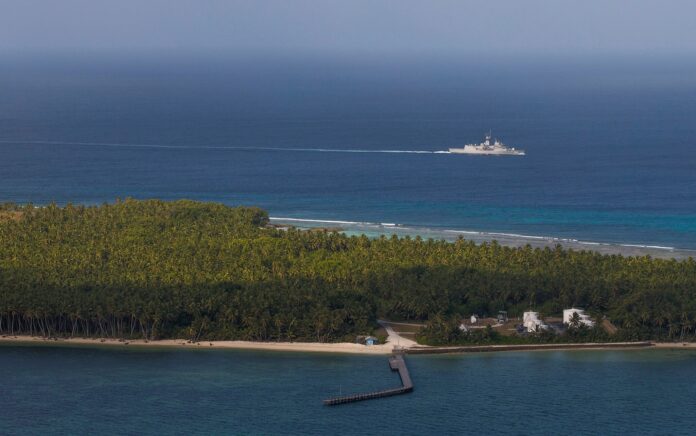
The marine park around the Cocos (Keeling) Islands should be understood as a national security asset, not just a conservation zone. This demands a whole-of-government approach coordinated by Australia’s Department of Defence, other Commonwealth and State agencies, environmental managers and marine scientists. (From: The Strategist. The Australian Strategic Policy Institute.)
Building coastal resilience protects Defence’s investment, while Defence’s resources can support environmental management. Conservation and national security can be mutually reinforcing rather than competing or siloed priorities.
Defence is currently lengthening and strengthening the runway and expanding the Rumah Baru Port Facility on the little territory’s West Island to support Royal Australian Air Force P-8A Poseidon and MQ-4C maritime aircraft. Expansion of the port will facilitate importation of building materials needed for the runway development.
The runway and other airfield facilities will provide Australia with extended maritime domain awareness in a crucial part of the northeast Indian Ocean, including Southeast Asia’s strategically important chokepoints.
Defence is therefore a major stakeholder in the future of the islands, and must conserve the surrounding environment in the Cocos (Keeling) Islands Marine Park. The islands’ highest point is a 9-metre sand dune, and they are increasingly exposed to the impacts of climate change, with persistent shoreline retreat and rising sea levels, threatening long-term habitability on the islands.
Research into the islands’ coastal resilience and the development of targeted coastal adaptation measures will play a crucial role in protecting the residents as well as Defence’s investments.
Canberra established the Cocos (Keeling) Islands Marine Park in 2022, as one of Australia’s National Representative System of Marine Protected Areas (MPAs). MPAs are no longer solely environmental initiatives. They’re increasingly recognised as critical components of national resilience that contribute to protecting coastal communities, sustaining marine resources and safeguarding critical and strategic infrastructure.
In the case of the Cocos (Keeling) Islands, marine scientists and environmental managers can provide valuable local ecological knowledge and develop coastal resilience planning that will support and protect Defence’s infrastructure rollout and operational planning.
Marine environmental resilience has become a core national security priority for many Indo-Pacific littoral and island countries as they confront the effects of climate change, illegal maritime activities, natural disasters and geopolitical competition.
Strengthening the Cocos (Keeling) Islands’ resilience requires closer collaboration between Australia’s environmental and infrastructure agencies, marine scientists and academics, Defence and maritime security organisations. This will meet conservation and humanitarian needs, boost disaster relief preparedness and support national security objectives.
Defence has surveillance equipment, logistics capabilities and expertise in contingency planning that can complement the islands’ environmental management and ensure their ecological survival. Frequent joint planning, shared maritime domain awareness, information exchange and scenario-based exercises will align the expertise of Defence, environmental managers and scientists.
Healthy coastal ecosystems are key to protecting critical infrastructure, ports and airfields from erosion, storm surge and other climate impacts. In an era of increased strategic competition, resilient coastal ecosystems also support the continuity of military operations and logistics during crises.
Conservation efforts and the defence of Australia can be mutually reinforcing. Strong communication between environmental managers and government agencies including Defence will lead to robust common operating procedures and shared risk assessments. This will enable mutually reinforced, integrated operations across environmental protection, disaster response, maritime law enforcement and national security.
Coastal resilience should be recognised as a priority for national security and Defence investment. Defence, marine scientists and environmental managers should work closely together through integrated funding streams in order to protect the expensive, critical military infrastructure on the Cocos (Keeling) Islands, with a long-term view of protecting the fragile marine and coastal environment.
Funding mechanisms can be strengthened by linking conservation projects to defence resilience, critical infrastructure protection, disaster preparedness and supply chain security. Federal and State governments should encourage combined investment involving Defence, environment, emergency management and infrastructure agencies to support projects that deliver broad and multiple outcomes.
This approach also creates opportunities to leverage international partnerships and establish defence cooperation investment programs that enhance resilience. For example, Australia can work with the United States and India, which have an interest in using the islands’ strategic geography.
Coastal resilience on the islands is key to Australia’s defence preparedness, which in turn boosts regional stability. This should encourage both defence investment from allies and strong international responses to regional security challenges.
The Cocos (Keeling) Islands present an opportunity for Defence – as the largest economic stakeholder – to cooperate closely with environmental managers and marine scientists. If successful, they can ensure Defence’s ongoing presence on these strategically important islands.