


New wave of militarisation in Sansha City
 By Conor M. Kennedy and Andrew S. Erickson
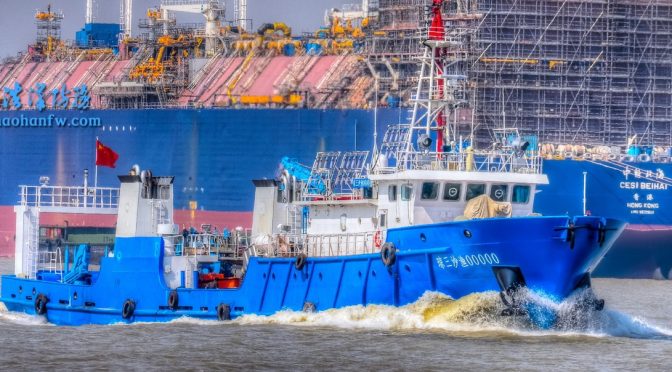
On 21 July 2013, several dozen Sansha City “residents” stood before the city government building and swore oaths during an inspection by Mayor Xiao Jie (肖杰) and his military counterpart Garrison Commander Cai Xihong (蔡喜宏). Clad in militia uniforms and toting Type-56 assault rifles, the Sansha Maritime Militia was officially established to uphold Chinese interests throughout the Paracels and beyond.
By Conor M. Kennedy and Andrew S. Erickson
On 21 July 2013, several dozen Sansha City “residents” stood before the city government building and swore oaths during an inspection by Mayor Xiao Jie (肖杰) and his military counterpart Garrison Commander Cai Xihong (蔡喜宏). Clad in militia uniforms and toting Type-56 assault rifles, the Sansha Maritime Militia was officially established to uphold Chinese interests throughout the Paracels and beyond. Canada’s only working sub — plagued by engine issues — completes mission
Canada’s only fully operational submarine has returned to its Halifax port (August 2016) Tuesday after completing a voyage to Scandinavian waters on its second...
China says new satellite will help safeguard interests at sea
A newly launched satellite will help China protect its maritime interests, the official China Daily newspaper reports (August 2016). The "Gaofen 3" satellite that...
China holds naval drill in Sea of Japan
China has conducted a “routine” naval drill in the Sea of Japan with the participation of missile-equipped warships, a Chinese military publication says.
The drill...
China’s first overseas naval base to open in 2017
By Arthur Dominic Villasanta
China is building its first overseas naval base and military outpost at the small port town of Obock in the...
Maritime security exercise in Singapore
A maritime security exercise that brings together nine countries including the United States began in Singapore on Monday (Aug 22, 2016). Called South-east Asia...
Russia investing in new ships, naval bases ‘to project its power’
By Nikolai Litovkin
Since October 2015 the Russian Navy has been conducting combat operations against the Islamic State militants in Syria. Today the fight...
No human in the loop – go for it scientists say
WASHINGTON: Should the United States build physical and cyber Terminators, weapons that do not have a human in the loop? The unequivocal answer from...
What are China’s intentions in the South China Sea?
WASHINGTON: What are China’s intentions in the South China Sea? It’s a question intelligence analysts, diplomats and the senior leadership of the United States...
Three assumptions that could leave the US vulnerable
The core task of the men and women who buy America’s weapons is to envision the adversaries and environments of tomorrow and buy forces that are up to the challenge.
This involves generating a similar set of assumptions to those used by operational strategists. Today, three assumptions underpin U.S. acquisition strategy that will leave tomorrow’s forces vulnerable to asymmetric defeat strategies and render the long-term U.S. acquisition plan unaffordable unless these change.