


First steel cut in Australian 30-year ship program
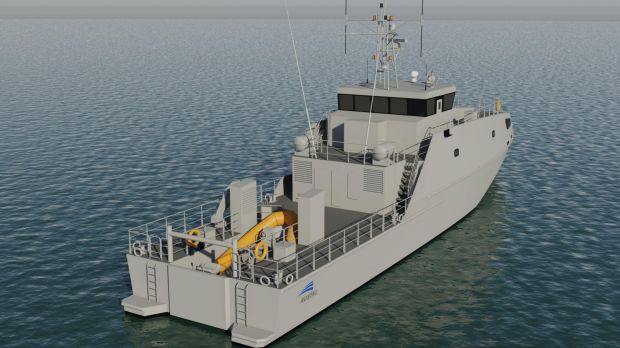 The first steel plates for a new fleet of Pacific patrol boats have been laser-cut (April 2017) at a small plant in southern Perth. It will be the start of a continuous 30-year program that Australian companies and the federal government hope will help spur a major export industry.
 DCNS signs agreement with Defence Materials Technology Centre
Defence industry company DCNS has signed (24 April 2017) an industry-participation agreement with the Defence Materials Technology Centre for defence construction and sustainment projects.
The...
Philippines sends defence chief to disputed island
The Philippines sent its top military officials last week (April 2017) to an island it occupies in the disputed South China Sea to reinforce...
Successful sea trials for Australian MATV
Damen Shipyards Group has announced the successful completion of sea trials of the Multi-role Aviation Training Vessel (MATV) MV SYCAMORE.
The sea trials included testing...
Philippines hopeful South China Sea code framework done in 2017
The Philippines is hopeful that the framework of the code of conduct for the South China Sea dispute would be completed during its chairmanship...
Xenophon warns China could sink Australian ships to warn US
Crossbench senator Nick Xenophon has warned China could sink an Australian naval ship to send a message to the United States if tensions escalate...
The Coast Guard and protecting chokepoints
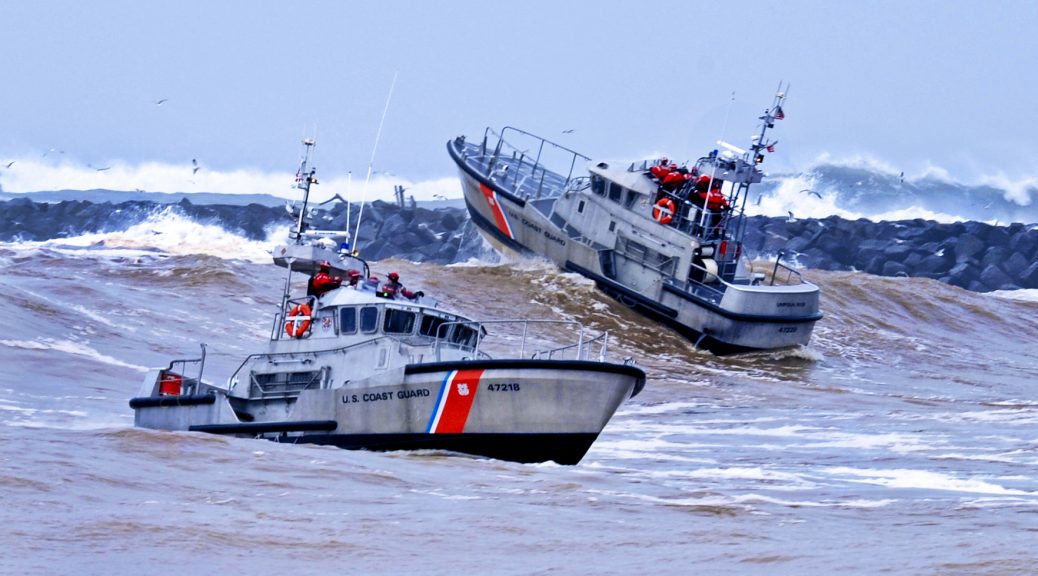 By Victoria Castleberry*
The need for security of international maritime trade has never been greater as over 90 percent of internationally traded goods are transported via maritime shipping and 70 percent of maritime shipped goods are containerized cargo.1 Most trade vessels are funneled through one or more of six strategic chokepoints around the world: the Suez and Panama Canals, Strait of Malacca, Strait of Bab el-Mandeb, Strait of Gibraltar, and the Strait of Hormuz.2
By Victoria Castleberry*
The need for security of international maritime trade has never been greater as over 90 percent of internationally traded goods are transported via maritime shipping and 70 percent of maritime shipped goods are containerized cargo.1 Most trade vessels are funneled through one or more of six strategic chokepoints around the world: the Suez and Panama Canals, Strait of Malacca, Strait of Bab el-Mandeb, Strait of Gibraltar, and the Strait of Hormuz.2 Electronic warfare simulation to equip sailors and submariners
In a collaborative project with Australian industry, the Royal Australian Navy is extending its use of simulation in training to ensure future electronic warfare...
Coordination: the Kingdom of Thailand’s example
 By Captain Panuphun Rakkeo*
The Thai Government recognizes that maritime security could not be handled by any one agency alone. In order to ensure safety of the seas, the Office of the National Security Council approved the establishment of the Thai Maritime Law Enforcement Coordinating Center or THAI-MECC on 17 March 1997. It is located at the Navy Operations Center and operates under the Office of the National Security Council's guidance. It was officially declared operational on 9 January 1998.
By Captain Panuphun Rakkeo*
The Thai Government recognizes that maritime security could not be handled by any one agency alone. In order to ensure safety of the seas, the Office of the National Security Council approved the establishment of the Thai Maritime Law Enforcement Coordinating Center or THAI-MECC on 17 March 1997. It is located at the Navy Operations Center and operates under the Office of the National Security Council's guidance. It was officially declared operational on 9 January 1998. What will be the shape of Indo-Pacific policy under Trump?
By Balaji Chandramohan*
Key Points
• The Trump Administration is contemplating the structure of its forward policy in the wider Indo-Pacific as it looks to address China’s...