

New magnetism submarine detection method
Finding a submarine beneath the ocean is one of the more difficult surveillance tasks in modern warfare. Sonar and sonobuoys can listen for underwater...

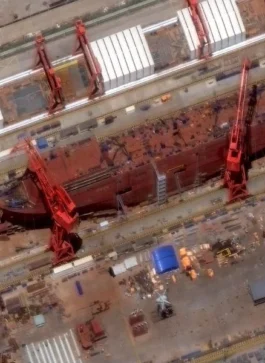
New shipyard for big Virginia-class parts
Anduril is establishing a new shipyard to manufacture parts for Virginia-class submarines in Baltimore County, Md., the company and the White Houseannounced, Breaking Defense...
30 ships in exercise off Scotland
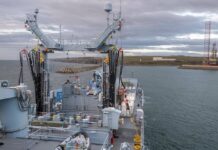
Medium-calibre guns will be fired at Cape Wrath as part of a multinational military exercise involving more than 30 ships and aircraft. Exercise Strike...
Who will repair sabotaged cables?
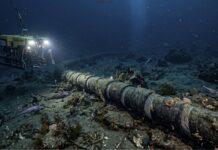
In June 2023, Dmitry Medvedev, Deputy Chairman of Russia’s Security Council, raised the prospect via the messaging app Telegram of ‘destroying our enemies’ ocean-floor...
UK to build submarine dry docks
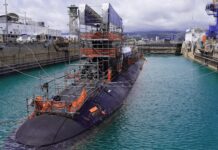
Chancellor John Healey will announce today that, subject to a commercial competition, the floating dry docks required for RN nuclear submarine maintenance at Faslane...
Mine clearance ability still vital
By Admiral Massimo Vianello, Italian Navy (Ret.) and Master Chief Petty Officer Giovanni Giorguli, Italian Navy (Ret.)*
Introduction
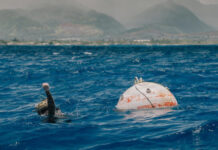
Throughout naval history, few weapons have demonstrated the...
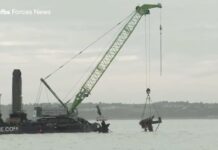
Thames operation to prevent explosion
By Tim Cooper
It's just after 8am and I'm standing about 200 yards offshore on what is known as Queenborough All Tide Landing in the...
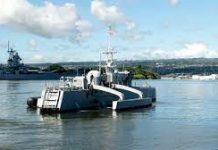
US Navy seeking more uncrewed vessels
The Navy is ushering in a new phase of integrating and testing medium unmanned surface vessels (MUSV) — and is seeking new solutions to...
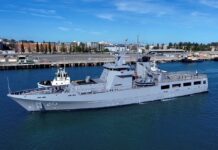
First OPV to Homeport in Cairns
It was announced on 29 September that at least two RAN Arafura Class Offshore Patrol Vessels (OPVs) will be homeported at HMAS Cairns. The...
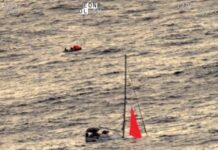
RNZAF finds sailors after yacht hits whale
On 27 September it was announced that a Royal New Zealand Air Force (RNZAF) P-8A Poseidon surveillance aircraft located four sailors from Australian yacht...