By Tom Sharpe*
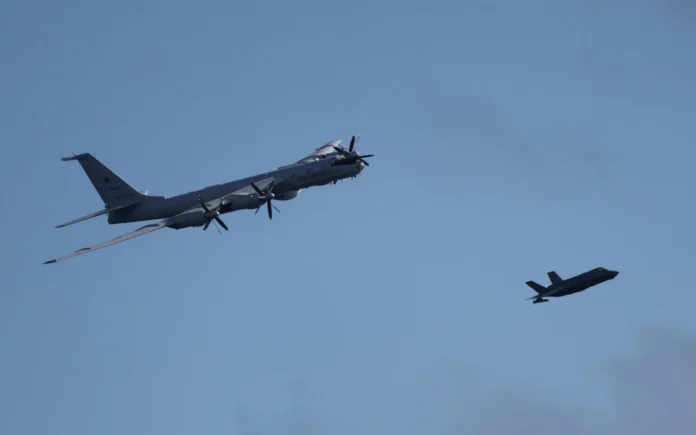
Last Thursday afternoon, high up in the Norwegian Sea, a Russian Tu-142 aircraft made a low pass over HMS Prince of Wales, flagship of the UK Carrier Strike Group, and dropped multiple sonobuoys into the water around her.
It ignored several radio calls on various internationally recognised frequencies. The Ministry of Defence (MoD) described the approach as “unnecessarily close” and the whole episode as “unsafe and unprofessional”. Unprofessional, certainly, this is how Russia operates. Unsafe? I would question that. This sort of thing occurs all the time and has done for decades. It happens both ways.
The plane, Nato codenamed Bear-F, is the maritime patrol version of the venerable Tu-95 bomber, in service since the 1950s. It is an anti-submarine aircraft, not an anti-ship one: its job is to find and track submarines using sonobuoys and other sensors, with a secondary role in surface surveillance.
It therefore posed no direct threat to the carrier or her escorting ships. Bears regularly come “round the top” of Norway heading towards Britain, where they are intercepted by the RAF’s quick reaction alert Typhoons. Historically this has been around eight times a year, but as with everything else Russia is doing, numbers are on the rise. When I was in the MoD press office you’d know it was happening because my RAF colleague on the next desk would get a flurry of calls asking what the boom was that they had just heard.
So what did the Bear actually do? A close pass. How close will remain classified, and “close” at sea is a relative term anyway. There is a graduated scale between assertive, too close, unprofessional, dangerous and then stupid.
Spend long enough at sea and you will see and be involved in most of these. This particular fly-by was low on the sliding scale. The 2021 Black Sea incident, when Russian forces fired just astern of HMS Defender whilst yelling blue murder on the radio, was worse; so was the lasing of RAF aircraft off Scotland by the spy ship Yantar.
Firing shots near a yacht under sail doing six knots while stopped in one of the world’s busiest shipping lanes, as the Frigate Admiral Grigorovich did the other week, is unprofessional, and given that bullets fired at sea ricochet and can end up almost anywhere, also dangerous.
There are shades of grey, as ever, but the Bear particular incident was well below these three in terms of danger and risk of miscalculation. The MoD made much of it, but that is probably as much about setting the tone for the Nato summit in Ankara as anything else.
Dropping sonobuoys is a little more interesting as they could have got some useful acoustic data off our carriers, but those ships are not designed to be stealthy underwater and it’s likely that much of their signature is known already. Ironically, the only thing in the area noisier than the carrier would be the Bear-F itself, its counterrotating propellers making a unique thumping noise loud enough for underwater submarines to hear.
Of course, if they were looking for the nuclear-powered attack submarine that would normally be with our carrier, they would have been able to do that from inside a taxi as they are all currently alongside in maintenance. If there is a scandal here, it is that, not the airshow they put on.
What did we do in return? Two F-35B Lightnings of 809 Naval Air Squadron launched from the carrier and escorted the Bear until it departed the area. The key, as ever, is to get the jets airborne long before the visitor arrives, to make the point that they have been tracked from the moment they took off, using a web of British, Norwegian and allied sensors.
This game of cat and mouse has been going since the 1950s and is an important part of intelligence gathering and also deterrence. Both sides asserting each other in various ways. In this case an F-35B against a Bear would be a turkey shoot and Russia knows that. When it’s our ships interacting with their submarines, things get murkier. Either way, the recent trend for online commentators to yell, “Why didn’t we shoot it down?” misunderstands the nature of these interactions, and the escalation that would cause.
Operation Firecrest, the reason the carrier was up there in the first place, is precisely about this. The Carrier Strike Group is in the High North to deter Russian activity, protect our undersea cables and pipelines on which we depend, and generally enforce Nato’s northern flank. We are entitled to be there: these are international waters. But that principle cuts both ways. The Russians are entitled to be there too, and to look at us while they are. It would be better if they did it at a distance, but that is not their way.
None of which is to downplay the macro trend, which should not be ignored. Shadow-fleet incursions, Russian attack submarines off our coast, GUGI survey vessels loitering over our critical undersea infrastructure and cyber-attacks are now routine, with cyber incidents happening daily. Last week the International Institute for Strategic Studies (IISS) linked drone activities over key UK/US airbases back in November 2024 to a Russian shadow-fleet vessel that had been berthed in Britain.
There are parts of this story that bear further investigation, but Russia did the same to Denmark in September 2025 and the ship from which they flew, the Boracay, was subsequently boarded and detained by France. Nothing was found but the ease with which this kind of grey-zone activity can be made deniable and hidden makes it such a threat.
It is almost certain that a Russian drone incursion into British-controlled airspace will happen again. It doesn’t need to hit anything, just shut down airports and watch the chaos and false reporting ensue. How have we used the intervening years to counter it? This is a key question.
One final, practical observation. This was a crewed aircraft flying at crewed warships, being met by crewed jets. For all the recent talk of drones and autonomy being the future, military people aren’t going anywhere just yet. Beware defence plans that suggest they are as they will have been written to save money, not increase effect. In reality we need both, and guess what, that’s expensive.
*Tom Sharpe OBE served for 27 years as a Royal Navy officer, commanding four different warships
This article first appeared in The Telegraph and is republished with permission.