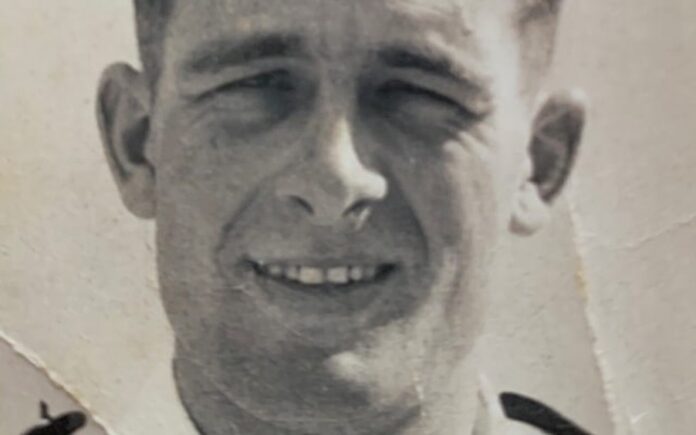
Lieutenant-Commander John Clarke, who has died aged 82, was a naval hydrographer and the project manager behind one of the most celebrated marine salvage operations of the 20th century: the 1981 recovery of five tons of “Stalin’s gold” from the wreck of the cruiser HMS Edinburgh, lying 800 feet down in the Barents Sea.
On May 2 1942, Edinburgh was the flagship of then Rear-Admiral Stuart Bonham Carter, who was commanding the escort of convoy QP11. Edinburgh was carrying 465 gold ingots in 93 wooden boxes to Britain, as part-payment from Russia for Allied war material, when she was torpedoed by the German submarine U-456. Sixty of her crew and the gold were lost.
The cargo, worth some £1.5 million at the time and several hundred million pounds in today’s money, lay undisturbed for nearly four decades until Clarke, then head of special projects for the Offshore Supply Association (OSA) in London, was telephoned in May 1980 by the diving contractor Ric Wharton with news of a scheme to recover it. Clarke had fielded enough calls about sunken Spanish galleons to be wary, and Wharton had to ring twice before Clarke took the story seriously. Once persuaded, having read the salvor Keith Jessop’s research from the Public Record Office at Kew, he became the operation’s driving force.
Clarke insisted that no credible attempt could proceed without a proper survey company involved, and brought in an old Dartmouth friend, Carl Oberman, at Racal Decca Survey. Clarke then spent almost 12 months assembling a fractious consortium of shipowners, divers and surveyors, and negotiating a “no cure, no pay” commercial structure almost unheard-of among conventional shipping firms. When OSA relocated to Germany, Clarke resigned but was soon re-employed as a consultant. He ran the project, including delicate negotiations in Moscow, on its merits rather than on any one company’s politics.
By studying Edinburgh’s sistership, the museum-ship Belfast, the diving team could learn the layout of the sunken wreck and the scale of the challenge they would face when they dived on a war grave. Clarke also tracked down several of Edinburgh’s survivors, with mixed success. One, the ship’s former first lieutenant, could remember nothing and suggested that they have a gin and tonic instead; another, her senior engineer, recalled the sinking in vivid detail but gave the project only a 40 per cent chance of success. Undeterred, Clarke noted: “Not exactly what I wanted to hear.”

He also attended secret explosive trials conducted by Sidney Alford of the shaped charges the expedition would carry, and helped recruit a 12-strong diving team from Australia, New Zealand, South Africa and Britain, together with the American gas-reclamation specialist Don Rodocker, whose expertise proved critical.
The expedition, which finally sailed in August 1981 aboard the diving support vessel Stephaniturm, pushed the limits of what commercial diving could then achieve. Saturation divers worked in pairs from a bell, breathing reclaimed helium in what was the first commercial use of helium recovery systems, and setting a depth record for sustained saturation diving that has never since been surpassed.
They cut through Edinburgh’s armoured hull, cleared a collapsed wireless office and an eight-ton generator, and on September 16 recovered the first ingot. By early October, 431 of the wreck’s 465 gold bars had been brought to the surface before deteriorating weather forced the operation’s abandonment. A further 29 bars were recovered in a follow-up expedition in 1986.
Clarke, as one of two project managers aboard Stephaniturm alongside Michael Stewart, later recalled the peculiarities of the expedition with characteristic dryness: the Soviet minders he nicknamed “the KGB colonels”; The Times journalist to whom he took an instant dislike, and who was later suspected of stealing Jessop’s diary; and the celebratory dinner in Murmansk enlivened by caviar and champagne.
The gold was landed at Peterhead on October 16 1981 after a 49-day round trip, driven from the quayside by Brink’s-Mat van to the Bank of England, while the divers, who had earned 92 per cent of their contracted bonus, were each presented with a miniature gold bar.
A Hydrographic Note was published on March 19 1982 with the position of the wreck, which was 13 nautical miles from where Bonham Carter had reported it in 1942.

John Noel Visger Clarke was born on February 7 1944 on the Isle of Wight and educated at Monkton Combe School near Bath, where his father was a rear-admiral and engineering specialist.
He joined Dartmouth in 1962, where he excelled in seamanship and boatwork, on one occasion taking a fast motor boat under the low bridge at Totnes, a manoeuvre strictly forbidden but, characteristically, he escaped punishment.
His early time at sea saw him as a cadet in the frigate Torquay visiting Bermuda and Canada in 1963, and as a midshipman in the destroyer Cambrian in the Far East during the Indonesian Confrontation, and briefly seconded to a Malaysian patrol boat in 1963-64.
He specialised in hydrography, the branch of the Navy responsible for charting the world’s oceans. Clarke’s first survey ship in 1964 was Dalrymple in the North West Approaches, when, he recalled, surveys were still undertaken very much on the lines of Captain Cook – “the difference being that we had motor boats with echo-sounders.”
Next, in Dampier from 1965 to 1967, he surveyed remote islands in the Solomons, Fiji and the New Hebrides (now Vanuatu), developing a lifelong attachment to Fiji, and in particular to the village of Naduri, to which he returned at every opportunity for the next 25 years, and wearing a Fijian sulu at his own wedding on a beach in New Zealand decades later.

He was briefly first lieutenant of the inshore survey vessel Echo, which surveyed the Thames and the East Coast. Then, as Vidal’s navigating officer from 1968 to 1970, he ran a survey camp on the then-undeveloped Trucial Coast, on the south side of the Strait of Hormuz, taking soundings by hand lead and horizontal sextant angle and building a jetty from driftwood.
Daunted by the prospect of years of deskbound chart work at the Hydrographic Department in Taunton, Clarke left the Navy in April 1972 at the end of his short-service commission. Chance drew him into the offshore industry, and it was that unusual pairing of naval survey expertise and his commercial nous that equipped him, a decade later, to manage the Edinburgh salvage, an outstanding feat of organisation as much as of diving.
In later years Clarke, self-reliant, forthright, inquisitive, amusing and loyal, settled near Bembridge, where he made his own blush wine. On the 35th reunion of his Dartmouth term, he arrived by a former Bembridge ferry which as a lad he had driven for £5 a week. Steaming single-handed across Lyme Bay by night, he took a party of term-mates, including his contemporary, the fundraiser Ian Shuttleworth in his wheelchair, up the Dart to the Ferry Boat Inn, where they were obliged to imbibe until the tide returned.
In 2004 he married Susan Dick, who survives him with three stepchildren.
Lt-Cdr John Clarke, born February 7 1944, died July 4 2026