One of the perennial questions for naval officers and policy makers is how relevant are the teachings of the classic naval strategists to the real world. In the Autumn 2006 edition of Headmark Lieutenant Commander (later Rear Admiral) Kath Richards tackled this very question.
The relevance of classical naval strategists to the RAN in the 21st century
Medium powers are said to lie between the self-sufficient and the insufficient. Super powers are self-sufficient. They are states with a stake in peace and freedom everywhere and the power to protect them. They have been likened to strategic monoliths – possessing the economic muscle, diplomatic clout and military might to defend their interests with their own resources. Small powers are insufficient. They lack the necessary resources to defend even their most vital interests such as territorial integrity and political independence. Occupying the middle ground in the strategic hierarchy of nation states are the medium powers.
Despite their diversity and differences, Rear Admiral Richard Hill suggests a common characteristic of medium powers is their aspiration for autonomy. He states that a medium power seeks to “create and keep under national control enough means of power to initiate and sustain coercive actions whose outcome will be the preservation of its vital interests?”
A medium maritime power is one that aims to use the sea to enhance its autonomy and preserve its vital interests. The navy of a medium maritime power seeks to employ sufficient naval capabilities to achieve this end. How a medium power navy uses the sea to meet its objectives is the domain of maritime strategy.
The RAN is an example of a medium power navy. Its maritime strategy is centred on a trinity of diplomatic, constabulary and military functions. Arguably, this strategy has its origins in the concepts of the classical naval strategists, most notably Alfred Thayer Mahan and Sir Julian Corbett.
Mahan has been described as an evangelist of seapower, a brilliant and influential naval theorist and is regarded as having laid the foundations of modern naval history. Corbett has been described as a theorist “whom no modern student of maritime war can afford to ignore,” and is credited with providing the Royal Navy of the early 20th century with its strategic doctrine.
The aim of this article is to explore the concepts of the classical naval strategists Alfred Thayer Mahan and Sir Julian Corbett and the relevance of their concepts to medium power navies. This article will outline the key concepts of both strategists and examine the arguments surrounding the relevance of their concepts to medium power navies, such as the RAN, in the 21st century.
Mahan – His concepts and their relevance
In 1890 Mahan, a serving US naval officer and avid historian, published his most influential and celebrated work The Influence of Sea Power Upon History 1660-1783. In this book, Mahan sought to demonstrate the effect of sea power upon the course of history and the prosperity of nations. The book met with critical international acclaim and established Mahan as the leading naval strategist of the fin de siècle (end of the century).
In the years that followed its release, Mahan published some 20 books and in excess of 160 articles covering a wide range of contemporary and historical maritime issues. A common theme throughout his work was that the US must develop its maritime power in order to achieve strategic greatness. In support of this theme, Mahan proposed a variety of different concepts ranging from grand strategy to issues of fleet tactics. However, a review of his major works indicates that he principally endeavoured to advance ideas in two main areas. Firstly, Mahan sought to define the relationship between sea power and national greatness and secondly, he sought to establish some guiding principles of naval strategy and naval warfare.
On the issue of sea power and national greatness, Mahan argued that a study of history revealed that the ‘mastery of the seas had been a determinant of victory in war and of prosperity in peace!’ To Mahan, sea power was the key to national greatness. Over the years, numerous commentators have debated the continued relevance of this concept. Needham suggests that today sea power must be balanced with a strong economy, a stable and responsive government, a developed industrial base and a highly capable military force. Sea power is not enough in itself to achieve national greatness. Extending this argument to medium powers, sea power should be considered as simply one of a number of measures that provides a means of protecting vital interests and enhancing autonomy. It is not a strategic planning panacea.
Mahan also proposed that the instruments of war, seaborne commerce and colonies underscored a nation’s maritime dominance.
Relating these factors to medium powers, Mahan’s instruments of war can be considered akin to modern naval capabilities. An effective naval force is clearly a prerequisite for control of the sea. However, beyond this idea the relative utility of seaborne commerce and colonies to a medium power navy requires further analysis.
In the case of seaborne commerce, the issue is not the relationship between a state and its maritime trade, but rather whether this trade is directly dependent upon naval strength for its existence and prosperity. With this in mind, Etzold contends that the traditional interplay of commerce and navies has been overturned as a result of changes in global power politics, from a military/territorial base to an economic/resource base. He maintains that the free use of the sea for commerce and transit is today a matter of convention and usage and not national power and certainly not naval power as it was in Mahan’s day. In the 21st century, all powers, regardless of their size are afforded the opportunity to pursue their commercial and strategic interests on the high seas.
On first inspection Mahan’s concepts on commerce and navies appear somewhat dated when applied to the economic reality in which medium power navies operate.
However, for medium power navies perhaps a modern take on Mahan’s concepts would be to recognise the benefits of international conventions, which govern sea usage. Arguably, conventions like the United Nations Convention on the Law of the Sea (UNCLOS) serve to assist all states in protecting their vital interests at sea.
In the case of colonies, Professor Barry Gough states that a nation does not have to possess colonies to have naval power and greatness and argues that forms of informal control can be equally as valuable as formal possession. This line of argument is further developed by Commodore Sam Bateman who suggests that alliance relationships, port access rights and cooperative approaches to regional security have now replaced the utility that Mahan once saw in colonies.
In a post-colonial world, perhaps the legacy of Mahan’s colonial concepts for medium power navies is that they should seek to foster international engagement and alliance relationships to enhance their autonomy and protect their vital interests. For the RAN, these security objectives are explicit in the Defence 2000 White Paper.
Beyond the macro naval-political dimension, Mahan also presented a variety of different concepts relating to naval strategy and naval warfare. Fundamentally, he considered that the purpose of naval strategy was to secure command of the sea.
However, today, the concept of command of the sea is now viewed as largely unrealistic in the face of technological advancements since Mahan’s day. In particular, technology such as submarines and aircraft mean that it is no longer conceivable to totally control the sea for one’s own use or to totally deny it to an enemy. Consequently, command of the sea is now viewed as a relative rather than absolute term and in its place the term sea control is now more often espoused as the fundamental purpose of naval strategy. For a medium power navy, sea control must be regarded as essential to mission achievement. With respect to the RAN, Vice Admiral Chris Ritchie has argued that sea control “is essential to do any military task away from the Australian mainland and even for many tasks that are within Australian territory.”
Mahan also maintained that the control of maritime commerce, through command of the sea, was the primary function of navies. Hе believed that wars were won by the economic strangulation of the enemy from the sea and that the stoppage of commerce compelled peace. Today, Mahan’s view that a navy exists solely to control maritime commerce appears somewhat myopic. As previously discussed, the traditional dependency between navies and commerce has yielded to the passage of time. Hence, for medium power navies, a broader view of naval functions is warranted in the 21st century when formulating maritime strategy.
Rear Admiral Richard Hill recommends such a view should focus on the ‘levels of conflict’ which cover normal peacetime operations, low level operations, higher level operations and general war. This approach has been largely adopted by the RAN, which upholds a trinity of naval roles covering diplomatic, constabulary and military functions in its maritime strategy.
Beyond the broader realms of strategy, Mahan’s warfighting concepts centred on two key principles. Borrowing heavily from Jomini, he proposed that ‘concentration was the predominant principle of naval warfare’ and he saw the fleet as an offensive weapon that had to be used aggressively. Both these concepts have endured the passage of time and are considered by the RAN as two of the fundamental principles of war.
Arguably, these principles led Mahan to develop his thesis of the decisive battle. Mahan regarded the primary mission of a nation’s fleet was to engage the enemy’s fleet. He advocated that ‘the one particular result which is the object of all naval action, is the destruction of the enemy’s organised force, and the establishment of one’s own control of the water.
Mahan broader realms of strategy, Mahan’s espoused that the concentrated fire of the battle fleet was the principal means by which naval power was to be asserted and that the enemy’s battle fleet was the preferred target of such fire.
On first inspection, the notion of a decisive battle between fleets appears to hold little relevance to modern medium power navies. However, whilst a Nelsonic vision of fleets exchanging broadsides is clearly archaic, the concept of battle per se continues to hold relevance. Rear Admiral Hill suggests that battle is a facet of higher level military operation that medium power navies should address. Не postulates that battles occur once the “tensions of sea use and sea denial have come to a head.” He concludes that “if medium power navies plan never to have a battle, they may get one on very unfavourable terms.”
No examination of Mahan’s warfighting concepts is complete without analysis of what some commentators consider are his doctrinal failings. These include his lack of support for guerre de course and naval artillery as well as his omission of army roles in the maritime environment.
Despite the great importance that Mahan placed on maritime commerce, he was not an advocate of a guerre de course strategy. Mahan considered that such a practice amounted to abandoning any attempt to control the sea. He believed that attacks on merchant shipping, along with harassing raids and the defence of coasts and harbours were options to be pursued by a ‘fleet in being’. To Mahan the only effective way to address trade was to engage and defeat the enemy’s fleet thereby making the sea untenable to merchant shipping.
History and technology have illustrated the fallibility of Mahan’s concepts in this area. In both world wars, the German U-Boat fleet conducted a highly effective guerre de course campaign which arguably brought Britain to the point of ‘economic strangulation’ championed by Mahan. For medium power navies, such as the RAN, attacks against shipping are today considered an integral facet of combat operations at sea.
Mahan’s disregard for actions from the sea, such as bombardment by naval artillery or assault from amphibious forces are also noteworthy as well as his scant attention to the interdependence of armies and navies in wartime.” It has been suggested that Mahan’s lack of appreciation of naval artillery was largely a result of his Civil War experience in which Union ship bombardment against Confederate coastal forts proved problematic. Mahan was also highly sceptical of the utility of amphibious operations in warfare. He warned that such operations could reduce the navy to simply a branch of the army.
Finally, Mahan regarded the navy as an autonomous agent, which acted independent of the army and its land campaigns. He considered that the navy was not affected by the outcome of land battles. For medium power navies, Mahan’s limited appreciation of power projection from the sea and the connectivity of land and sea forces, significantly limits the relevance of his theories in these areas to the modern day. In the 21st century, combat operations from the sea are as much a part of maritime military action as combat operations at sea. Furthermore, effective joint systems are considered essential force multipliers for any medium power navy.
In summary, Mahan’s concepts of sea power and national greatness reflect an imperial mercantile world whilst his concepts of naval strategy and naval warfare are dominated by a theme of autonomous offensive naval action. A review of these concepts reveals that many continue to hold resonancе, whilst others have clearly fallen victim to a changing world political order and the advancing technology of the 20th century.
For medium power navies, perhaps the relevance of Mahan is best summed up by B.R. Sullivan. He suggests that his enduring value “is not to be found in dated notions of naval power and strategy. Instead it is his approach to thinking about threats and the use of force… and ideas about the very nature of warfare that provide the classic worth of his works.”
Corbett – His concepts and their relevance
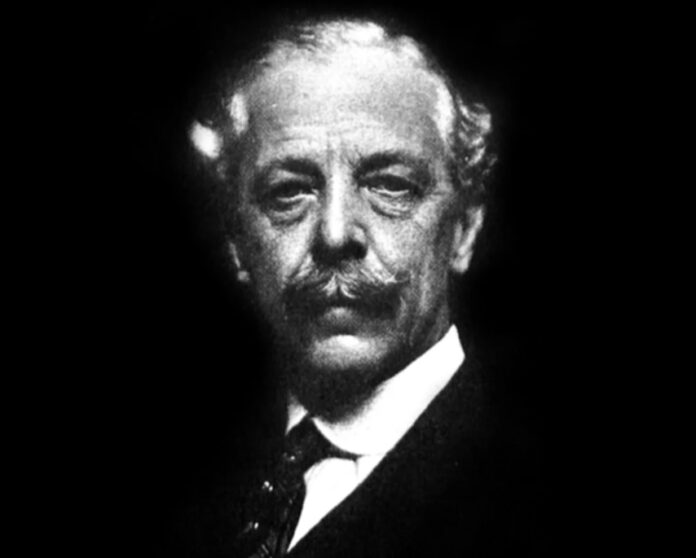
Professor Geoffrey Till notes that while the theories of Alfred Thayer Mahan are all very well in their way, the work of Sir Julian Corbett provides a much more appropriate foundation for speculation about the future of sea power in the 21st century. Sir Julian Corbett, a lawyer and an historian, came to the study of naval strategy late in life. He is best remembered for his book Some Principles of Maritime Strategy which was published in 1911. In this work, Corbett developed a number of concepts relating to a general theory of war, the theory of naval war and the conduct of naval war – all of which have degrees of relevance for medium power navies in the 21st century.
In the broadest sense, Corbett theorised that strategy needs to be consciously related to foreign policy and naval strategy to land strategy. In his theory of general war, his central thesis was that since men live upon the land and not the sea, great issues between nations at war have always been decided – except in the rarest cases – either by what your army can do against your enemy’s territory and national life, or else by the fear of what the fleet makes it possible for your army to do.
Fundamentally, Corbett saw that the reward for being strong at sea was the capacity it conferred to influence events ashore for that was where events were actually decided. This thesis led Corbett to develop concepts that examined the role of sea power in the wider scheme of things.
Specifically, Corbett drew a distinction between maritime strategy and naval strategy. Corbett considered that maritime strategy was inherently joint in nature and focused on the relations between the army and navy in planning war. He asserted that maritime strategy related to the principles which govern a war in which the sea is a substantial factor. In contrast, naval strategy “determines the movements of the fleet when maritime strategy has determined what part the fleet must play in relation to the action of the land forces.” Unlike Mahan, Corbett did not see navies as autonomous agents. He viewed naval strategy as not a “separate entity but simply a part of the art of war”.
For medium power navies, Corbett’s ideas on maritime strategy have proven to be lasting. Royal Navy doctrine states that “maritime power is inherently joint in nature. It emanates from forces drawn from all three services, both sea and land based, supported by national and commercial resources, exercising influence over the sea, land and air environments.” RAN doctrine maintains that “the environments within which the services operate and fight are interconnected and cannot be considered in isolation”. Both doctrines clearly echo Corbett’s intent.
Beyond Corbett’s concepts of maritime and naval strategy, his theory on naval war also warrants attention.
Like Mahan, Corbett upheld the principle of command of the sea. He considered that the “object of naval warfare must always be directly or indirectly either to secure command of the sea or to prevent the enemy from securing it.”
However, unlike Mahan, Corbett saw that the aim of command of the sea was to ensure control of maritime communications and not the total destruction of an enemy’s fleet. Corbett viewed maritime communications as those that were required to support a fleet and an army overseas and also trade routes. To Corbett, command of the sea was a relative and not absolute concept. He saw command as being asserted in ‘theatres’ and used to prevent the enemy from disrupting one’s own communications.
Relating Corbett’s communications concepts to medium power navies, Rear Admiral Hill asserts that the passage of shipping against opposition has been the most important single type of sea use operation in the two major wars of the 20th century. Consequently, medium power navies should address it as an element of higher level maritime operations.
For the RAN, the importance that Corbett placed on maritime communications remains apposite. As an island, Australia is fundamentally dependent upon the sea for communications. To address this strategic reality, current RAN maritime doctrine upholds operations such as the interdiction of commercial shipping (to prevent an adversaries re-enforcement of resupply of deployed units), layered defence activities (such as convoy), and the naval control of shipping as fundamental aspects of combat operations at sea.
To ensure the control of communications, Corbett proposed a number of concepts covering the conduct of naval war. He advocated both decisive battle and blockade as methods of securing command. For the latter he distinguished between close and observation blockades, arguing the utility of both against either naval or commercial forces. Apart from these offensive measures, Corbett also argued strongly for defensive measures. He maintained that defensive fleet operations such as a ‘fleet in being’ and ‘minor counter attack’ could be effective by holding command of the sea in dispute. He further proposed that in exercising command of the sea, a fleet should target defence against invasion, the attack and defence of trade as well as the attack, defence and support of military operations.
Like Mahan, however, Corbett’s warfare concepts have not escaped criticism. Some commentators suggest that Corbett fundamentally underestimated the impact of the submarine, the value of convoys and the effectiveness of a guerre-de-course strategy.
Despite these issues, Corbett clearly recognised the utility of both offensive and defensive operations, the importance of maritime trade, the requirement to defend the homeland and support army operations.
Rear Admiral James Goldrick states that medium power navies “need to develop and maintain the greatest possible range of capabilities to provide the balance necessary to protect against threats in the maritime environment and provide their governments with the widest range of options.”
Perhaps therefore the true relevance of Corbett’s warfare concepts for medium power navies is that he presented a multifaceted approach to the subject. In summary, Corbett’s theories of war, naval war and the conduct of naval war all contain concepts, which continue to hold relevance for mediume power navies in the 21st century. Specifically, his views on maritime strategy, sea communications and naval war-fighting concepts appear as pertinent to modern medium power navies today as they were nearly a century ago.
Conclusion
A medium power navy seeks to employ sufficient naval capabilities to preserve its nation’s vital interests at sea. To pursue this objective, a medium power navy requires a maritime strategy. Alfred Thayer Mahan and Sir Julian Corbett were among the very first who sought to establish the principles of maritime strategy. Both men aimed to demonstrate that sea power has been and would continue to be, very important for present and future developments.
Over the years, Mahan’s theories have been said to wear less well than Corbett’s. Mahan’s studies of sea power and national greatness are indicative of this with their references to colonies and the dependent relationship between commerce and navies.
However, for medium power navies in the 21st century, the value of these theories lies not in the attitudes of an imperial age, but rather in Mahan’s attempt to define the relationship between a navy and its nation.
Mahan’s exploration of naval strategy and naval warfare centred on the concepts of command of the sea and autonomous naval action. He viewed command of the sea as an absolute concept. It could only be achieved through decisive battle. Mahan also saw the primary function of navies was the protection of maritime commerce, yet he failed to value a guerre de course strategy. He also gave little credence to the utility of naval artillery and the relationship between navies and armies, or medium power navies, technological change and a doctrine of joint warfare have clearly impacted Mahan’s tactical and operational applications of sea power. However some of his principles, such as the concentration of force and offensive action at sea, are as relevant today as they were a century ago.
In contrast to Mahan, Corbett believed that it was on land that human destiny was decided and it was where they had an impact ashore that navies were most influential. Не considered that navies and armies were interconnected and hence discriminated between maritime strategy and naval strategy.
To Corbett, command of the sea was a relative concept. Its objective was the control of communications in a given theatre. This control could be secured by any number of offensive or defensive measures, though like Mahan, he underestimated the impact of submarines and the inherent benefits of a guerre de course strategy. In Corbett’s concepts, medium power navies find the origins of terms such as joint warfare, power projection and sea control. Today, these concepts are embedded in the war-fighting doctrines of many medium power navies.
In the final analysis, this article has demonstrated that though Mahan and Corbett wrote their works many decades ago, a number of their concepts relating to maritime strategy and naval warfare continue to hold relevance for medium power navies, such as the RAN, in the 21st century.
About the Author
Rear Admiral Katherine Richards AM CSC RAN (retired) served in the RAN for 36 years and retired in 2024. She graduated Dux of her naval class at the Australian Defence Force Academy with First Class Honours in Mechanical Engineering. After her seagoing service she commanded HMAS Cerberus and later was Head Navy Engineering and the Defence Seaworthiness Regulator. Kath Richards subsequently served as the Australian Naval Nuclear Powered Submarine Safety Regulator, overseeing the safety and environmental performance framework for the nuclear submarine program. Kath Richards is now Chief Engineer at Engineers Australia and is a Board Member of Australia’s Nuclear Science and Technology Organisation (ANSTO). In 2024, she obtained a post graduate qualification in quantum physics from the ANU.
A fully referenced version of this article is at:
https://navalinstitute.com.au/wp-content/uploads/Headmark-121-Autumn-Winter-2006-pp21-36.pdf