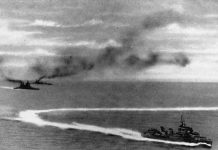
The German submarine captain saw his target’s silhouette against the evening sky off the coast of southern England and gave the command to fire a single torpedo. It was the last anyone would see of the US Coast Guard Cutter Tampa and its 131 crew members for more than 107 years, CNN reports.

Three minutes after that German torpedo struck the vessel amidships, the Tampa was on the bottom of the Atlantic with all crew lost, the largest naval loss for US forces during World War I.
On Wednesday, the Coast Guard announced a team of British divers had located the wreck of the Tampa last weekend at a depth of 300 feet (91 meters) some 50 miles (80 kilometers) off the Cornwall coast.
The team had been looking for the Tampa since 2023.
“This discovery is the result of three years of research and exploration. TAMPA is of huge importance to the United States and the relatives of everyone who died that day. Their final resting place is known at last,” dive team leader Steve Mortimer said in a Facebook post.
“Finding TAMPA didn’t just happen last weekend. This was the tenth trip to dive possible targets and everyone – whether skipper, crew, researcher, liaison or diver – played a part. We’re still buzzing. We did it!” another Facebook post said.
The Coast Guard said it provided the group with records and data to confirm the wreck was the Tampa.
“This included the archival images of the deck fittings, ship’s wheel, bell, weaponry and archival images of the Tampa,” William Thiesen, Coast Guard Atlantic area historian, said in the statement.
On September 17, 1918, the ship began convoy duty in the Atlantic waters. But on September 26, the Tampa’s captain requested permission to leave the convoy it was escorting as his ship was running dangerously low on coal to power its boilers and needed to refuel.
Commanders granted the captain’s request, and the ship headed to a port in Wales at full speed around 4 p.m.
Around 8:15 p.m., it was spotted by the German sub UB-41 which fired a lone torpedo. The blast from the torpedo was followed by a secondary explosion, caused by either coal dust igniting or depth charges aboard the Tampa detonating, according to the Coast Guard history.
The full report is here.