By Rear Admiral Sudarshan Shrikhande, Indian Navy (Retired)*
At the time of writing (March 2026), the soothsayer’s twice-spoken warning in Shakespeare’s Julius Caesar — “Beware the ides of March!” — seems especially apt. In light of the ongoing conflict in West Asia and growing concern around the Persian Gulf, the big worries are about the passage of trade through the Strait of Hormuz and perhaps in the Red Sea and the global effects of all this disruption. (From: The US Naval Institute News.)

In the Red Sea, Houthi strikes on merchant ships were fewer in 2025 than 2024. President Donald Trump explained the U.S.-Houthi ceasefire of 16 May 2025 as resulting from the few weeks of airstrikes on Houthi strongholds in Yemen. He said, “The Houthis have announced to us that they don’t want to fight any more. They just don’t want to fight.”1 But, early in July 2025, the Houthis attacked two Liberian-flagged ships in quick succession. In the second attack, on 8 July, four crew members of one, the Eternity C, died.2
Also in May, India launched air and missile strikes into Pakistan as part of Operation Sindoor. This was in retaliation for a cross-border terrorist attack on Indian tourists at Pahalgam in Kashmir. Twenty-five non-Muslim male tourists were singled out and shot, along with a local guide. Consequently, Indian forces targeted several terrorist camps and bases. Pakistan asked for a ceasefire on the fourth day. While no action took place at sea, several dozen ships from the Indian fleet deployed.3
Between the Red Sea ceasefire and resumption of attacks, the big event was the 12-Day war. It began on 13 June with preemptive Israeli strikes against suspected Iranian nuclear enrichment facilities, military targets, and leaders; it ended in a tenuous ceasefire on 24 June, following U.S. missiles and bomber strikes on several targets in 22 June’s Operation Midnight Hammer.
A December 2025 analysis from Poland found: “The outcome of the [bombing campaign] remains inconclusive. There is no doubt that Iran’s military capabilities were significantly degraded, its air defense systems crippled, and its missile arsenal partially destroyed. Its ability to support regional proxies, including Hezbollah in Lebanon and the Houthis in Yemen, was significantly curtailed.”4During the February 2026 State of the Union Address, President Trump declared Iran’s nuclear weapons program had been “obliterated.”5 Iran’s retaliation—more missile barrages launched at Israel—caused limited physical harm but demonstrated Iran’s continuing ability to act.
At the same time, Iranian air defenses proved to be porous and comparatively ineffective. The number of defensive and long-range offensive systems fired by both belligerents demonstrates a new reality of precision warfare, in which manned strike aircraft play a secondary role until an enemy’s air defense capability has been severely degraded.6 Robert Pape’s caution, published a day before the spring 2026 campaign started, is a good one: “The Smart Bomb Trap does not fail because bombs miss. It fails because enemies adapt—and escalation outruns the intended design.”7 Against this backdrop of severe tensions in West Asia and continued shipping traffic reductions along the Mediterranean–Suez–Red Sea–Hormuz axis, Operation Epic Fury began 28 February 2026. At press time, there was no useful estimate of what political-strategic objectives will be (or claimed to be) achieved by which belligerent or when.
Despite declarations of victory made by leaders of the United States, Israel, and Iran, Captain Robert Rubel’s caution in a March Proceedings article is worth reiterating: “The strategic objectives are [un]clear. This is not a prediction the U.S.-Israeli campaign will not work, but the odds of creating a more peaceful and stable Iran are long.”8
Trends to Note
At least five sea power imperatives have come to the fore. First, continental and maritime strategies are interdependent—even for a distant great power with a very powerful navy, such the United States.9 Second, while a “fort” and a “fleet” can work together and in sequence, from the strategic to the tactical levels of warfare, the fleet is likely to be constrained until an adversary’s fort is sufficiently degraded. Third, even as they become more vulnerable, navies remain in high demand for missions in the littoral, where most of naval warfare has historically taken place.
Fourth, the range, accuracy, and lethality of precision ordnance available to many fleets and forts is extending the littoral in warfare. Concurrently, domain awareness and situational clarity are improving steadily. At the same time, the information domain creates opportunities for each side to generate fog for the other. A navy can face significant punishment even in its own littoral from a stronger enemy fleet and fort combination, as the Iranian Navy has devastatingly experienced this year.
Fifth, asymmetry is always useful. History has repeatedly shown that weaker nations and even nonstate actors benefit from asymmetry, particularly when operating from their own forts and familiar littorals. For example, Houthi missiles still present a risk. The Houthis may simply be waiting to escalate at a strategically purposeful time. Or consider the Battle of Salamis in 480 BCE, during which confined waters enabled a Greek fleet’s smaller, more maneuverable ships to defeat a larger Persian force. Drake’s fire ships at Cadiz, Turkish mines and artillery in 1915 in the Dardanelles, and the Indian Navy’s special operations with Bangladeshi rebels against laden Pakistani ships in August 1971 teach similar lessons. Returning to the Middle East, so does the mining in the Persian Gulf during the 1980s.10
When trade is disrupted, unintended consequences can be far more harmful than those intended or achieved, especially for the nation or players seen as most responsible for the resultant chaos. For instance, the United States resented both Great Britain and Germany for the effects of World War I on its Atlantic trade, but it did not become a belligerent until its other interests came into play. India may soon experience serious consequences on its economy and people if the current Persian Gulf conflict continues.11
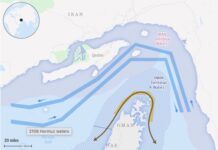
Protecting trade as an international public good and a source of national wealth is not always easy for navies. Trade finds a way, but the costs of continued commerce can rise significantly when it is threatened by war, and the options for protecting trade are not always readily implementable. The choking of the Strait of Hormuz and its global repercussions—especially on energy prices and fertilizers—should not fall into the category of unexpected, because the risks were well understood.
The Persian Gulf War Comes to the Indian Ocean
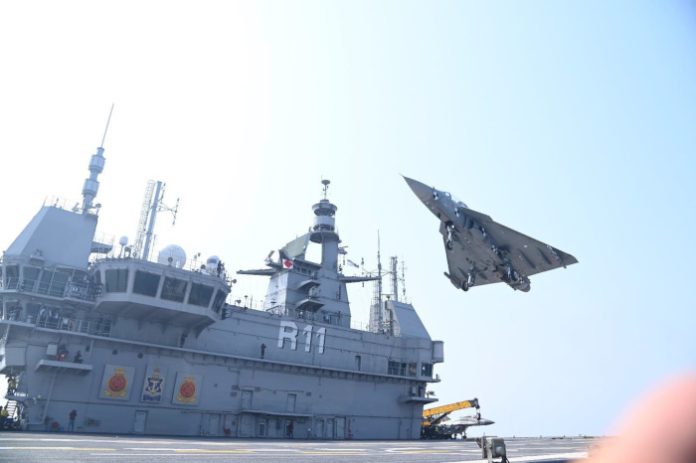
The Indian Navy hosted three major events at Visakhapatnam in February 2026. The first was the International Fleet Review on 18 February. More than 60 ships and vessels of the Indian Navy and Coast Guard, as well as units from 19 other countries from the region and around the world, participated, including the United States, the Philippines, South Korea, Japan, Australia, Vietnam, Russia, Iran, Malaysia, Oman, and the Seychelles.
Following that, on 20 February the Indian Navy assumed chairmanship of the Indian Ocean Naval Symposium (IONS) Conclave of Chiefs, “a voluntary initiative that brings together the navies of the Indian Ocean littoral states. Through dialogue, cooperation, and shared understanding, IONS fosters regional maritime security and stability across one of the world’s most strategic oceanic regions.”12
Held from 19 to 25 February, Exercise Milan 2026 included operational planning and at-sea phases in which ships, submarines, aircraft, and personnel from 52 nations cooperated in complex maritime operations.
The Iranian corvette Dena was among the ships that took part in the fleet review. As she sailed home to Iran on 4 March, a U.S. attack submarine sank her about 30 nautical miles west of Sri Lanka’s southern tip. She went down quickly; some 80 crew members drowned, although the Sri Lanka Navy rescued 32, many badly injured. In India, reactions among the general public and military veterans ranged from deep anguish, to indignation that the U.S. Navy had done this to a recent guest of India and so far from the Persian Gulf, to a feeling that the U.S. submarine ought to have surfaced and rescued as many survivors as possible.
This writer recognizes the misfortune that befell the Dena but believes that one belligerent targeting another on the high seas (regardless of the distance from their respective bases) complies with the law of armed conflict. While jus ad bellumfactors for this conflict are debatable, the tactical level actions are quite within the law. It seems certain Iran—if it had the capability and opportunity—would have attacked a U.S. Navy ship or submarine anywhere possible, and in late March, Iran reportedly launched two intermediate-range ballistic missiles at Diego Garcia.13(Iran, however denied that report).14
As for surfacing to rescue survivors, British naval strategist Geoffrey Till’s suggestion the submarine ought to have done so was surprising.15 The same argument was not advanced in the United Kingdom regarding HMS Conqueror having sunk the Argentine cruiser General Belgrano in the icy waters of the South Atlantic during the Falklands War in 1982.16 It took almost 36 hours for Argentine Navy ships to rescue the survivors. Neither did anyone in India seriously argue the Pakistani submarine Hangor ought to have rescued the survivors of the Indian frigate Khukrishe torpedoed in the Arabian Sea in December 1971.
After the Dena’s sinking, Sri Lanka and India announced that Iranian Navy ships had been permitted to enter Colombo and Kochi as a humanitarian gesture, although the Indian Foreign Minister informed India’s Parliament without mentioning the sinking of the Dena.17
China may again be the indirect beneficiary of a conflict in which it is not a participant, even if China’s energy supplies are adversely affected by what is going on around the “bend in the sea” of the Persian Gulf. While the effectiveness of U.S. and Israeli attacks on Iran indicate Chinese defensive and offensive weapons have not performed especially well, it is not safe to assume China’s domestic enabling networks and systems will perform as poorly as the export versions. Likely more important is the continuing relevance of this observation: depletion of the West’s ordnance stockpiles in the Persian Gulf and elsewhere suits China.
Cooperation as a Principle of War (and Statecraft)
Since the 2023 review Cooperation and Conflict in the Indian Ocean was published, cooperation has receded and conflict has advanced. This stems in part from inconsistencies in U.S. statecraft and policies regarding trade, partnerships, and even long-standing alliances. As international relations scholar Thomas Waldman points out:
“European NATO allies in particular are derided, described more as rivals than friends; trade partners are coerced; security guarantees are recast as transactional services rather than shared commitments; and multilateral institutions are dismissed as constraints rather than instruments of influence.”18
These changes are felt throughout the Indian Ocean in trade flows. And the nature of the Quad—the Quadrilateral Security Dialogue—and its potential multidimensional benefits across the Indo-Pacific region seem far weaker now.19There is also growing concern in Canberra that the much-celebrated “AUKUS Pillar 1” plan could be in jeopardy, despite assurances from London and Washington.20Meanwhile, India’s domestic nuclear-powered ballistic-missile and attack submarine programs seem well underway. But completion timelines will depend on increased efficiency and cooperative approaches between design and production lines for each.21
The final lines of last year’s Indian Ocean review seem in retrospect too optimistic: “If 2024 was an oceanic annus horribilis in the Indian Ocean region, for 2025 and beyond only planning, preparation, and cooperation might prevent insertion of ‘maximus’ in that phrase. A free and open Indo-Pacific—mare liberum—will require it.”22
1. “Trump Says Bombing of Yemen to Stop as Oman Confirms U.S.-Houthi Ceasefire,” Al Jazeera, 6 May 2025.
2. “Yemen: Houthis’ Attacks on Cargo Ships Apparent War Crimes,” Human Rights Watch, 23 July 2025.
3. CAPT Sarabjeet S. Parmar, IN (Ret.), “The Indian Navy’s Role and Impact in Operation Sindoor: Historical Precedents and Future Imperatives,” Council for Strategic and Defense Research, 30 May 2025.
4. Krzysztof Strachota, “Iran in Crisis: The Landscape after the Twelve-Day War,” Centre for Eastern Studies Commentary, 18 December 2025, osw.waw.pl.
5. Congressional Record, 24 February 2026, S648.
6. Sam Lair, “Shallow Ramparts: Air and Missile Defenses in the June 2025 Israel-Iran War,” Foreign Policy Research Institute, 17 October 2025.
7. Robert Pape, “From Kosovo to Iran: The Smart Bomb Trap and the Risk of Catastrophic Escalation,” Escalation Trap, 27 February 2026.
8. CAPT Robert C. Rubel, USN (Ret.), “Coercion, Catalysis, and the Iran Campaign,” U.S. Naval Institute Proceedings 152, no. 3 (March 2026).
9. Sudarshan Shrikhande, “Continental and Maritime India: Linkages and Conundrums,” in The Indian Ocean and Its Littorals, ed. Kapil Prateek and Hira Siddhant (New Delhi: NatStrat, 2024).
10. Sandeep Unnithan, Operation X: The Untold Story of India’s Covert Naval War in East Pakistan (Delhi, India: HarperCollins, 2019).
11. Kanchan Yadav, “U.S.-Iran War: How Strait of Hormuz Closure Impacts Global Oil Supply—Explained in 5 Charts,” The Times of India, 12 March 2026.
12. “Indian Ocean Naval Symposium Conclave of Chiefs,” IONS, ions.global.
13. Herb Keinon, “Iran’s Attack on U.S.-U.K. Diego Garcia Base Is Not a Turning Point, but a Warning—Analysis,” The Jerusalem Post, 22 March 2026.
14. “‘False flag attack’: Iran denies claims it fired missiles at Diego Garcia,” Al Jazeera, 23 March 2026.
15. Dabolim Dialogues, “Ep 58: Seapower—A Conversation with Professor Geoffrey Till,” YouTube, 9 March 2026, youtube.com/watch?v=KP_BF5U5ZGI.
16. Max Hastings and Simon Jenkins, The Battle for the Falklands (Slough, UK: Book Club, 1983), 146–50.
17. India Ministry of External Affairs, “Suo Motu Statement by EAM Dr. S. Jaishankar in Lok Sabha on ‘The Situation in West Asia,’” 9 March 2026.
18. Thomas Waldman, “What Thucydides Could Really Teach Trump,” Survival 68, no. 1 (2026): 149–58.
19. Michael Shoebridge, “The Incredible Shrinking Quad,” Lowy Institute Interpreter, 4 September 2025.
20. Binoy Kampmark, “Blind and Deaf to AUKUS: Australian Planners and Elusive Submarines,” Countercurrents, 13 Febr
uary 2026.
21. Sandeep Unnithan, “Beyond Malacca: Why India Needs More Nuclear Submarines,” YouTube, 4 November 2025, youtube.com/watch?v=VaAqwCB8Jhs.
22. RADM Sudarshan Shrikhande, IN (Ret.), “Another Turbulent Year in the Indian Ocean,” U.S. Naval Institute Proceedings 151, no. 5 (May 2025).
*Rear Admiral Shrikhande is a graduate of the Soviet, Indian, and U.S. Naval War college. He has commanded three ships and been India’s defense attaché in Australia and the South Pacific. In flag rank, he headed naval intelligence, was chief of staff of the Indian Navy’s training command, and served with the strategic forces command.