Ju Hyung Kim*
The gradual opening of the Northern Sea Route (NSR) is typically explained as either a commercial opportunity or a distant arena for great power rivalry. However, from the perspective of South Korea, the NSR should be interpreted as an indirect security variable that could reshape naval behavior, escalation dynamics, and undersea competition in Northeast Asia, rather than as a new operational theater. Its significance lies in how two events—the probability of China’s invasion of Taiwan and North Korea’s continuous submarine threat that is central to South Korea’s defense planning — intersect.
South Korea is one of the world’s most trade-dependent countries, with more than 99 percent of its entire trade volume transiting through the sea. Historically, South Korea’s naval planning assumed relatively stable sea lines of communication (SLOC) running through the Malacca Strait, the South China Sea, and into Northeast Asian waters. The NSR compresses such geographical structures by reducing the Europe–Northeast Asia shipping route by up to 40 percent. From a strategic point of view, such compression shortens warning time, speeds up operational tempo, and weakens the centrality of traditional chokepoints near the Korean Peninsula. For a middle power like South Korea—which has maintained its deterrence posture through predictability and early detection—such change would increase uncertainty without providing compensating leverage.
In this context, Russia’s role is especially important. Moscow treats the NSR not as a neutral international passage, but as a strategically controlled corridor. As ice recedes in the Arctic region, Russia’s nuclear-powered submarines gain greater freedom to transit from the Arctic bastion to the Pacific, bypassing heavily monitored maritime chokepoints. The consequences for South Korea are the spillover effects in the maritime domain, rather than direct Russian pressure. The increased Russian submarine activity adds ambiguity and density to the maritime area, in particular in the East Sea, where it is already occupied by U.S., Japanese, Chinese, and South Korean submarines. Contact management would become more complex, attribution less certain, while anti-submarine warfare (ASW) resources would be under greater pressure.
In addition, the NSR intersects with the Taiwan contingency in ways that matter to Seoul. China’s interest vis-à-vis the Arctic is strategic, rather than geographic. A logistics route that uses the Arctic lowers dependence on the southern maritime corridors that would be vulnerable to interdiction during a Taiwan contingency. Although the NSR does not determine whether China invades Taiwan, it is true that it partially reinforces Beijing’s capability to conduct long-duration competition. For Seoul, such a development increases the likelihood of a drawn-out, system-wide crisis, which would necessitate South Korea to deter threats near its territory and support allied operations through basing, logistics, and rear-area security.
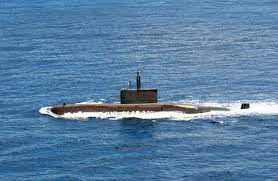
It is in this context that North Korea becomes indirectly yet operationally relevant. North Korea is neither an Arctic player nor does it directly benefit from the NSR. North Korea’s relevance lies in the secondary impact. Increased accessibility to the Arctic increases Russian and Chinese submarine activity in the North Pacific as well as Northeast Asia, densifying the undersea environment in which North Korea’s relatively unsophisticated submarine force operates. In a congested undersea environment, acoustic discrimination becomes harder, rules of engagement tend to become more conservative, and classification confidence drops. Such an environment would disproportionately benefit weaker actors that rely on ambiguity rather than technological advantage.
In a Taiwan contingency, such effects would be further amplified. U.S. and Japanese ASW assets would be concentrated in the Taiwan Strait and the Western Pacific, leaving South Korea to defend its homeland with reduced allied support. When conducting activities including ballistic missile launches, covert minelaying, or coercive patrols, North Korean submarines would operate under greater cover of noise. Simply put, the NSR does not strengthen North Korea’s capabilities, but it weakens the maritime environment in which those capabilities are contained.
Meanwhile, spillover effects originating from the Arctic would increase the burden on maritime domain awareness (MDA). The expansion of traffic along the NSR introduces more dual-use vessels, complex cargo flows, covert military logistics disguised as commercial shipping, and opportunities for sanctions evasion. South Korea does not need to possess Arctic surveillance platforms, yet Seoul would not be free from the information asymmetry created by the NSR. Under such circumstances, strategic surprise attacks, rather than direct aggression, would become the major naval threat.
To maintain deterrence under the aforementioned circumstances, South Korea does not need to evolve into an Arctic navy. What is required is depth and resilience in core missions. Maritime dominance in Korean waters should remain the top priority, supported by sustained investment in capabilities including maritime patrol aircraft that focus on the East Sea and the Korea Strait. Equally important is the Navy’s solid command and control capability. In a dual-contingency situation, South Korea would have to manage crisis escalation under limited allied support, and in that sense, a secure and redundant national C2 system is a sine qua non. Last but not least, selective blue-water endurance matters more than geographical expansion. The South Korean Navy should be able to conduct prolonged operations in the North Pacific in order to protect sea lines, monitor escalation, and signal resolve; this requires logistics capacity and sustainment, instead of symbolic Arctic deployments or ice-class hulls.
The Northern Sea Route would not introduce South Korea to the Arctic. Instead, the dynamics of the Arctic would be introduced into South Korea’s security environment. The NSR would amplify the risk of a Taiwan–Korean Peninsula dual contingency by compressing maritime space, strengthening undersea maneuver, and insulating revisionist powers during crises. For the ROK Navy, the most effective deterrence would depend on resisting the temptation of overextension, prioritizing underwater operations, and preserving the ability to independently manage crisis escalation when great power rivalry spills from an unexpected direction into Northeast Asia.
*Dr. Ju Hyung Kim, President of the Security Management Institute — a defense think tank affiliated with the South Korean National Assembly — led a project commissioned by the South Korean Navy titled ‘Regional Naval Modernization Trends and Future Directions for the ROK Navy’s Core Capabilities.’