

US sea-based nuclear deterrent in a new era
By Thomas Mahnken and Bryan Clark
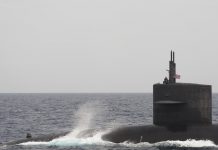
The US undersea deterrent is the most survivable leg of America’s nuclear triad of ground-, air- and sea-based nuclear...

Defence budget in time of Covid
By Marcus Hellyer*
In the first post in this series, I noted that, so far, the government remains committed to the 10-year defence funding line...
Sovereign capability should be new normal
Amidst a year of unprecedented global turmoil, the looming update to the national White Paper poses a unique opportunity to overhaul outdated practices and...

Four US combat commands to test homeland defence
For the first time, four U.S. combatant commands are coming together this week for an exercise that simulates how the military would respond to...

All bases are not equal in the defence of Australia
By John Caligan*
I read with interest the recent Strategist posts by John Coyne and Graeme Dunk in which they apparently took different stands on...

Nuclear subs and US strategy
By James J. Wirtz*
Today is an age of acceleration, a time when Moore’s Law is creating profound changes at diminishing intervals, making it difficult...
Fixed defence spending or 2% of GDP?
By Marcus Hellyer*
Tuesday 12 May was to have been budget night, until Covid-19 intervened and the government moved the 2020–21 budget release to 6...

US Navy flexing, despite Covid
The Pacific Fleet Submarine Force took the unusual step this month of announcing that all of its forward-deployed subs were simultaneously conducting “contingency response...

Japan’s role critical in US-China conflict
By Bertil Lintner
When Japanese Prime Minister Shinzo Abe said last month that the Covid-19 pandemic was the biggest national crisis since World War II,...
China’s belligerence under cover of COVID
By Trinh Le
Around midnight on 2 April, a Vietnamese fishing vessel sank in the disputed waters in the South China Sea after allegedly being rammed by...