

Australian sub in NZ for anniversary
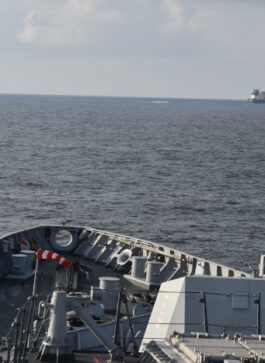
A submarine has been spotted in Auckland this morning, the NZ Herald reports. But there's no need to worry, it's just the Aussies dropping...
Ukraine rebuilds navy, with U.S. help
Ukraine is refitting and expanding its naval fleet, including repairing its flagship, the frigate "Hetman Sahaydachnyy", to counter a Russian military build-up in the...
Norwegian yard set to build world’s first unmanned ship
The race to build the world’s first unmanned ship leapt ahead yesterday with news the UK’s Automated Ships – an M Subs Ltd subsidiary...
South Korea fired on Chinese boats illegally in its waters
South Korea’s coast guard opened fire at Chinese boats illegally fishing within its territorial waters this week (nov 2016), the Korea Times reports.
No...
China and Malaysia sign deals on navy vessels, SCS
Malaysia has agreed to buy four Chinese naval vessels and pledged with Beijing to handle South China Sea disputes bilaterally, a Chinese official said...
CN launches Bravo Zulu
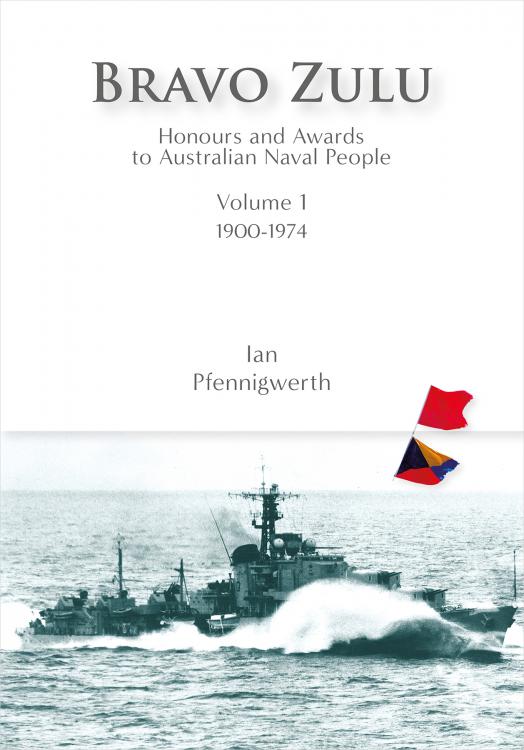 On launching Bravo Zulu: Honours and Awards to Australian Naval People 1900‐2014. the Chief of Navy spoke about the importance of naval history. "To understand where we are going, it is important to understand where we have come from," he said.
 Norms and standards – a view from NZ Navy
Rear Admiral John Martin, ONZM, Chief of Navy, Royal New Zealand Navy – Talking at the International Seapower Symposium run at the Naval War...
US Navy wants more sub-on-sub warfare training
 The Navy’s submarine force is looking to reinvigorate its high-end warfare training and plans to do so by finding efficiencies within the current testing and certification schedules, the commander of submarine forces said, US Naval Institute News reports.
 Attacks like those on USS Mason ‘will become more common’
 The US Navy should prepare for a future operating environment where anti-ship weapons propagate globally and attacks such as the recent ones against guided-missile destroyer USS Mason (DDG-87) are more commonplace, one the service’s top budget officials said, US Naval Institute News reports.
CN to speak at Naval Warfare Officers annual lunch
CN to speak at Naval Warfare Officers annual lunch 29 Nov 2016. RSVP by 8 November. Details here.