

Submarine upgrade program to benefit shipbuilding
TAIWAN is to draw on the experience of an ongoing program to upgrade two of its aging submarines to support a project to build...
China is building its biggest amphibious assault vessel
China’s navy has started construction on its next generation amphibious assault ship, the 075 Landing Helicopter Dock, according to the South China Morning Post.
The...
DCNS and PT PAL to cooperate in ships projects
French company DCNS has signed a new memorandum of understanding (MoU) with Indonesian shipyard PT PAL to boost their cooperation in a number of...
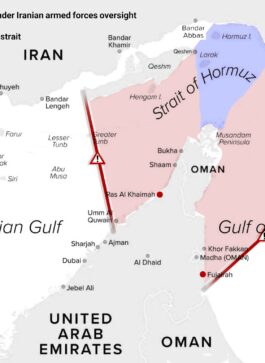
 International attention has focused on the possibilities of an Iranian closure of the Straits of Hormuz, and the catastrophic effect a blockade would likely have on global energy supplies.
 Damen Shipyards Group submits tender for Australian OPV
Damen Shipyards Group has submitted a tender for the SEA 1180 Phase 1 Project to deliver twelve Offshore Patrol Vessels to the Royal Australian...
UK to begin simulator training ahead of F-35B trials
The United Kingdom is to begin training pilots of its Lockheed Martin F-35B Lightning II Joint Strike Fighter (JSF) on BAE Systems' bespoke simulator...
Europe’s Asia-Pacific maritime strategy
 IN THE aftermath of the July 2016 ruling by the United Nation’s Permanent Court of Arbitration that broadly found China’s demarcation claims in the South China Sea to be without legal merit, it became apparent that legal decisions alone would do little to influence the status quo. So what is Europe's maritime strategy for the region?
 $35 billion Future Frigate request for tender released
The $35 billion Future Frigate project reached a significant milestone today with the release of the Request for Tender (RFT) to the three shortlisted...
French maritime strategic thought in the Info-Pacific
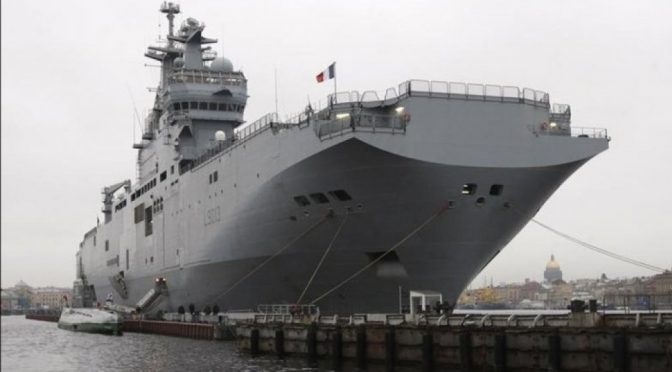 In Europe, France is distinctive in claiming that its boundaries actually extend outside Europe into the Indian Ocean and Pacific Ocean, i.e. the ‘Indo-Pacific,’ through its overseas departments (département d’outre-mer), and overseas territories (territoire d’outre-mer), which are considered integral parts of France, and indeed thereby of the European Union. David Scott looks at the implications.
 Redistribution of maritime power a reality: French Admiral
 A French admiral's view: Sailors are privileged, active observers of the world that surrounds them. Recent activity is very different from the dynamic immediately following the end of the Cold War. A substantial redistribution of the world’s maritime powers is a reality. China, Russia, Japan, India and Brazil have all acquired naval means (Aircraft carriers, submarines and frigates) enabling them to affirm their power at sea. This is a rupture from the past.