By Clive Williams*
Uncrewed and autonomous systems are reshaping modern warfare, yet Australia has been slower than many adversaries and smaller states to field drones at scale. The global drone revolution has lowered the barrier to projecting force, allowing smaller actors to challenge larger militaries.

This can stabilise or destabilise conflicts but is transforming the battlespace regardless.
The 2023 Defence Strategic Review recognised this shift, identifying autonomous systems as central to Australia’s future force. Yet progress remains slow. Acquisition processes, certification demands, and lengthy fielding cycles continue to impede development and deployment.
Australia has long relied on imported systems, especially from the US and Israel. Although investment in sovereign capability – including the MQ-28A Ghost Bat – is growing, movement from prototype to operational readiness remains slow.
A major constraint is a risk-averse procurement culture. Extensive contracting and compliance requirements slow innovation and hinder local companies, many of which find it easier to sell overseas than to Defence.
This limits the rapid prototyping and iterative development that drive modern uncrewed-systems innovation. Reform efforts exist, but the gap between recognition and implementation persists.
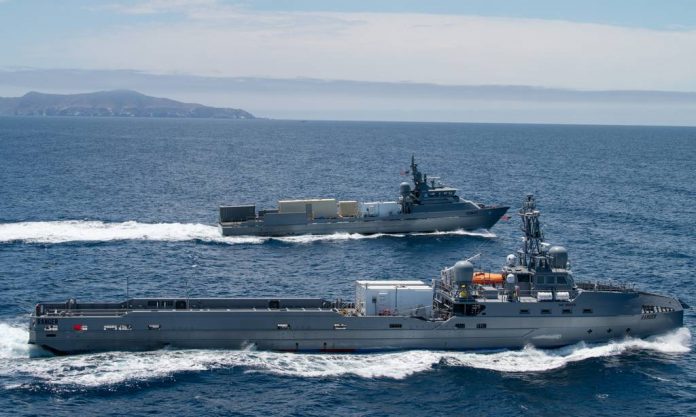
Meanwhile, adversaries and allies are rapidly adopting cheap drones, expendable munitions, and AI-enabled teaming behaviours. The war in Ukraine demonstrates this transformation clearly. Uncrewed aerial systems, once used mainly for reconnaissance and loitering attacks, have become multi-domain assets. Ukraine’s low-cost, long-range uncrewed surface vessels in the Black Sea have damaged major naval platforms, showing how inexpensive systems can impose strategic effects and disrupt traditional navies.
Autonomy and co-ordinated mass are driving these shifts. Units in Ukraine and the Middle East are experimenting with semi-autonomous swarms capable of saturating defences and exploiting gaps faster than humans can react.
Fully autonomous swarms remain developmental, but decision-making cycles are already accelerating, reducing the time for human judgement. As autonomy increases, ethical and legal questions become sharper, especially as humans grow more distant from lethal outcomes.
The proliferation of offensive drones has triggered a global counter-drone race. Countries including the US, Israel, Turkey, China, and European states are investing in layered defences: electronic-warfare jamming, kinetic interceptors, directed-energy systems, and networked sensors.
Protecting airbases, naval facilities, logistics hubs, and deployed units from swarms is now comparable in priority to air and missile defence. Europe’s efforts to deter drones along its borders highlight how uncrewed threats increasingly affect civilian as well as military security.
An MQ-28A Ghost Bat taxis after a test flight at Woomera. Picture Defence Images
Diffusion of drone technology continues to accelerate. Major producers-including the US, China, Israel, Turkey, Iran, and Russia-export hardware, software, and operational concepts widely, enabling rapid adoption elsewhere.
Tactical innovations seen in Ukraine and the Middle East spread quickly, often without accompanying safeguards. Drones now offer low-cost options for intelligence gathering, precision strike, long-range harassment, and naval disruption, empowering non-state actors as well as smaller states.
Australia is responding, but progress remains mixed. Government announcements commit billions to uncrewed aerial, surface, and subsurface systems over the next decade.
The Ghost Bat program continues to advance, with successful teaming trials and increased funding positioning it as a potential cornerstone of sovereign capability. Yet moving from demonstration models to mass production and full operational readiness requires clearer priorities and faster processes. Domestic industry is growing but still lacks consistency and scale.
International governance has not kept pace with accelerating technology. The UN continues to debate constraints on lethal autonomous weapons systems, but progress is slow. Systems capable of independently selecting and engaging targets challenge fundamental principles of the laws of armed conflict.
Accountability – who is responsible if an autonomous system commits an unlawful act – is increasingly difficult to define. Democracies must maintain transparency while keeping pace with adversaries willing to accept fewer constraints.
Australia needs to act decisively to remain a credible defence actor in a region where technological agility is essential.
First, investment in layered counter-drone defences must accelerate. Current systems are improving but remain inadequate against advanced swarms, long-range USVs, and co-ordinated multi-domain attacks.
Defence Industry Minister Pat Conroy. Picture by Darren Howe
Second, procurement reform must continue. Streamlined acquisition pathways, faster fielding cycles, and closer collaboration with Australian industry are essential to shorten the gap between concept and capability.
Third, clearer doctrine is needed. Government should define limits for autonomous behaviour, clarify command responsibility in AI-enabled operations, and establish rules for deploying emerging systems.
Fourth, Australia should advocate stronger international norms. Patchwork controls and voluntary guidelines are insufficient. Binding agreements covering autonomous decision-making, targeting authority, and proliferation are needed to reduce escalation risks.
Finally, a broader national conversation is overdue. The appeal of “autonomous war” – where machines undertake dangerous tasks-can obscure significant ethical, strategic, and societal hazards. Australians must consider how much authority to delegate to AI algorithms and how to maintain meaningful human oversight as autonomy expands.
An MQ-28A Ghost Bat takes off for a test mission at Woomera. Picture Defence Images
The drone revolution is already reshaping global security. Australia’s slow adoption risks strategic irrelevance in a region where speed and adaptability matter as much as mass and firepower.
By accelerating procurement, strengthening sovereign industry, investing in countermeasures, and engaging seriously with the ethical challenges of autonomy, Australia can remain both credible and responsible.
The future battlespace will be shaped not only by machines, but by the choices societies make about their use.
*Professor Clive Williams MG is a former military and defence intelligence officer.