By Tom Sharpe*
The Royal Navy has developed a bold and controversial vision for its future fleet.
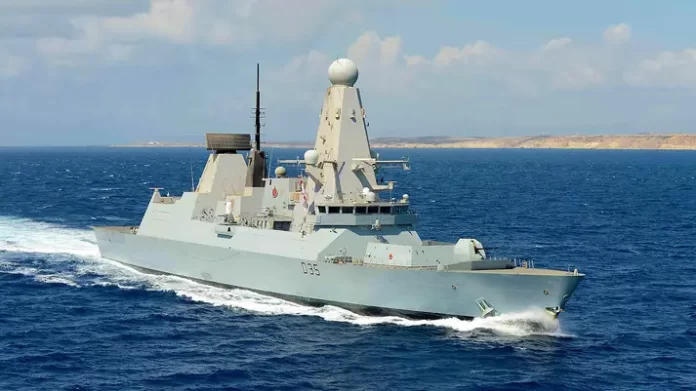
Our troubled but finally effective Type 45 destroyers will be replaced not by traditional warships, but a drone command hub called a Common Combat Vessel (CCV), of which “at least six” will be ordered.
The CCV will be the centre of a network of smaller, more affordable autonomous or lightly manned vessels, or sloops as they are increasingly being called. Having initially spat out my tea at the idea of a navy without destroyers, I’ve warmed to it.
Destroyers and cruisers are big, expensive targets. Losing one is a disaster. Countering enemy drone and missile threats requires dispersing your assets, and this is exactly what the CCV concept provides. Combined with the unavoidable march to autonomy, it makes a lot of sense.
Logic dictates that the CCV will be a follow-on from the Type 31 frigate being built by Babcock up in Rosyth. The supporting sloops, each around 80 to 120m long, would cost roughly £200m each, which is very cheap, as warships go.
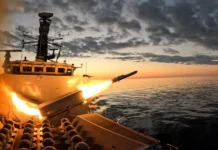
One of these sloops, the Type 91, is envisaged as a missile barge. How many we will get is not clear, nor is how many missiles they will take, but if I were designing one I would have around 32 missile canisters in each. Less than that, and you would become “shot out” too quickly. More than that and you are defeating the aim of “less-but-dispersed”.
The missiles will likely be Aster variants rather than the much more expensive US Standard type, but this is not yet clear.
Another sloop, the Type 92, would focus on anti-submarine warfare and therefore work closely with our newly built manned Type 26 frigates.We are also to get Type 93 extra-large uncrewed underwater vehicles (XLUUVs) and a Type 94 sensor sloop, which would carry radar and detection suites.
In theory, all this means you have a menu of options depending on the task. Heading to the Bear Gap to do anti-submarine warfare, take a 92, a 93 and a pair of 94s. Doing integrated air and missile defence in British waters, take as many 91s as you can. Countering the Houthis in the Red Sea, take 91s and 94s.
Scrapping destroyers entirely has understandably caused some angst. These warships are defined by the number of missiles they carry and the size of their long-range air-defence radar. The bigger the radar is and the higher you can place it, the better it is for long-range, high-speed missile detection.
But the new sloops should be large enough to carry suitable air-defence missiles. It is also now clear that advances in radar technology allow it to be lighter and smaller, distributed across multiple hulls rather than concentrated on one platform.
It goes without saying that these sloops will need to be able to defend themselves against a range of threats, be survivable in high seas and contest electronic warfare environments. They will forever be susceptible to being sunk or captured precisely because they don’t have people onboard.
But if they only cost £200m each, you get a lot of them for the cost of one destroyer or cruiser. You might not want to lose any, but it’s nothing like the disaster that losing a traditional warship would be. Importantly, you could also regenerate them much more quickly in war.
There are other benefits. The sloops’ modest size would open industrial possibilities. They could be built at yards beyond the two main Scottish facilities, spreading work across additional sites around the country. This could help revive our moribund shipbuilding strategy. It could even align with the incoming prime minister’s emphasis on creating a northern (English) powerhouse. Export potential would also follow.
Other navies are facing the same calculation the Royal Navy has confronted: that billion-pound destroyers are unaffordable in the numbers required.
A working hybrid model – one proven hull type surrounded by cheaper, role-specific sloops – might offer them a credible alternative. Countries that were never in the billion-pound warship market in the first place would be interested. If Britain develops and demonstrates the concept successfully, it would be first to market with a scalable solution. The combination of domestic industrial regeneration and overseas sales could generate significant long-term value.
Sadly, the defence investment plan (DIP) does not reward any of this vision. The Navy has been allocated approximately £1bn over four years for the hybrid fleet – roughly a quarter of what is required.
I try and avoid inter-service politics but it is impossible to avoid noticing how many traditional platforms the Army is to receive funding for, such as Boxer, Challenger 3, Ajax. This is many times that which has been allocated to the Navy’s hybrid vision.
The Navy has gone bold early on modernisation. Is this its reward? Only a week ago the Chief of the Defence Staff spoke at Rusi’s land warfare conference and asked why the Army was still promoting legacy platforms. We then found out a week later that those platforms are extensively funded in the DIP.
The DIP team that worked up much of these plans comprises two army officers and one RAF, make of that what you will.
Amazingly, the DIP follows the same broad resource framework that prompted the previous defence secretary to resign three weeks ago on the grounds that it did not keep the country safe.
Only a further £1.5bn has been added since then, much lower than what was needed, yet the document is now presented as a settled achievement to fanfare of “increased defence expenditure”. As the defence secretary resigned, the chief of the defence staff said he could not support the review as it stood.
So what does he make of this one – all good? And whilst I’m causing mischief, let’s see what the service chiefs do or do not say publicly around this plan. My bet is that the silence will be deafening.
*Tom Sharpe OBE served for 27 years as a Royal Navy officer, commanding four different warships
The article first appeared in The Telegraph and is republished with permission.