Killing drones at the speed of light

0
57

The Australian Strategic Policy Institute (ASPI) is pleased to release a new explainer examining the opportunities and challenges that directed energy weapons (DEW) present for the Australian Defence Force (ADF).

Authored by ASPI Senior Analyst Malcolm Davis, ‘Light speed weapons? Directed energy and the future of the ADF’ analyses how DEW technologies — including high-energy laser (HEL) and high-power microwave (HPM) systems — could reshape counter-drone and missile defence, and makes the case for a dedicated Australian DEW strategy.

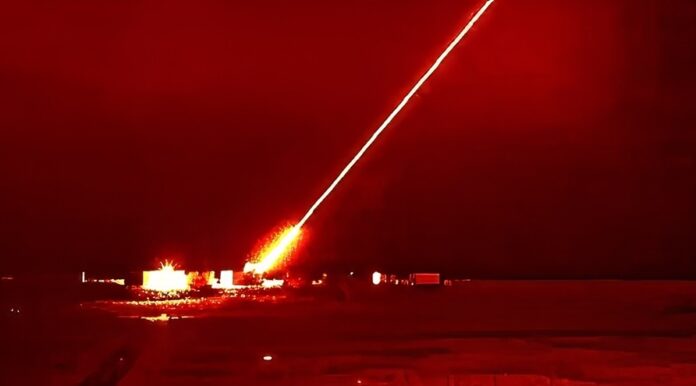
The report finds that DEW have the potential to create an inflection point in modern warfare. By delivering effects at the speed of light and at very low cost per shot, they offer a fundamentally different approach to countering the growing threat of low-cost drones and, over time, more advanced missile systems.

Recent conflicts, including the war in Iran and Russia’s invasion of Ukraine, highlight the need to invest in cheaper and more sustainable defence capabilities. While DEW are unlikely to replace traditional missile defence systems, they could reduce reliance on them and provide a more sustainable and scalable layer of defence.

“For Australia, which depends on a network of northern bases to support a strategy of deterrence by denial, there is a clear need for investment into the development of DEW to ensure greater resilience in the face of threats such as armed drones, and eventually, more advanced missile systems,” the report states.

DEW offer several operational advantages over traditional weapons. They can engage targets at the speed of light — around 300,000 kilometres per second — and, with a stable power source, provide effectively unlimited magazines, addressing a key limitation of missile-based defence systems.

“Their cost per kill is very low relative to a traditional defensive missile: it costs cents or, at most, a few dollars per shot, compared with up to $US 4 million for advanced air defence missiles, such as the Patriot interceptor missile.”

Adversary capabilities are also maturing rapidly. China has unveiled a 20-gigawatt power source for a microwave weapon designed to attack low-Earth orbit satellites, including Starlink satellites, underscoring the need to view Beijing as a strategic competitor in this field.

At the same time, the report emphasises that DEW are not a complete substitute for existing capabilities. Technical challenges remain, including power generation, range limitations, line-of-sight constraints and sensitivity to atmospheric conditions.

As a result, the most effective defence strategy will combine DEW with traditional integrated air and missile defence systems to counter the growing drone threat.

The report highlights the maritime domain as a key area of opportunity for Australia. Integrating DEW into naval surface combatants could enhance close-in defence against drones and, over time, missile threats, improving the survivability of surface vessels.

This aligns with the importance of maritime capability in Australia’s National Defence Strategy, where strengthening fleet air defence at sea remains a priority given the scale of current naval investment.

To accelerate development and ensure timely integration of the technology into the force structure, the report recommends the development of a dedicated DEW strategy. This would strengthen the defence industry’s ability to support sovereign capability and embed continuous modernisation.

Such a strategy should also emphasise collaboration with key partners, including through AUKUS Pillar II, as well as with countries such as Japan and South Korea.

Click here to read the report

LEAVE A REPLY

Please enter your comment!
Please enter your name here