From the ANI Archives: Up Top in 1948

0
76

The Journal of the Australian Naval Institute occasionally published articles from its members about their sea time experiences. The former Chief Petty Officer Kevin Gleeson contributed this 2004 article about the destroyer HMAS Quiberon’s 1948 ‘Up top’ deployment. It provides a fascinating glimpse of life onboard an austere war-time built destroyer, as well as the RAN in general and the ports visited, all that have changed beyond recognition.

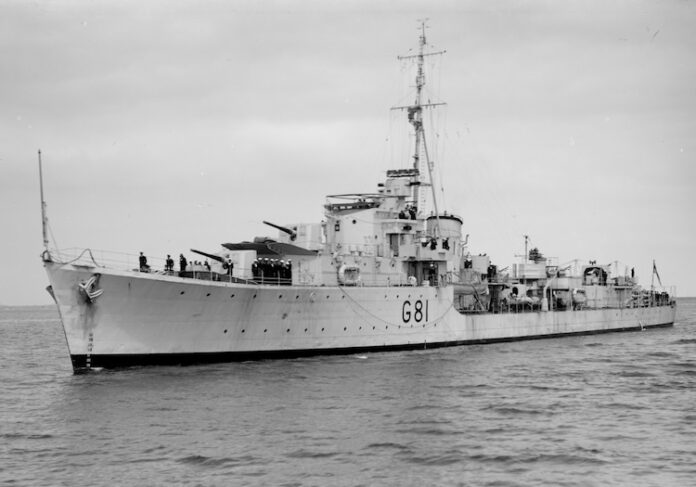
HMAS Quiberon‘s 1948 deployment to Japan

In March 1942 agreement was reached that the RAN would take over and man the new British built destroyers Quiberon and Quickmatch, with the RAN paying for the crew and their allowances, and the British Admiralty meeting all refit and maintenance costs. (Another three ‘Q’ class destroyers, Quadrant, Quality, Queenborough, were loaned to the RAN between 1942-46, and all five were transferred outright in June 1950.)

Joining Quiberon

On 19 August 1947 HMAS Hobart arrived back in Sydney from its final deployment in Japan as a unit of the British Commonwealth Occupation Forces (BCOF) and prepared for her decommissioning. At the time I as an Able Seaman Torpedo-man, had enjoyed serving in Hobart, and felt sad about leaving the ship and my mates, but I welcomed a draft back to a seagoing ship, the Q class destroyer HMAS Quiberon. So it was a train journey to Melbourne, only to find that Quiberon had sailed around to Westernport Bay. So it was now another train journey to Flinders Naval Depot, where I picked up Quiberon‘s motor boat around midnight, at Stony Point. It was the liberty boat to pick up the sailors who had spent a great night up at the Flinders Naval Depot wet canteen (Murph’s), and a few sailors who were broke and had gone to the movies in the depot drill hall. The wet canteen at Flinders was at the rear of A Block. It had a general session at the lunch break, selective sessions for sporting teams (after the game). And the main session was in the evening. Pay nights were very vigorous, with all sorts of activities, including crayfish and chook raffles. Sunday nights were great, as some of the bandsmen put on a musical treat, that got better as the evening progressed, as the audience kept them well supplied with beer. It was always a great experience to be stone cold sober and riding back to the ship, with a boatload of happy noisy Jacks fresh from a good alcoholic run ashore.

The motor boat took about half an hour to return to Quiberon out in Westernport Bay, so it was well after midnight when we arrived back on board. The bosun’s mate kindly gave me a hand with my bag and hammock, down to the Torpedoman’s mess deck, and assisted me in finding a vacant set of rails to sling my hammock. This was not an easy task in a blacked out strange mess deck, already filled to capacity with sleeping sailors in hammocks. Next morning, everybody was surprised to find a stranger sitting up in a hammock, who was not there when they had gone to sleep. The young fellow in the adjacent hammock was Bert Hewitt from Kalgoorlie. It was our first meeting, and I am fortunate to still have him as a number one buddy today. I was soon made to feel at home in the Torpedo-man’s mess, and had a great band of messmates, whose company I enjoyed, both on the ship and on runs ashore.

Life onboard

Quiberon was a happy ship commanded by Commander John Bath; the First Lieutenant (the Jimmy) was Lieutenant Duncan Stevens, who later lost his life on HMAS Voyager. The navigator was Lieutenant Ken Shands, who later commanded Hobart (II) on her second deployment to Vietnam (he retired as Commodore Ken Shands, OBE RAN, and passed away 21 January 2002). Other officers included Lieutenant John Golder and the Torpedo Officer, Commissioned Warrant Officer Reg Solley.

The Q class destroyers used a system of victualling called Repayment Messing, where the Navy allowed a certain cash allowance per day to feed the sailors. With repayment messing the victualling money was credited to the individual messes, on a per head basis.

In the Torpedo-man’s Mess, two members were rostered to be Mess cook for 24 hours. Their duties included drawing food stores from the supply office, vegetables from the veggies deck locker, and meat from the beef screen. The mess cook took along a docket book to purchase the food supplies (like playing shops), so that the individual mess could be debited for the food obtained; if a mess overspent, they had to pay up on the day of reckoning. Good management was required in planning the menus. The leading hand of our mess, Fred Tooth was a great manager; he saw that we were fed with the best victuals available and kept us within our budget. The rostered mess cooks besides drawing the daily stores, had to prepare the meals in the mess, which when made up would be taken to the galley to be cooked, mainly supervised by the ship’s cooks. Most mess members were pretty good cooks, and all had their specialties. If the food was not up to standard, you certainly got the message from your peers.

The rostered mess cooks were also responsible for the setting up and clearing up before and after each meal, and a complete scrub out of all the mess gear, including the deck and any other housekeeping requirements, such as sand soaping the mess table, polishing the bright work, and paint touch up jobs. The mess deck was our home, and we were house proud. We had to be, as accommodation was crowded in the mess decks, with little room for our belongings. To store our gear we had a seat locker, into which all our gear had to be stowed. Often when you needed to have access to your seat locker, one of your messmates would be stretched out on the lockers having a sleep, or the Mah Jong players would be sitting on it.

A downside with repayment messing was that certain stores had to be drawn in bulk, and stored in the mess along with all the sailors that lived, slept and smoked in the confined space, that was their home, complete with oil tank breathers, and battery room full of charging batteries. Near the head of my hammock, hanging from a deck head hook, there was normally a side of smoked ham, from which we carved off slices of bacon, for breakfast. There were also crates of eggs and bags of flour and sugar; you can imagine the state of things, if the ship hit big seas during the night, and the mess cooks had not sufficiently secured the stores. The result would often be scrambled eggs for breakfast. This unhealthy set up, which then was the norm for life on the boats, would not be acceptable today.

Leaving Westernport Bay, Quiberon, visited Devonport and Beauty Point, in Tasmania before arriving back in Sydney on 23 November 1947, where she and Quickmatch tied up alongside each other moored to a buoy off Garden Island. That night a merchant ship King Stephen, lost steerage going up harbour and rammed Quiberon in the engine room, causing great damage and necessitating docking the next morning in Captain Cook Dock. As it was estimated that repairs would not be completed until the end of January 1948, it was decided that the ship’s company should take leave due to them. So it was off home to the West for leave in the train. My mother decided it was a good opportunity to put on my twenty-first birthday party, as I would not be home for my actual birthday. It was at this party, that I met my wife who was not overly impressed with my Quiberon mates or me. But all good things including leave come to an end. We missed out on our family Christmas Dinner and joined a troop train going east on Christmas Day 1947, arriving in Sydney on New Years Day 1948 in the pouring rain, to rejoin Quiberon still in the dock, with HMA Ships Bataan and Australia.

Repairs completed, Quiberon undocked, went alongside the Cruiser Wharf at Garden Island to store and ammunition ship, in preparation to sail south and rejoin fleet for exercises and a work up, prior to sailing north to Japan. An oil lighter came alongside to oil ship. Again things went wrong, the lighter rammedQuiberon, holing her side. Quiberon was listed to port, to raise damaged plates up above water line, for repair.

Departure for Japan

Eventually on 8 February 1948 Quiberon left Sydney to join the fleet and take part in exercises, prior to arriving in Hobart, during their famous Regatta. Quiberon and Quickmatch departed Hobart for Port Arthur for Captain D’s inspection. On 25 February Captain ‘Ginger’ Morrow carried out the annual inspection. On completion Quiberon in company with Quickmatch departed Port Arthur for Sydney, arriving there on the 29th to finalise preparations for Japan. The following week was busy for the ship’s company, storing, ammunitioning and oiling ship. We were particularly busy in the Torpedo Party repairing electrical defects, taking torpedoes aboard and fitting them in the torpedo tubes, as well as the depth charges, which had to be loaded into the racks and rails. These were particularly heavy physical tasks, which sent us to our hammocks tired each night. The weekend before we sailed we all had a good farewell run ashore in Sydney, to prepare us for the months ahead.

On Monday 8 March Quiberon and Quickmatch, sailed for Japan up the eastern Australian coast, through the Great Barrier Reef, and oiled ship at Cairns before heading north to New Guinea. A highlight of the trip is the passage through the China Straits, on the eastern tip of New Guinea. It’s like sailing up a lush jungle river, as the passage is quite narrow in places, which includes steaming past the entrance to historic Milne Bay. The next port of call was Dreger Harbour, on the north coast of New Guinea, where both ships tied up at Buki Wharf, about a kilometre from the naval depot HMAS Tarangau. The depot kindly provided trucks to take a swimming party out to jungle river pool at Lamanak. The pool was up river and well used by the sailors at Tarangau, but armed lookouts were always posted as saltwater crocodiles some times came up stream.

The first port of call in Japan on Tuesday 23 March was Yokosuka, formerly a large and important Japanese naval base, and now the principal American naval base in Japan. An Australian Army officer, who spoke fluent Japanese, joined us to act as an interpreter. Our duties in Japan included Japanese ship and installation inspections, as well as patrolling the sea between Korea and Japan. On these patrols any vessel large or small was stopped, boarded and inspected, anytime day or night.

On Thursday 25 March, we sailed from Yokosuka up Tokyo Bay to Takashima Docks, on the outskirts of Tokyo, for the Easter period. The docks were close to a little suburban railway station, so it was no problem getting into Tokyo Central Station, which still wore the scars of Allied bombing, as did the rest of Tokyo. In spite of the damage to this city, it was an interesting place. It was a must to visit the Imperial Palace, which was guarded by smart Australian Army soldiers, followed by a stroll down The Ginza, inspecting shops for souvenirs and a visit to one or more of the beckoning beer halls.

At Tokyo Central Station, there were fast trains to different parts of Japan, which was great for getting around and seeing the ordinary people and places. There was a special carriage for the Occupation Forces on the train, and travel was free. It was great to get off the train at a town that looked interesting, have a bit of a walk around, take a few photos, and rejoin another train, to travel to another attractive place that took your fancy. It was a good break from life aboard ship.

The Easter break over, it was back to business visiting various Japanese ports to carry out ship inspections, and other duties required in the early period of the occupation of Japan. At 0700 on Monday 5 April, Quiberon departed from Yokosuka and at 1530 arrived at Shimazu (the nearest sea port to Mt Fuji). Ship inspections and boarding parties were duties that the ship’s company were rostered for, and were extra to normal ship and watch keeping duties. We made our way towards Kure, visiting the ports of Nagoya and Yokaichi along the way. This time it was a two day stay in Nagoya, which was always a good port to visit, and to have a run ashore.

On Sunday 11 April Quiberon arrived in Kure berthing at the floating wharf. The Japanese constructed these wharves to provide instant harbour facilities for their ships when they invaded islands in the Pacific campaign. Each unit was self contained, fitted with cranes, power generating equipment, workshops, accommodation and messing facilities. The units could be used singly or linked up with other units. The units were quite large, and were long enough for a cruiser to berth, on either side. It was fortunate that this facility was intact and available for our ships, as Kure was a principal Japanese naval base, and had suffered badly from heavy aerial bombing toward the end of the war. Sometimes the visit to Kure was brightened up by the arrival of HMAS Kanimbla, berthing the opposite side of wharf from us (Kanimbla was on the trooping and supply runs from Sydney to Kure, and so was a frequent visitor.)

Visiting Kure was always a pleasure, as it was in the area controlled by the BCOF and the Australian forces were prominent in the administration and control in this part of Japan. There was plenty in the Kure area to make shore leave attractive and there was also the opportunity to meet Aussie Army mates. It was always great to meet mates serving ashore in Japan, have a few or more beers, and spin yarns, that got more outrageous as the night progressed. An added attraction was the Occupation Forces Radio Station, which broadcast Australian news and enjoyable music.

Hong Kong

Leaving Kure on 15 April Quiberon sailed for Hong Kong (a four-day journey). It was always touchy going through the Formosa Straits, as the ship was passing through a passage of sea between the Chinese Communist Forces on mainland China and the Chinese Nationalists on Formosa Island. Aircraft from both sides inspected the ship. For the passage through the Formosa Straits, ship’s company was closed up in the second degree of readiness, and the ship operated above normal cruising speed. After sunset the ship was lit up, with the Australian Flag and White Ensign well illuminated. Everybody looked forward to a trip to Hong Kong, as it had so much to offer. In common with most sailors, I always looked upon Hong Kong as being the Pearl of the Far East. It was great for shopping and had so much to offer at the right price. A bonus for Australian soldiers in Japan was to get leave and take passage on RAN ships for the return journey Japan-Hong Kong. About twenty soldiers of various ranks took this trip to Hong Kong with us, living in the sailors’ messes, and doing a few duties aboard ship, which they generally thought was a lot of fun, including chipping and red leading. It was a great opportunity and change for them away from normal Army routine, as their deployment in BCOF Japan was at least twelve months.

A stay in Hong Kong was never dull, as there were often typhoon alerts. If serious, it meant going to sea to ride the typhoon out, fortunately on this visit this was not required. The Royal Navy command also had the habit of rostering the visiting Australian destroyers as Duty Destroyer; this could entail going to sea to do a rescue of any vessel in trouble. Sometimes the troubled vessel was a British merchant ship, which was being hassled by the mainland or Formosan Chinese, because it had been trading with one of the other Chinese powers or both. When a ship was Duty Destroyer, the ship’s company ashore was subject to recall, and had to remain in a confined area in Hong Kong. If a recall occurred, mobile shore patrols from RN Depot HMS Tamar, combed the town, the bars and other sailor’s haunts, extricating the liberty men, and returning them to the harbour landing to be picked up by ship’s boats to be transported back to their respective ship, which would be under sailing orders.

Back to Japan

Leaving Hong Kong and all of its attractions, Quiberon steamed back to Japan, arriving in Sasebo (southern island of Kyushu) on 5 May to take up patrol duties. It was a good liberty port with many attractions, including the famous Casbah beer and dance hall. Sasebo was mainly the homeport of operation for allied naval ships, which were operating patrols and ship search and inspections in the straits between Japan and Korea, and the Sea of Japan. When on sea patrol all vessels large and small in the search area were stopped and searched by a ship’s boarding party, no matter what time day or night. The boarding parties’ duties were not always pleasant, moving and lifting cases of fish and squid in the middle of the night. The actual boarding operation was often hazardous when a good swell was running.

The vessels were searched and inspected, mainly for illegal person’s coming across from Korea, and in particular North Korea, which was controlled by Russia after the war ended. Often whole groups were moved from North Korea, in fast boats to islands in the straits or the Sea of Japan. Then they were smuggled across to Japan on small vessels, including fishing vessels. The illegals were often found on fishing boats, in spaces underneath the fish crates. Our searching duties included visiting Cheju Island and Tsushima Island, which were approximately midway between Pusan, Korea and Fukuoka, Japan.

Leaving Fukuoka on 5 June after port inspections, we renewed sea patrols and the next day boarded a Korean ship not much bigger than a navy general purpose vessel. Below decks and in the hold, packed like sardines were over 130 Korean illegals, drugs and other goods being smuggled into Japan. Many of the illegals were in poor shape and suffering from seasickness in the confined space. The Korean vessel was secured alongside and the illegals brought aboard, and confined to a section on the after deck, as cholera and other diseases were rife in areas where these people had come from. A makeshift toilet was also set up over the stern. Due to health risks; the ship’s heads were not available for their use.

With an armed boarding party aboard, the Korean vessel was taken in tow to the small Honshu port Taisha, where the US military were waiting to take charge of the vessel, its Captain and crew, and the illegals were taken away to face the consequences. The vessel would be confiscated, and it was common knowledge that the Captain and crew faced heavy penalties. After the illegals were cleared off Quiberon, the areas they occupied were thoroughly washed down and disinfected. It was then back to sea to continue the ship’s duties, which took in Tsushima Island and the little Korean port of Chinhae, just south of Pusan. On visits to Chinhae, armed parties were sent ashore and were driven around the area in US Army trucks to project the military image, as the US forces were sparse in this area, and there were troubled rumblings in Korea as a prelude to the Korean War in 1950.

Besides the patrolling duties there were many lighter moments. As June is summer time in the northern hemisphere it was now hot at sea aboard ship. If the sea was calm at 1630 it was hands to swim. The ship would stop, and lower the ship’s boats. Boat crews were armed with automatic weapons, and a couple of armed sailors were on deck to protect us from sharks. We used to wonder, who was in the greatest danger from our guardians, the sharks or us. When all was ready, hands to swim was piped. What a sight it was as we all dived over board into the sea, to have a good half hours cool down and skylark. The ship’s buzz said that there were no sharks in the Korean Straits, but one afternoon after swimming had ceased, two sharks were sighted close to our port side.

Aboard ship at sea, the sailors occupied themselves in many diverse ways. There were the Mah Jong kings, who seriously played from the time the ship left Sydney to its return many months later. They played for one penny a hundred points and kept a book to record the winnings and or debts. On the return to Sydney the winnings/losses were toted up. Sometimes fellows would play for months to win the grand accumulated amount of a few shillings. Then there were the card players. The favourite games in the Torpedo-men’s mess were Rummy and Rickety Kate, or in sailor’s parlance, Chase the Pisser. In between we wrote letters to mum or our Squareys and dreamed of our next leave and home.

Some days at sea, due to rough weather, the upper deck was either undesirable, or off limits. The sailors would clamour for a mess deck picture show. This was easy to arrange as Torpedo-men were also projectionists, and had control of the 16mm projector and films that had been in the ship for months; everybody had seen them at least twice, but every show was like a premier. The word would get around, and before the pictures got rolling the mess deck was a full house. The old cowboy films were popular, with favourites like Hopalong Cassidy pursuing Indians across the screen, which was semi-obscured by cigarette smoke from the sailors duty free cigarettes. Then the love scenes in some of the old movies would provoke many wisecracks, and cat calls.

During our deployment to Japan, electric model trains appeared in some of the Japanese stores ashore. They were similar in size and design to the prewar English produced Hornby model trains. These trains were a great attraction to the sailors, and many train sets were bought for little brothers back home. Several styles of engines and carriages were available, and unlimited lengths of tracks, railway signals and rail crossings, could be purchased. This all had potential for laying out a fine comprehensive railway system.

Several of the fellows in the Torpedo-men’s mess had train sets, and we all wanted to try our train out. So we would all get our train sets out and design a real huge combined railway system round the mess deck. The hammock bin was in the middle of the mess, so the system circumnavigated it. There would be trains running every where. Train smashes, and derailments, were all order of the system, as engine drivers and signalmen controlling the railway points settled down, with railway operating experience. All would be going well, and trains burning around without disasters, and then the ship would give a great big roll, or a pitch resulting in massive derailments, throwing the system into confusion. When the train sessions got underway, the word would get out, attracting nearly as many spectators into the mess deck as the movie shows. Sailors at sea always appreciated unique entertainment.

On 15 June, returning to Sasebo with three US Fletcher class destroyers, we were directed to a buoy in Sasebo Harbour. The normal routine used for coming up to a buoy, was to lower the whaler to convey the buoy jumpers to the buoy and then secure ship’s cable to the buoy. The USN normally did not use a whaler for buoy jumping, but instead used a ship’s motor boat. As we were operating with USN destroyers, it was decided to use the ship’s motor boat. Nearing the buoy the order was given to lower the motor boat in to the slip level just above water, so it could be slipped at the appropriate moment. The lowering of the boat had just commenced, when disaster struck. The forward fall gear failed, taking away the support for the motor boat’s bows. The bows plunged into the sea, with the stern still suspended. The boat’s crew were hurled forward under the canopy and trapped as we were still underway. Fortunately the canopy was dislodged by water force, resulting in boat’s crew being ejected into the sea. The boat’s coxswain and bowman had a lucky escape from being killed or injured by the ship’s propellers, as Quiberon passed them. The buoy jumper, a three-badgeman who was the acting blacksmith, had a severe blow to his head. He floated to the top in a dazed state, and immediately started swimming as fast as he could go, to get away from ship’s side. He was finally stopped and picked up by a Japanese fisherman, and brought back to the ship. When the accident occurred, two of the cooks and other sailors nearby climbed into the whaler and were lowered for rescue duties.

Towards the end of June, Quiberon had a break from the Korean Patrol, and visited more Japanese ports for inspections. Some of the ports included Fukuoku, Kagoshima, Nagasaki, Kobe and Osaka. Kobe was near to the town where the famous all girl Tarakazuki Opera (Revue) was based. I had visited this opera before when serving in Hobart, I was fortunate to revisit and enjoy this great show again. During this stay a severe earthquake caused much damage and loss of life. In a nearby town, a movie house collapsed killing more than 200 people. This was followed by tidal waves, causing more damage, loss of lives, and flooding.

On 1 July we departed Yokosuka for Sasebo. Before arriving there on the afternoon of 3 July, we carried out depth charge drill, and fired our near use by date depth charges; I enjoyed this as my depth charge station was forward depth charge thrower, starboard side. After the shoot, the ship stopped, lowered boats and picked up the fish, which were on menu that night.

Return to Australia

At 0905 on 6 July, Bataan arrived in Sasebo to relieve us. Quiberon‘s ship’s company were all happy to catch up with their mates, and hear a bit of news from back home. During the forenoon about 50 or 60 Australian soldiers and airmen came aboard for passage home to Australia – a convenient cheap method of moving troops. We also took aboard a party of ex-RAAF wartime aircrew officers who had sailed in Bataan for sea duties and nautical experience. The journey home to Australia with us was to be a continuation of their training. These experienced officers had joined the Navy to help man the infant naval flying service, and the aircraft carrier HMAS Sydney, when it commissioned. Several had been decorated during World War II for distinguished service.

With all the troops taking passage, accommodation was strained. The lower forward mess, which normally was not occupied as it was an uncomfortable mess to be in at sea (particularly in rough weather) was used, as well as squeezing extra personnel into the normal messes which already had a full complement of sailors.

We departed Sasebo at 1300, and on leaving harbour, encountered three USN destroyers. Signals were exchanged farewelling us and passing up-to-date weather information, including the possible presence of a typhoon. We carried on, as we were going home, but it was not long before the ship was into the edge of the typhoon. Conditions further deteriorated and the decision was made to return to Sasebo, arriving there at 1845 that evening, to await a favourable weather report concerning the typhoon.

It was a hot still evening and the water in the harbour at Sasebo was like a millpond. An up to date movie was borrowed from one of the US destroyers, and a movie show was set up on the upper deck for an evening’s entertainment.

About 2345 a favourable weather report was received, the movie was returned to the US destroyer, and arrangements were made to prepare for sea. Again we departed from Sasebo. It was a still warm night, the sea calm, and as it was hot and stuffy in the lower forward mess, most of the occupants, brought their sleeping gear on the upper deck, and bedded down. All went well until about 0200, when we again struck rough weather. The bows dipped into the sea, and the decks were awash. The troops sleeping on the upper deck were swamped, and driven below to the discomfort of the hot pitching mess decks, where many were now going through the misery of seasickness.

By morning the ship was right into the typhoon, and taking terrible treatment, making it uncomfortable for all aboard. Very few of the troops taking passage showed much interest in eating breakfast, lunch or tea that day. All the joy and excitement of having a trip on a Q class destroyer had evaporated. The ship suffered the effects of the typhoon until it was south of Guam. The Quiberon was a good sea ship and took the pounding well.

On Wednesday morning 14 July we steamed into a calm picturesque Seeadler Harbour in Manus Island, much to the joy of the passengers who were glad to see land and stand on a steady deck again, if only for a few hours.

As there were a batch of pound and a quarter demolition charges in the magazine that were reaching their use by date, the Torpedo Gunner decided that it would be a good and appropriate time to safely dispose of these charges. The ship’s Demolition Party, of which I was a member, prepared the demolition charges for disposal under the watchful eyes of the Torpedo Gunner, and the Petty Officer Torpedo Instructor. To prepare the charges we sat on the deck on a rubber mat in the Depth Charge Pistol Room. Two charges were strapped together, complete with fuses and detonators; when all charges were prepared, they were taken aboard both whalers. The Demolition Party, with some of the ex RAAF aircrew manning the oars, left the ship and moved out in to the middle of the vast anchorage of Seeadler Harbour. Manning the oars and pulling a whaler was a novelty for the ex-RAAF officers, and a bit more sea experience.

This is how we jettisoned the explosive charges over the stern. The coxswain encouraged the men manning the oars to build up to a maximum speed. Then when the Torpedo Gunner felt conditions were ideal, we would ignite and throw the charges astern, while the oarsmen maintained speed to get a safe distance from the subsequent explosion. The whaler would return to the explosion area, with the Demolition Crew diving into the sea to retrieve any stunned fish. This plan of operation continued, until all the demolition charges were disposed of.

The ex-RAAF flyers were enjoying the experience, and requested a go at the fish retrieval operation, to which the Torpedo Gunner agreed. So they joined in the fun in the sea, retrieving fish. But their enjoyment faded, when the final charge brought up a lot of marine creatures including several sea snakes that revived quickly after coming to the surface, and swam off among the fish retrievers. Both whalers carried enough fish to feed all aboard that night.

At 1300 we departed Manus for Dreger Harbour arriving there next morning and berthing at Buki Wharf, Tarangau. (Tarangau was de-commissioned at the end of 1949 and relocated to Manus.) Swimming parties went ashore and were transported by trucks from Tarangau to a river in the foothills, above a couple of spectacular water falls. This spot was considered to be reasonably safe from saltwater crocodiles, but lookouts were maintained just in case.

At 1630, it was back to sea again, to steam east down the north coast of New Guinea, passing Milne Bay, and travelling through the beautiful China Straits. Mail was picked up for transport to Australia from the little island of Samarai (the administrative centre for Papua New Guinea).

Early on the morning of Sunday 18 July, we berthed in Cairns, to oil ship and take on bread and fresh vegetables. The sailors were happy to see a milkman arriving on the wharf on his horse drawn milk cart, all ready to sell milk and fresh eggs to the milk starved sailors, who bought up big and carried their spoils below to their mess decks. Happy sailors were soon drinking copious amounts of fresh creamy milk, or making big egg flips, building themselves up for their leave and home coming.

At 1300 we slipped for sea, on the last leg of the journey home to Sydney, and carried out speed trials all down the coast. Morale was high on board as everybody had channel fever. Some of the troops taking passage were eagerly counting the days to getting back on solid land, and having a good meal again, that they could keep down, after the journey home on our beloved lively destroyer. That night there was a rush to get a seat in the heads, as the rich diet of milk and eggs were too much for stomachs that had lived on more basic foods for several months. A sudden excess of milk and eggs gave many of the sailors a good dose of diarrhoea.

On Thursday morning 23 July, we steamed into Sydney Harbour, as always it was a welcome wonderful sight after a spell overseas. It was a sixteen-day journey home to Australia. Sadly the journey through Sydney Heads was the final homecoming for Quiberon, as she had come home to be paid off and go into reserve.

As we entered harbour, there was a RAAF Sergeant waiting near the gangway with his bags and gear aiming to be first off the ship at the instant of berthing. He claimed he had eaten very little food between Sasebo and Sydney and swore he would never ever take a sea trip again. On arrival mail and draft notes came aboard, and many of the crew were drafted to other ships and depots. I was drafted to Flinders Naval Depot, to undertake a conversion course from Seaman Torpedo-man, to an Electricians Mate First Class, as the Torpedo rating was to be phased out. The Western Australians were booked to travel home to Perth for leave the next evening Friday 24 July so they had to pack their bags and hammocks for dispatch to their next ship or depot before proceeding on leave. I left the ship with mixed feelings, happy because I was going home on leave, but sad because I was leaving Quiberon and my mates. And I did not want a draft ashore to Flinders Naval Depot. I was going to miss life on a destroyer, which I had grown to love.

Quiberon’s Re-Birth as an Anti Submarine Frigate

Quiberon decommissioned in August 1948 after her third deployment to Japan, and was joined in reserve by Quickmatch when she paid off in May 1949. In November 1950 Quiberon commenced conversion to a fast anti-submarine frigate at Cockatoo Island Dockyard. After nearly eight years in dockyard hands she recommissioned on 18 December 1957, and commenced what were to become regular deployments to the Strategic Far East Reserve, where she served with distinction.

On 15 February 1972 Quiberon and Quickmatch were sold to the Fujita Salvage Co Ltd of Osaka, Japan. Quiberon, in company with the decommissioned Battle class destroyer Tobruk left Sydney under tow from the Japanese oceangoing tug Sumi Maru No 38 on 10 April 1972 for the final journey to Japan. A sad chapter for two great ships that had served Australia with distinction in war and peace, and I had the honour and privilege to serve in both. In Quiberon I had served as an Able Seaman Torpedo-man, and in Tobruk as Chief Petty Officer Electrician (E). Tobruk was my last posting 1955-57 and the completion of my engagement. I served on various types of ships, during my naval career, but in common with most ex-matelots I fell in love with destroyers; the old sailors cry was give me the boats.

About the Author

Ken Gleeson was born in 1927 and served as an Airman in the RAAF during World War II. He joined the RAN after the war and went on to be a Chief Petty Officer (Electrician). He served in HMA Ships Cerberus, Hobart, Quiberon, Kangaroo, Koala, Sydney and Queenborough, as well as HM Ships Collingwood and Rocket. He died in 2019.

LEAVE A REPLY

Please enter your comment!
Please enter your name here