Importance of Indonesian sea lanes

0
143

By Aristyo Rizka Darmawan*

If there is one thing Canberra has learned from the Strait of Hormuz crisis, it is how vulnerable Australia remains and how dependent it is on the world’s maritime chokepoints. Closer to home, Australia’s reliance on Indonesia’s archipelagic sea lanes presents a similar problem, especially in the event of a future crisis. (From: The Interpreter. The Lowy Institute.)

The February 2026 signing of the Australia–Indonesia Treaty on Common Security (Jakarta Treaty) creates the conditions for both countries to address the issue.

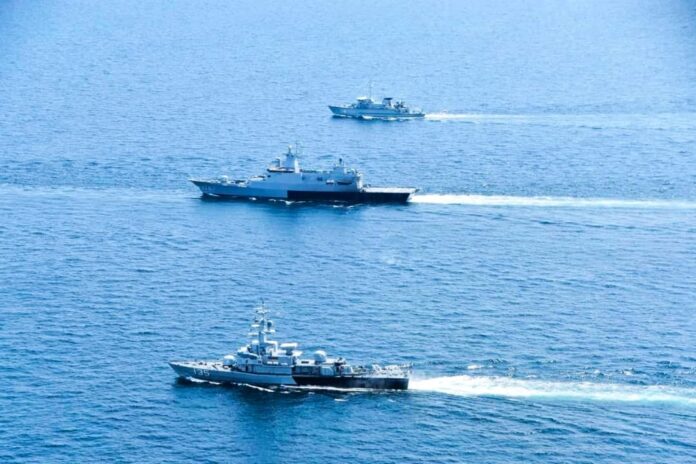
Indonesia’s straits and archipelagic sea lanes – including parts of the Strait of Malacca, and the Lombok and Sunda straits – carry most of Australia’s trade, with the routes through and around Indonesia accounting for 83% of maritime imports and around 90% of exports. If Indonesia were to close those lanes for any reason, the flow-on effects for Australia would be existential.

Under the United Nations Convention on the Law of the Sea (UNCLOS), Indonesia is obliged to ensure its archipelagic sea lanes remain open. Even during a time of armed conflict, as a neutral country, Indonesia must ensure archipelagic sea-lane passage under the San Remo Manual and the Newport Manual.

A recent report from the Center for Strategic and International Studies (CSIS) projects how devastating and costly a closure of Indonesia’s sea lanes would be for international trade. To avoid such a scenario, the report proposes that the United States should conduct more freedom-of-navigation operations (FONOPS) around Indonesia.

The recommendation stems from prior experience. In 1964, Indonesia denied the British carrier HMS Victorious and two accompanying destroyers passage from Perth to Singapore via the Sunda Strait due to a “confrontation” with Malaysia. The event, which occurred before the existence of UNCLOS, created tension between Jakarta and London; the tension was finally resolved after Indonesia proposed alternative routes of passage.

Australia and Indonesia should strengthen their communication channels to better manage future crises and build a common understanding of how to regulate archipelagic sea lanes.

In 1988, Indonesia closed both the Sunda and Lombok straits for military exercises. This provoked a strong response from Canberra, which argued that Indonesia had violated international law. In a recent interview I conducted with a senior Indonesian Navy officer, he argued that, if necessary, Indonesia is allowed to close any of these sea lanes and provide a substitute for international passage. He referred me to Article 53 (7) of UNCLOS, which states that “An archipelagic State may, when circumstances require, after giving due publicity thereto, substitute other sea lanes”.

Some legal experts, however, argue the contrary, stating that the sea lanes should remain open as they are considered “straits normally used for international navigation” under international law.

This interpretation is not only important as a theoretical legal debate but also potentially consequential if a crisis occurs in the region. Recent research published by the International Institute for Strategic Studies (IISS) revealed that Indonesia is developing anti-access/area-denial (A2/AD) as part of its archipelagic defence strategy, deploying “naval mines and submarines in and around the ‘strategic funnels’ in Indonesian waters”.

Importantly, Indonesia currently designates only parts of its archipelagic sea lanes. This allows an alternative interpretation of the status of passage in undesignated sea lanes. The east-west sea lanes through the Java Sea, for example, have remained undesignated, leaving the option open as to whether they are subject to the laws of archipelagic passage.

These two types of passage will have two different legal implications, for instance whether a submarine should remain submerged or show its flag. This will become more important when AUKUS submarines begin traversing the straits in the future.

So, how should Canberra and Jakarta avoid another archipelagic sea-lane crisis? Strong defence and security cooperation under the Jakarta Treaty is a good start. The treaty allows parties to undertake regular consultations at leadership and ministerial levels on matters affecting their common security. Indonesia and Australia should use these forums to develop contingency scenarios for keeping the archipelagic sea lanes open.

Lessons learned from the Strait of Hormuz crisis show we cannot rely on laws alone. Instead, Australia and Indonesia should strengthen their communication channels to better manage future crises and build a common understanding of how to regulate archipelagic sea lanes even in a time of conflict in the region.

*Aristyo Rizka Darmawan is an Assistant Professor of international law at Universitas Indonesia and a PhD Scholar at the Australian National University. His research focus is on the law of the sea and maritime security in Southeast Asia.

LEAVE A REPLY

Please enter your comment!
Please enter your name here