From the ANI Archives: The  ANZUS Treaty

0
768

The Summer 2003 edition of the Journal of the Australian Naval Institute published an article by the then Commander Jonathan Mead on the utility of the ANZUS Treaty. It makes for interesting reading both in the light of AUKUS and the unpredictable US foreign policy of the second Trump Administration.

The Continued Utility of the ANZUS Treaty

‘Without any inhibition of any kind, I make it quite clear that Australia looks to America, free of any pangs as to our traditional links of kinship with the United Kingdom.’

Prime Minister John Curtin, 29 December 1941

‘The Treaty [ANZUS] remains today the foundation of a relationship that is one of our great national assets.’

Defence 2000 White Paper

From Curtin’s wartime Labour government through to Howard’s conservative government of 2000, both political factions have highlighted the importance of the Australia-US alliance. Indeed, whilst the geo-strategic environment has undergone cataclysmic changes throughout the past 50 years the ANZUS alliance has been the bedrock from which Australia could formulate its security policies around.

The aim of this article is to examine the ANZUS Treaty and specifically its influence vis a vis Australia’s naval interests. This paper will commence with a brief history of the ANZUS alliance. This will lead into an examination of how the Treaty has influenced Australia’s strategic and naval interests. Finally, this essay will conclude with an investigation into the future of ANZUS.

History of ANZUS

Military alliances have been a recurring feature of international relations. The defeat of the Japanese in 1945 and the supremacy of US military power irrevocably altered the Asian balance of power. The demise of European colonialism within the Asia-Pacific sphere left the US as the sole dominant power within the region. In 1949, the US along with its European allies formed the North Atlantic Treaty Organisation (NATO) in response to a burgeoning Soviet threat. Within Canberra, key policy makers including the Minister for External Affairs, Dr Evatt, advocated for a similar Pacific pact. However, the US Secretary of State, Dean Acheson, articulated the reluctance of the US to enter into such an arrangement. Acheson stated, inter alia, that ‘while it is true that there are serious dangers to world peace existing in the situation in Asia, it is also true that a Pacific defence pact could not take shape until present internal conflicts in Asia were resolved.

Notwithstanding US ambivalence towards Asia-Pacific engagement, the fluidity of the international arena quickly forced Washington to reappraise its policy. In particular, Mao Zedong’s victory over Nationalist forces in 1949 and the outbreak of hostilities in Korea in 1950 galvanised American sentiment towards ‘containing’ communism within the Asia-Pacific theatre. Washington viewed Japan as the linchpin in any containment strategy. Ironically, Australia’s interpretation of the regional security environment was inimical to Washington’s interpretation – in that Menzies and Spender both saw a rearmed Japan as a direct threat to Australia’s interests. Indeed, even Labor’s Evatt expressed concern over Japan’s rearmament. In 1950, he stated that:

I think it is quite fallacious to concentrate on Russia as the only possible aggressor in the Pacific or South East Asia. 1 I do not believe that Japan will always be content to remain allied to those nations that were its chief enemies in World War II.

Consequently, Canberra wanted to drag America into the Asian morass in order to deter Japanese expansionism, whilst conversely, Washington wanted to extend its influence into Asia in order to defend Japan from the Soviet Union.

Thus, Japan was the nucleus (though for significantly differing reasons) for both the US and Australia to entertain a Pacific pact. President Truman declared on 10 January 1951 that:

It is the policy of the US Government that the US will commit substantial armed force to the defense of the island chain of Japan… and in order to implement this policy the US Government is willing to make a mutual assistance arrangement among the Pacific Island nations (Australia and New Zealand).

Thus, a convergence of interests and perceptions between Australia and the United States acted as the catalyst for negotiations over a security treaty. Subsequently, the negotiating process, which involved a certain degree of quid pro quo, culminated with the signing of the ANZUS (Australia, New Zealand and the US) Treaty in Washington on 12 July 1951.

The principal elements of the Treaty are contained in article s II, III, IV and V.

Article II calls upon all states to ‘maintain and develop their individual and collective capacity to resist armed attack’. Importantly, Article III details provisions for mutual consultation in the event that any of the parties ‘is threatened in the Pacific’.

Under Article III, consultation includes such parameters as instability and subversion. Finally, articles IV and V refer to the geographical limitations of the Treaty.

The vexing question of the limitations of the ‘Pacific arena’ has been the subject of much debate and speculation. Indeed, the actual boundaries of where ANZUS applies have never been decisively defined – though this ambiguity allows both states to interpret the Treaty to their own advantage. Until 2001, the ANZUS Treaty had never been activated – and ironically it was Australia who activated it in defence of the US. However, throughout its history there has been considerable angst over ANZUS obligations. Indonesia’s claim over Dutch New Guinea was to provide the first test of these ANZUS obligations. Menzies sought to gain US commitment towards Australia’s stance over Dutch New Giuinea . However, the US was reluctant to enter into the fray and instead adopted a neutral perspective. Further, the precise meaning of ANZUS came under extra scrutiny during Indonesia’s confrontation toward Malaysia. Canberra sought to obtain a commitment from the US for Australian troops stationed along the Borneo border. Again the US was reluctant to narrow the provisions of the ANZUS and instead left the vagueness of the Treaty stand.

President Nixon’s celebrated Guam Doctrine of 1969 further confused and indeed disturbed Australia. No longer could Australia accept the premise that the US would intervene in a conflict emanating in South East Asia – though an attack on Australian soil would still invoke the ANZUS Treaty. Thus, America’s attitude towards its ANZUS obligations has been characterised by ambiguity, generality and self-serving interests. Conversely, Australia has been quick to support US interests – Australia’s commitment to Vietnam being a case in point.

Despite the nuances of the Treaty its ‘value has been less in countering specific threats than as a hedge against many possible threats – put simply the alliance has been threat insensitive.’ As Norman Harper noted, ‘to the United States the Treaty was designed as part of a network of alliances to contain communism’.

Notwithstanding, the disparity in interpreting ANZUS, the Treaty has spawned a mosaic of political and security fora. Indeed, Australia’s military alliance with the US has been branded by a ‘rapidly expanding program of strategic cooperation, exchange training, joint military exercises, arms procurement and intelligence sharing’.  At the forefront of this military alliance has been collaboration in the arena of naval interests.

ANZUS and Australia’s Naval Interests – Positive Impact

Spawning from the ANZUS Treaty has been a host of security consultative fora. Defence programs. Defence arrangements and multilateral/bilateral treaties. One of the more significant of these treaties was the Radford-Collins Naval Control of Shipping Agreement.

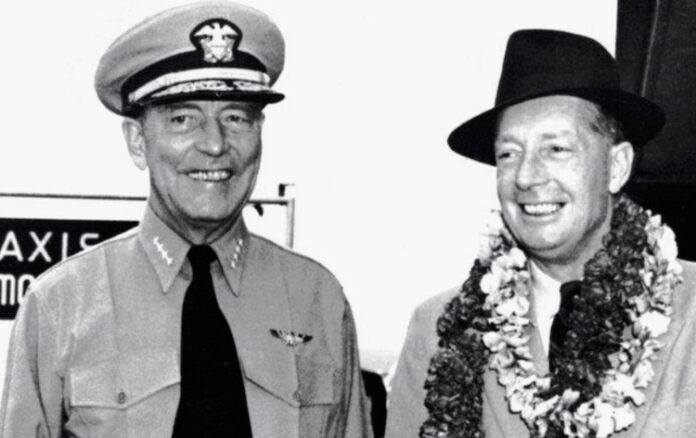
From 26 February-2 March 1951. the Australian Chief of Naval Staff. Vice Admiral Collins, and the US Commander-in-Chief Pacific (CINCPAC), Admiral Arthur Radford, attended a conference at Pearl Harbor aimed at establishing a service level arrangement between the two commands in the sphere of maritime security. The conference concluded with the following recommendations:

  • A boundary line was formed in the Pacific for allocation of duties between the US, Australian and New Zealand with respect to naval escort, convoy routing, diversion of traffic, reconnaissance, local defence, anti-submarine warfare (ASW) and search and rescue (SAR).
  • Liaison and coordination between CINCPAC and Australia and New Zealand was to be developed this included exchange of officers.
  • Coordination and information exchange between CINCPAC and ANZAM (Australia-New Zealand-Malaya) over naval control of shipping was to be established.
  • Reconnaissance, in particular ASW, was to be a key objective of the parties.
  • SAR responsibilities within the confines of the delineated area were defined.
  • Synergy of communications was to be developed.

Importantly, the agreement allowed for direct bilateral Naval planning under the ANZUS Treaty. Whilst ANZUS was unique in that it established a military alliance between three states without a common security threat, Radford-Collins was framed to delineate specific ‘areas of maritime responsibility’. The ANZUS navies were directed to provide reconnaissance and surveillance of their respective areas. Under Admiral Gorshkov’s reinvigoration of the Soviet Navy and in particular with the burgeoning rise of its submarine arm, Australia and the US focused their resources on ASW. To support Australia’s ASW efforts the US assisted the RAN’s development of the Ikara ASW weapons system, Mulloka sonar, and Barra sonobuoy.” Further, both navies established an environmental data centre in Guam.

As an adjunct to Radford-Collins, the RAN formulated contingency plans for the protection of Allied naval shipping in the Pacific – primarily in response to the Soviet Union’s submarine threat.

Cascading from Radford-Collins was the development of a series of maritime exercises aimed to increase naval interoperability. In the 1970s, a series of Naval Control of Shipping (NCS) exercises codenamed Ripcord and Roller Coaster were established. These exercises subsequently lead to the development of the Bell Buoy exercise series. The jewel of naval cooperation is the RIMPAC exercise which is held biennially off Hawaii.

In 1966, Australia joined the AUSCANUKUS Naval communication organisation. Further, the joint RAN-USN Harold E. Holt naval communication base at North West Cape is another manifestation of Radford Collins arrangements. Naval material standardisation through the Australia, Britain, Canada and United States (ABCA) Quadripartite program has seen cooperative naval logistic programs aimed to support both the RAN and the USN. In 1977, RAN officers were appointed to the USN Pacific Intelligence Center in Hawaii as a forerunner for intelligence sharing arrangements.

However, despite the multitude of benefits that flowed out of Radford-Collins, the agreement itself is particularly vague. Specifically, no naval missions per se, were assigned to Australia. This accorded with the fluid nature of ANZUS and allowed each Navy the ability to respond to a diverse array of contingencies.

In summary the positive aspects of both ANZUS and the Radford-Collins arrangement are:

  • Australia’s sense of security within the region has been enhanced.
  • ANZUS acts as a deterrent to possible aggressors.
  • The RAN has received preferential access to naval intelligence.
  • Interoperability between the two navie s has been enhanced.
  • Opportunities to train and exercise with the USN has been increased.
  • The RAN has received access to USN equipment and technology.
  • The RAN’s standing within the region has been improved.
  • The Treaty has contributed to the stability of the region.
  • ANZUS and Radford-Collins have kept a permanent USN presence in the region.

ANZUS and Australia’s Naval Interests – Negative Impact

Notwithstanding the litany of positives arising out of ANZUS and Radford-Collins there remain some negatives. Fundamentally, critics of ANZUS claim that Australia may become embroiled in a conflict not of its choosing. However, this argument is political in nature and has little relevance to the RAN per se. More subtly, there are some negative aspects that do affect the RAN. The RAN’s dependence on US sourced material makes it a ‘hostage of USN logistics’. Resupply of vital naval equipment is reliant on American supply lines. Thus, the RAN cannot support but any of the most minor of operations without US assistance. This dilemma is contradictory to the ADF’s Policy of ‘self-reliance’.

Another criticism leveled at Radford-Collins was Australia’s disproportionate Defence funding on ASW to the detriment of other force development areas. This funding had its genesis through a fear that Soviet submarines would interdict Allied shipping in the South Pacific. However, as Professor Ball noted in 1982, the validity of this threat was dubious and problematic.0 During the 1970s the Whitlam government sought to redress this deficiency by ‘developing a well balanced fleet which had capabilities in all facets of naval operations’.

Finally, the ever-increasing costs of maintaining parity with the USN in order to achieve interoperability has had a detrimental impact toward RAN long term force structure.

In summary, the negative aspects of both ANZUS and the Rayford-Collins arrangement are:

  • The RA N is dependent on US sourced material.
  • Australia’s policy of self reliance is problematic.
  • RAN force structure can become ‘warped’.
  • Cost distortions arising out a desire to source USN technology effectively squeezes the RAN’s budget.

ANZUS and Australia’s Naval Interests

Regardless of the virtues of the ANZUS Treaty two significant issues emerge. Firstly, the alliance is threat insensitive and secondly the alliance has typically meant more for Canberra than it has for Washington. Appraising whether the Treaty has been a useful arrangement for Australia’s Naval interests over the last 50 years is subjective. Undoubtedly, the RAN has benefited from the host of spin offs that the alliance has produced. Opponents suggest that it has made the RAN less self reliant and critically dependent on US supply arrangements. However, a more objective method of assessing the value of ANZUS to the RAN can be made by examining the ramifications to the Royal New Zealand Navy (RNZN) since its de jure termination of the agreement in August 1986.

After 1986, the RNZN was effectively ‘frozen’ out of USN information sharing, intelligence exchange, weapon sales, communications access and participation in exercises. The net result to the RNZN has been a linear decline in its interoperability not only with the USN but also with other allied navies including the Royal Navy, the Canadian Navy and the RAN. Further, the RNZN’s technological parity with other regional navies, its proficiency in general maritime operations and its ‘awareness’ of regional activities have all been significantly affected.

Thus, the RNZN experience is testimony to the impact that ANZUS has made to both the Australia and New Zealand Navies.

The Future of ANZUS

 This article has already concluded that ANZUS has served Australia’s naval interests well over the past 50 years. However, the question remains – will it continue to do?

Strategic interests

During the early 1990s the decline of ideological bipolarity coupled with a more stable balance of power and an improvement in Australia’s strategic environment led commentators to reappraise the value of ANZUS. However, as the events of East Timor in 1999 and 11 September 2001 graphically highlighted, the Asia Pacific region is characterised by volatility, unpredictability and instability.

Adding to the morass of regional instability is Chinese ambiguity. Robyn Lim, of the Hiroshima Shudo University, commented that ‘China is the great beneficiary of the way the Cold War ended, it is pointing east and south strategically.’

ANZUS offers Australia the same insurance policy as it did during the 20lh century – protection against invasion by a belligerent power. Further, as the USA’s new strategic doctrine of pre-emptive attack illustrates, Australia can ill-afford to be complacent with respect to rogue states. The proliferation of Weapons of Mass Destruction within the region poses considerable strategic risk to Australia.

Admiral Chris Barrie, the Chief of the Australian Defence Force, commented in June 2001, that ‘the horizontal proliferation of missiles is a dangerous development, which is in no country’s interest and which needs to be discouraged as much as possible’. Consequently, ANZUS provides Australia with a formidable ally to deter and if need be combat a bellicose state or organisation through the 21st Century. Whilst no security agreement can provide absolute protection against all eventualities, ANZUS nevertheless, endows Australia with an instrument to respond to crisis situations and indeed its mere existence may stymie some adverse circumstances from developing.

As the Joint Committee on Foreign Affairs and Trade concluded in 1982, breaking up ANZUS would ‘be counter productive not only to Australia’s long term security but the stability of the reuion as a whole’. Further, Admiral Barrie noted in 2001 that ‘the United States must remain fully engaged in the region, it is a stabilising and reassuring presence at a time of complexity and unpredictability’.  In 2001, the Australian Minister for Defence, Peter Reith stated that ‘I would argue that ANZUS has always been more about the security of the region than about the direct defence of Australia’.

Infidels of ANZUS often cite that the Treaty no longer reflects Australia’s national interests, nor that it is relevant in the prevailing geo-strategic environment. Indeed, in 1980, Professor Joseph Camilleri stated that:

A policy of the status quo [ANZUS] appears doomed to failure. There is certainly no prospect that in the years ahead relations with the United States will continue to operate in the same fashion as in the period of undisputed American dominance.

However, ANZUS is focused on shared interests and not threats per se, in addition, as the events post 11 September 2001 illustrated, ANZUS provides Australia and the region with a strategic insurance policy. Gary Brown summarised this salient aspect when he concluded that ‘a break up of the alliance would remove a vital piece of the regional security framework’.

It is important to highlight that the validity of ANZUS does not need to atrophy in the absence of a clearly defined threat. Rather, it is the congruency of strategic interests between Australia and the US, which validates ANZUS.  As Lim noted,

cross-bracing the US alliance system based on the maritime society needs of all parties is the best way to encourage the evolution of a peaceful and prosperous East Asia.

Naval interests

ANZUS affords the RAN access to technology, which is critical for its future commitments. Peter Reith underscored this sentiment in 2001 by stating that the RAN was ‘dependent on the technology access and scientific cooperation provided by the US alliance.’ Reith further concluded that alliance arrangements give ‘Australia even better access to US military technology which gives us a vital edge in capability and operations.’

For the foreseeable future ANZUS will provide the RAN the ability to conduct bilateral exercise and training programs in order to ‘maintain their capabilities’. The Tandem Thrust series of exercises between the RAN and USN held bi annually in the Shoalwater Bay training area are the largest combined and joint exercises held in Australia . These exercises afford the RAN the opportunity to be interoperable with the USN. This interoperability has best been achieved through ‘commonality of equipment’. In addition to these training programs is the burden sharing of intelligence which provides the RAN with regional strategic awareness.

If Australia were to cede from the alliance, its regional technical edge would be quickly lost. Coral Bell noted that without the US alliance Australia would have to quadruple its defence spending in order to ‘maintain its strategic environment’.

Notwithstanding the diverse benefits that ANZUS offers for Australia’s future maritime interests, there are some drawbacks in rigidly adhering to the alliance. Firstly, ANZUS risks alienating regional states that have inimical political, cultural, economic or security interests to that of the US. For example, the recent US hard-line stance against Islamic Iraq threatens to undermine Australia’s favourable stance with its regional neighbours. As the Joint Standing Committee on Foreign Affairs, Defence and Trade concluded in 1997. ‘balance and sensitivity are especially necessary with respect to Australia’s efforts to commit the US to the region.’

Secondly, adherence to the alliance can be cost prohibitive. The 21st Century will see the Revolution in Military Affairs (RMA) combine new applications of technologies, new operational concepts and military doctrines in a way that will require substantial funding. Thus, aligning with the USN and attempting to maintain interoperability will be a costly process.

Finally, the rationale and legitimacy of the Radford-Collins agreement is now questionable. Indeed, tenets including ASW and reconnaissance focused toward the ‘Soviet threat’ are now indisputably obsolete. Hence, from a maritime perspective persisting with ANZUS and Radford-Collins could be viewed as inimical to the prevailing strategic environment. However, Radford-Collins represents far more than the general edict of the agreement. In particular, it represents a commitment for engagement by both navies. Consequently, asserting that Radford Collins is archaic, is an insufficient reason to dismiss the agreement.

In summary, the future of ANZUS is an amalgam of strategic, economic, operational, technological and security issues. These issues arc:

  • It offers Australia an insurance policy against a rising China and a proliferation of threats from rogue states and organisations.
  • It ensures that the US remains committed to the region thus maintaining regional stability.
  • It will continue to allow the RAN access to privileged technological information and intelligence.
  • It allows the RAN to be interoperable with the USN.
  • ANZUS will provide the RAN a forum from which it can conduct bilateral exercises.
  • Ceding from ANZUS could result in the Australian government having to commit substantial more funds for regional stability.
  • ANZUS has the potential of alienating regional states, primarily resulting from a suspicion of US foreign policy.
  • The RMA has the potential of ‘blowing out ” the RAN’s budget.

Conclusion

The longevity of ANZUS is indicative of the importance that both Australia and the US have placed on their bilateral relationship. The dynamics of the relationship have been diverse and complex. Yet, the security treaty per se has almost been overtaken by a host of other economic, political, military and diplomatic accords.

ANZUS has been a defining instrument for Australia’s naval interests. Notwithstanding the arguments cited against the validity of ANZUS there is no disputing the impact it has had on the development and proficiency of Australia’s Navy. In particular, the alliance has facilitated the exchange of naval personnel, intelligence sharing, technological advancements, maritime training and overall military proficiency.

The future of ANZUS is often questioned. Critics of the alliance contend that it is no longer relevant in the prevailing geo-strategic environment. Yet, it is the very fluidity and dynamism of the strategic environment that entrenches its future. From a strategic perspective it offers Australia security and regional stability. From a naval perspective the Treaty will continue to offer technological, economic, and operational remuneration.

About the Author

Vice Admiral Jonathan Mead AO RAN is the inaugural Director-General of the Australian Submarine Agency. Prior to taking up this position Vice Admiral Mead led the Nuclear Powered Submarine Taskforce, within the Department of Defence. The Taskforce worked with the US and UK to identify the pathway for Australia to acquire conventionally-armed nuclear-powered submarines.

Jonathan Mead joined the RAN in 1984. He is both a Mine Clearance Diving and Explosive Ordnance and ASW specialist. His commands include the frigate HMAS Parramatta, Commander of Combined Task Force 150 (Maritime Counter Terrorism) and Commander of the Australian Fleet.

Vice Admiral Mead holds a Master’s Degree in International Relations, a Master’s Degree in Management, and a PhD in International Relations. He has published a book on Indian national security.

LEAVE A REPLY

Please enter your comment!
Please enter your name here