
Warning Time Squandered: Australia, China’s 2027 Ambition, and the Test of Maritime Preparedness
By Nick Tate*
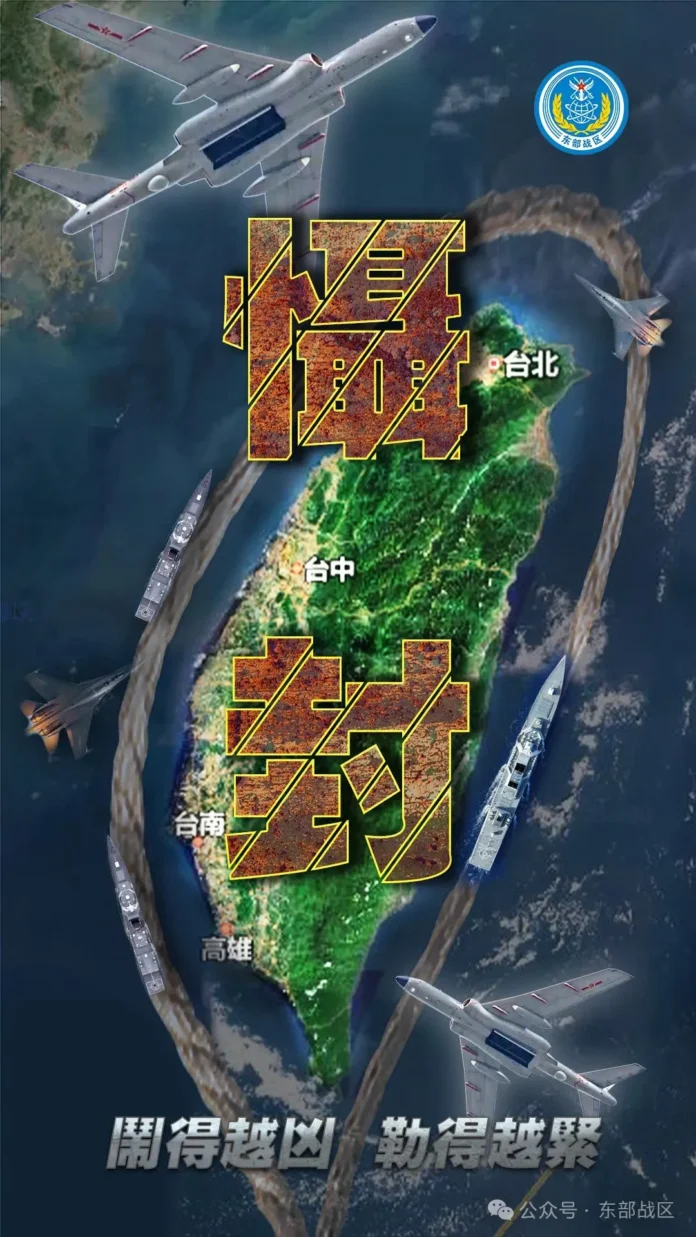
The Pentagon’s latest assessment of China’s military trajectory is confronting. It states that the People’s Liberation Army continues to make steady progress toward its 2027 objectives: the ability to achieve strategic decisive victory over Taiwan, strategic counterbalance against the United States in nuclear and other strategic domains, and strategic deterrence and control against other regional countries. In practical terms, China expects to be able to fight and win a war over Taiwan by the end of 2027.
I am not convinced that Australia’s national leadership fully understands what that means for us.
This assessment is often framed as a Taiwan contingency or a problem for the United States to resolve. It is neither. The reference to “deterrence and control” against other regional countries should be read as a direct warning to maritime trading states such as Australia. Our geography, alliance relationships, dependence on maritime trade, and role in regional security place us squarely within the set of countries whose behaviour China seeks to influence or constrain in any future confrontation.
Nor should 2027 be interpreted as a single ignition point for a short, decisive war. A more realistic interpretation is that it marks the point from which China believes it can sustain armed confrontation if required. That confrontation may be coercive rather than immediately kinetic, maritime rather than territorial, and prolonged rather than climactic. Pressure on shipping, logistics, data flows, and confidence in maritime systems offers a way to apply force while managing escalation.
Australia has had warning time. The question is whether we have used it effectively.
I am proud of the professionalism of the Australian Defence Force, particularly its maritime forces. But maritime power is not limited to platforms and crews. It rests on national systems: ports, fuel, ship repair, sustainment, workforce, data, and infrastructure. These systems already perform well in day-to-day operations. The challenge is ensuring they can scale, adapt, and endure under sustained pressure.
Successive governments have received increasingly clear strategic warnings. Yet the response has too often been characterised by a cycle of review followed by delay. Each review accurately diagnoses the problem, but the period that follows is marked by uncertainty, re-interpretation, and a loss of momentum. In some cases, approved programs are reshaped during implementation in ways that dilute their original intent.
This is not a failure of process at the front end. Australia has robust mechanisms for government approval. The weakness emerges after approval, where governance becomes less disciplined. Scope changes, budget pressures, and risk aversion incrementally reshape projects without the same level of scrutiny that justified them in the first place. The cumulative effect is capability erosion rather than deliberate reprioritisation.
The increasing emphasis on “minimum viable capability” or “minimum viable product” has reinforced this trend. While intended to accelerate delivery, it is often applied from a budget perspective rather than an outcome perspective. Minimum viability becomes defined by what can be afforded within a financial envelope, rather than what is required to function under sustained maritime pressure. Over time, this risks producing capabilities that meet approval milestones but fall short of strategic need.
If the period from 2027 onward is characterised by prolonged maritime confrontation, then Australia’s preparedness must be judged by its ability to endure, adapt, and recover at sea.
Five focus areas should guide national effort.
First, mobilisation as a national policy issue.
Maritime mobilisation must extend beyond Defence planning. It requires coordinated national policy on workforce availability, fuel security, industrial surge capacity, logistics, and sustainment. Warning time must be converted into practical capacity before it is consumed.
Second, protection of sea lines of communication.
Australia’s economy depends on secure maritime trade. Preparedness requires more than naval presence. It demands planning and rehearsal with industry for trade continuity, port access, shipping resilience, and response to disruption. Sea lines of communication are a national vulnerability and must be treated as such.
Third, protection and resilience of undersea cables and maritime digital infrastructure.
These systems underpin trade, command and control, and alliance operations. Their vulnerability makes them attractive tools of coercion in a prolonged confrontation. Redundancy, monitoring, rapid repair, and regional cooperation are essential elements of maritime resilience.
Fourth, practical collective maritime defence in the region.
Resilience at sea is inherently collective. Shared maritime domain awareness, coordinated responses to grey-zone activity, and mutual support arrangements for logistics and trade continuity matter more than new declaratory frameworks. Daily integration builds credibility and reduces the effectiveness of coercion.
Fifth, disciplined adherence to international maritime law.
For a trading island nation, the United Nations Convention on the Law of the Sea is not abstract principle. It is a strategic protection. Consistent adherence to maritime law, freedom of navigation, and peaceful dispute resolution underpins regional stability and Australia’s long-term interests.
The PLA’s 2027 objectives should be read as a test of Australia’s ability to convert warning into preparation. Our strategic documents increasingly describe the challenge accurately. The harder task is resisting paralysis by analysis, maintaining discipline after approval, and defining capability by strategic outcome rather than short-term affordability.
The ADF will do its part. The unresolved question is whether national leadership will treat this warning time as an opportunity to strengthen Australia’s maritime resilience, or allow it to be consumed by further review, re-scoping, and the comforting illusion that analysis alone constitutes readiness.
*Nick Tate is a retired captain of the Royal Australian Navy with senior experience in defence infrastructure and sustainment. He now works in industry, focusing on capability delivery and the integration of estate, logistics and workforce into operational readiness.